







Pope Francis declares environment destruction 'an offense against God'
By Sonny Coloma


ENDEAVOR
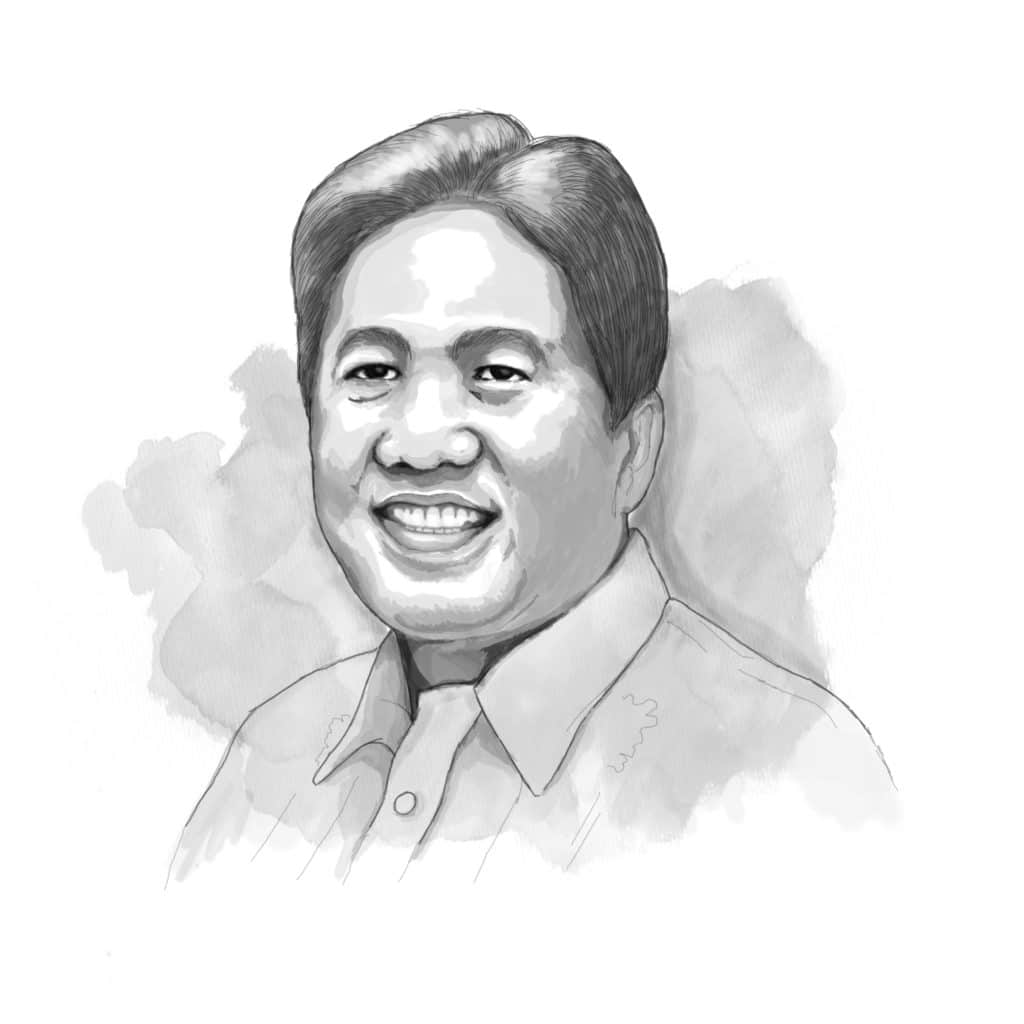
Pope Francis delivered a five-point message to the world at COP 28 in Dubai last Dec. 2.
First: Denounce evil, conflict and death. Second: Uphold life. Third: Strike at the roots of ecological debt. Fourth: Rebuild through multilateralism. Fifth: Forgive and unite.
At the outset, he told his audience through his delegate, Vatican Secretary of State Cardinal Pietro Parolin: “…(T)he destruction of the environment is an offense against God, a sin that is not only personal but also structural, one that greatly endangers all human beings, especially the most vulnerable in our midst and threatens to unleash a conflict between generations.”
Then, he immediately delivered the counterpoint: “Let us choose life! Let us choose the future! May we be attentive to the cry of the earth, may we hear the plea of the poor, may we be sensitive to the hopes of the young and the dreams of children!”
He deplored the orthodoxy of the status quo: “We find ourselves facing firm and even inflexible positions calculated to protect income and business interests, at times justifying this on the basis of what was done in the past, and periodically shifting the responsibility to others.”
This is an undisguised criticism of big business’ previous propensity to celebrate the unbridled accumulation of profits and surpluses: “The business of business is business.” The current advocacy of the Environmental, Social and Governance (ESG) ethos came about as a response to calls for the exercise of corporate social responsibility.
Ironically, he pointed out, global maladies were being wrongly attributed to growing population which was blamed on high birth rates spawned by the poor. He deplored: “These are falsities that must be firmly dispelled. It is not the fault of the poor, since the almost half of our world that is more needy is responsible for scarcely 10 percent of toxic emissions, while the gap between the opulent few and the masses of the poor has never been so abysmal. The poor are the real victims of what is happening.”
Using toxic emissions as the barometer, he beamed the spotlight on “the footprint of a few nations responsible for a deeply troubling “ecological debt” towards many others.” As a means of redress, he said: “It would only be fair to find suitable means of remitting the financial debts that burden different peoples, not least in light of the ecological debt that they are owed.”
According to the Oxford Climate Society, ecological debt is defined as “the level of resource consumption and waste discharge by a population which is in excess of locally sustainable natural production and assimilative capacity.” Author Rachel Parlour writes that the term was coined in 1992 by the Instituto de Ecologia Politica in Santiago, Chile: “The production of greenhouse gases by the developed nations of the north was seen as inequitable. This was exacerbated by utilization in the north of resources extracted in the south which imposed climatic and social changes not included in the calculations of international debt.”
Paradoxically, the countries in the global South that provided natural resources became heavily indebted to the countries that exploited and converted these into finished products. Ms. Parlour explains further:
“Subsequently, a rich versus poor argument emerged, asserting that the impact of exploitation of finite natural resources from these nations had not been fully ‘compensated’ by price, royalties or licensing fees…(D)ue to the inherently interrelated nature of ecology and ecosystems, ecological debt has now transcended the physical and political boundaries of any individual nation to become a global phenomenon that involves every person on earth in calculating the suggested debts through collective and individual behaviors worldwide.”
Pope Francis simply reminded his audience of the raison d’etre for the annual COP meetings that began as an outcome of the 1992 Rio Earth Summit.
Multilateralism, or “the way of togetherness,” is built upon trust. Thus did the Pontiff deplore: “How much energy is humanity wasting on the numerous wars presently in course those in Israel and Palestine, in Ukraine and in many parts of the world.” He proposed a concrete alternative: “With the money spent on weapons and other military expenditures, let us establish a global fund that can finally put an end to hunger and carry out works for the sustainable development of the poorer countries and for combating climate change.”
Pope Francis then specified four breakthrough sectors where marked progress must be achieved: energy efficiency; renewable sources; the elimination of fossil fuels; and education in lifestyles that are less dependent on the latter. He also urged that implementation of initiatives must be “efficient, obligatory and readily monitored,” lamenting further: “It is well-known that various agreements and commitments “have been poorly implemented, due to the lack of suitable mechanisms for oversight, periodic review and penalties in cases of non-compliance.”
The COP 21 agreement in Paris, while ratified by 195 countries, is marked by lip-service compliance. It was only at COP 27 in Sharm El Sheikh last year, agreement was forged for establishing a Loss and Damage Fund. As observed by the Climate Vulnerable Forum: “Climate finance effectiveness has far to go, beyond a Delivery Plan for the $100 billion of annual balanced climate finance.” This is long-delayed and urgently needed by countries like the Philippines that suffer from catastrophic losses. In recent weeks, heavy rains brought about only by shear-line weather disturbances that are not even tropical cyclones brought on massive floods in Davao and Samar.
Pope Francis concluded his message by expressing optimism that 2024 will be a breakthrough year, in the same way that 1224 was the year in which St. Francis of Assisi composed his Canticle of Creatures: “Let us leave behind our divisions and unite our forces! And with God’s help, let us emerge from the dark night of wars and environmental devastation in order to turn our common future into the dawn of a new and radiant day.”