







New post, new man: Expecting new outcome?


OF SUBSTANCE AND SPIRIT
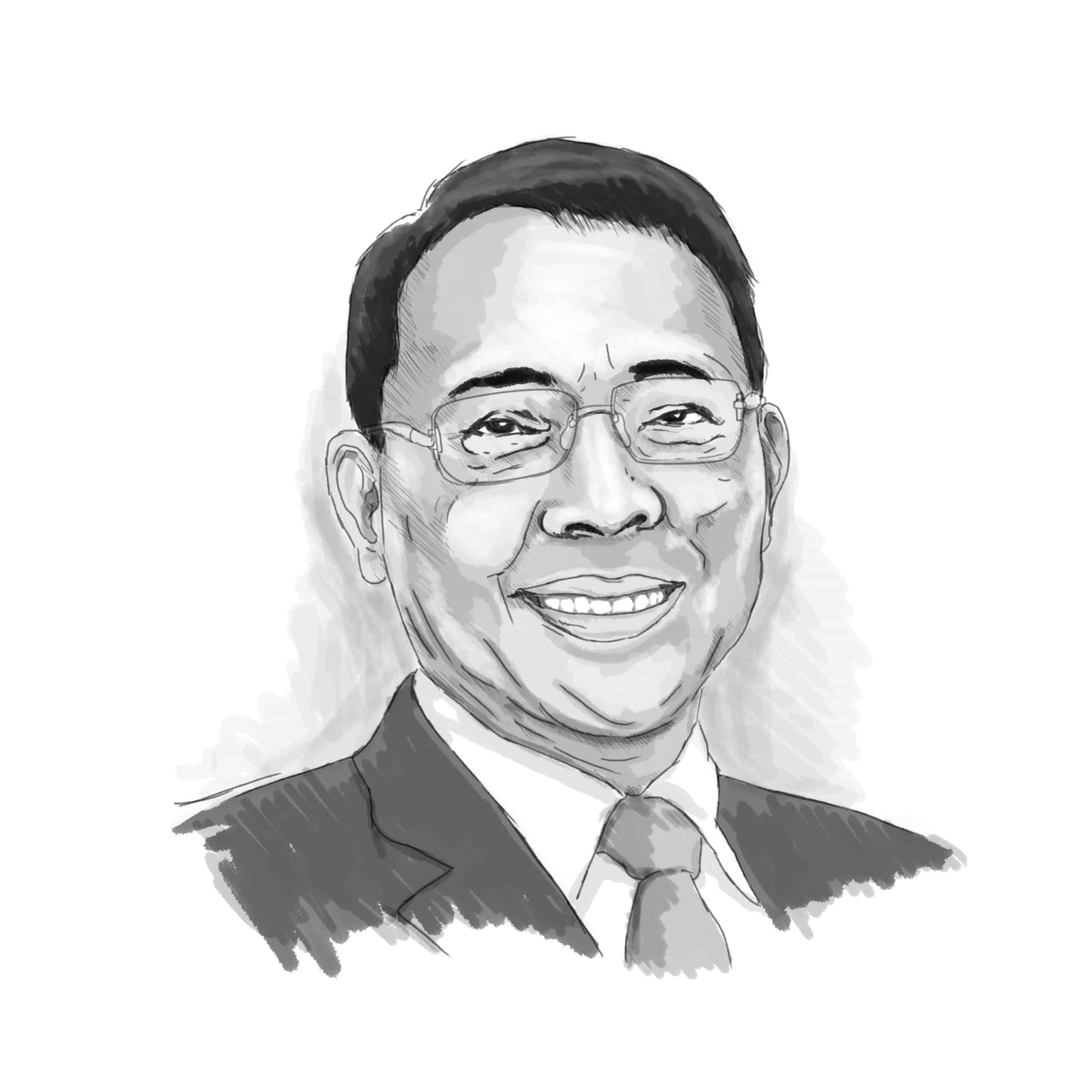
Let me share an edited version of what we sent out through GlobalSource Partners as principal advisor for the Philippines last week. This is about President Marcos’ Executive Order (EO) No. 49 which established the Office of the Special Assistant to the President for Investment and Economic Affairs (OSAPIEA) in the Office of the President.
Its seven whereases reflected the President’s expectations about what ought to be done to economic policymaking in the Philippines.
At present, we have an Economic Development Group (EDG), formerly Economic Development Cluster (EDC), which harmonizes and provides greater focus on public policies to address such burning issues as inflation and food security. We have key economic committees under the National Economic Development Authority (NEDA) Board such as Investment Coordination Committee (ICC), Social Development Committee (SDC), Committee on Infrastructure (INFRACOM) and the Development Budget Coordination Committee (DBCC).
These are the first two whereases.
Until the new EO was released, the EDG was chaired by Finance Secretary Benjamin Diokno. He also chaired the ICC. Vice-President and Education Secretary Sara Duterte presides over the SDC. NEDA Secretary Arsenio Balisacan is chairman of INFRACOM while DBCC is headed by Budget Secretary Amenah Pangandaman.
The EO seems to imply that more ought to be done to respond to the presidential demand for establishing quick and effective response to the issues of inflation and food security. Or similarly, policy coordination and focus are sorely needed.
The third whereas of the EO underscores that something is missing in both formulation and implementation of public policies as well as in monitoring them to ensure that they are “holistic and cohesive” to address various challenges in the Philippine economy.
The fourth whereas clarifies the President’s continuing authority under the Administrative Code of 1987 to reorganize the government to achieve “simplicity, economy and efficiency.” This implies in no uncertain terms that today’s arrangement and delivery system may not be simple, but complicated; uneconomic, or costly to run; and inefficient so it needs some reengineering.
The fifth whereas justifies the reorganization prescribed in the EO as authorized under the General Appropriations Act for Fiscal Year 2023 in so far as creating new offices and new positions ”whenever public interest so requires.” Given all the weaknesses of the current system, the new office and the new position of cabinet rank are necessary. Otherwise, public interest may be risked.
The seventh and last whereas reiterates the President’s power of control over all executive departments, bureaus and offices. Those affected should take notice that the EO has constitutional basis.
Whatever is not working under the present set-up is supposed to be rectified by the new office and the new position. The new OSAPIEA is mandated to ensure that the various investment and economic policies and programs are optimally deployed under the leadership of SAPIEA of cabinet rank.
Frederick Go, director, president and CEO of Robinsons Land Corporation and multiple other big corporations, was appointed by the President last Dec. 20, 2023 as the first SAPIEA. Mr. Go will be responsible for advising the President on various economic concerns; identifying priority programs, activities and projects; and coordinating and evaluating those priority initiatives of key government agencies; among others.
As such, Mr. Go will be effectively the new economic czar. He will be like a school principal.
As the new chair of the EDG, Mr. Go is mandated to supervise and monitor on behalf of the President — listen to this — NEDA, DOF, DBM, DTI and their respective attached agencies including PEZA, SEC, BOI “to ensure effective and efficient implementation of their respective priority initiatives.” He will also sit as member of the powerful boards and committees including the NEDA Board chaired by the President himself, ICC, DBCC and INFRACOM.
How will Mr. Go fare in his new job in the public sector?
Mr. Go, previously Presidential Adviser on Economic Affairs, brings into his new job on-the-ground experience in building business empires in the real world and navigating through various political regimes, something that the economic managers do not have in their résumé. The President’s disappointments with his economic managers are all written in the EO. There ought to be more than a series of economic briefings and investment roadshows, and more of actual execution and harmonization of projects.
How else does one explain why investment sentiment remains low, economic growth is below par relative to the target, and most important, the President’s rating spiraling down? We are not sure if any of the President’s campaign promises has been delivered including the reduction of rice prices to ₱20 a kilo. The people continue to ask for receipt.
Some even suggested that all that the President needed to do is to change economic horses and charge them with more focused deliverables, keeping their own spheres of influence intact, if indeed he was not satisfied with their performance. But the problem is more structural, and there is very little to show that it is fully understood.
One major challenge to this government is keeping fiscal and debt sustainability after the pandemic. Mr. Go’s competence will be tested on how he could orchestrate public policy formulation and execution to achieve economic growth while keeping debt levels manageable, and taxes more progressive. Prices of prime commodities have risen like no other, and taxing the people more will simply elevate the level of their dissatisfaction. The President’s rating is likely to sink even deeper. Borrowing more heavily will indeed make us the darling of global capital markets, but could bring us farther from the 60 percent acceptable level of debt to GDP ratio and closer to the sad experience of the debt crisis in the mid-1980s.
But what is crucial here is to keep the budget deficit under control lest it triggers higher borrowing or higher taxes. Brakes should be handy on various big ticket infrastructure projects which can use more complete staff work. The budget should be the tipping point in education, health, science and technology, housing, food security. In this connection, Mr. Go could be at loggerheads with his fellow cabinet members who may be more politicized to a fault, or with the members of the legislature who cater to populist sentiments.
One thing is clear.
Mr. Go’s appointment is not music to the ears of the economic managers. Now they have to be accountable to him, other than to the President. We cross our fingers, pray and hope for the best outcome. The new set up promises to be an organizational nightmare. But if Mr. Go soldiers on with only the people’s interest in his heart, we should expect a different, and decidedly more positive, outcome.