Philippines
National
Nuclear science offers solutions for climate change, energy needs — DOST
Philippines
National
Nuclear science offers solutions for climate change, energy needs — DOST
Nuclear science offers solutions for climate change, energy needs — DOST


The Department of Science and Technology (DOST) has cited nuclear science and related studies as key to addressing climate change and ensuring a sustainable future.

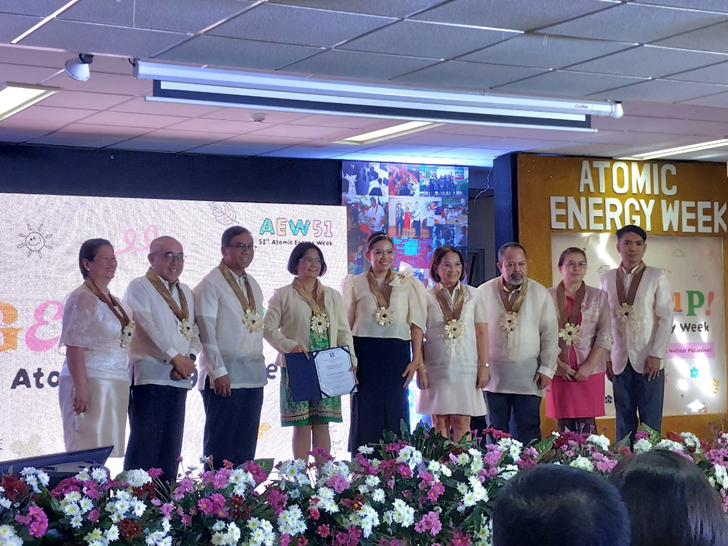
DOST Secretary Renato U. Solidum Jr. emphasized the potential of nuclear technology to address global warming concerns at the start of the 51st Atomic Energy Week (AEW) on Dec. 4.
"Climate change is a problem that we all need to look into. We will be victims of global warming, so we need to act, and nuclear technology would play crucial roles in addressing our concerns on this," Solidum said.
He stressed that while the Philippines may not be a major contributor to global greenhouse gas emissions, the country will still be affected by pollution and its associated health impacts.
"The protection of the environment will also utilize nuclear technology. While the Philippines may not be a major contributor to greenhouse gases, we need to address air pollution from a health perspective, not just the climate. This is because we will not only be affected by rising temperatures and changing rainfall patterns but also air pollution," he said.
The DOST chief further emphasized the importance of nuclear science and research studies for developing alternative energy sources, particularly in the form of nuclear power—where this clean energy source could significantly reduce greenhouse gas emissions.
"Nuclear technology can also be used to develop new crop varieties that are resistant to heat and require less water, ensuring food security even in a changing climate," Solidum added.
Beyond its applications in medicine, agriculture, and industry, Solidum also sees the renewed focus on nuclear power as a new opportunity for the Philippine Nuclear Research Institute.
The DOST added these includes "mastering nuclear technology as a potential power source for economic development but also ensuring its safe, secure, and responsible use."
“This is the reason why the country's science department has its full support for the efforts of the Nuclear Energy Program Inter-Agency Committee, as well as the establishment of a unified, independent regulatory body for ionizing radiation sources through the bill for the Philippine National Nuclear Energy Safety Act pending in Congress," Solidum said.