






 Philippines
National
Measles cases 'surge' in PH due to low MMR vaccination, says expert
Philippines
National
Measles cases 'surge' in PH due to low MMR vaccination, says expert
Measles cases 'surge' in PH due to low MMR vaccination, says expert


Infectious disease expert Rontgene Solante expressed concern over the rise in measles cases in the country, which he attributed to the insufficient coverage of the measles, mumps, and rubella (MMR) vaccination.
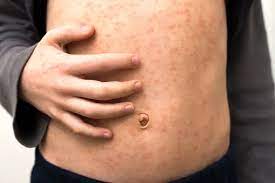
He noted that the MMR vaccination rate among children has been “low” in the past year.
"This is expected, kasi the past year ay ang baba ng MMR vaccination natin sa mga bata, and in fact, hindi tayo nakaabot dun sa 90 percent na kinakailangan (because in the past year, our MMR vaccination rate among children has been low, and in fact, we haven't reached the required 90 percent),” Solante, who is also the president of the Philippine College of Physicians, said in a televised briefing on Wednesday, Nov. 8.
Solante also pointed out that the focus on Covid-19 vaccination has redirected attention and resources away from other immunization programs, including those for children.
"Ibig sabihin, 'yung programa ng expanded program immunization sa mga bata ay medyo naiwan ng kaunti, pero ang taas ng gap na naiwan (It means that the expanded program of immunization for children has fallen behind slightly, but the gap left is significant),” he said.
To address this, the expert underscored that the Department of Health (DOH) has initiated a "catch-up vaccination" program, which includes MMR vaccination for children under two years of age, who are particularly vulnerable to the disease.
Measles cases in PH
Based on the DOH data, measles cases in the Philippines have surged by nearly “300 percent” from January to October 2023.
"If we can remember also, we had measles outbreaks in 2018 and 2019, so it becomes a cycle now na kapag mababa ang vaccination rate sa mga bata ay tataas ang mga kaso (When the vaccination rate among children is low, the number of cases will increase), and this is now the result because of the low vaccination coverage that the country had for the past two to three years,” Solante explained.
“This is something that is expected, and it's not just measles; other vaccine-preventable diseases like polio, pneumonia, and influenza may also resurface,” he added.
Solante emphasized that measles does not follow a seasonal pattern, saying “outbreaks can occur at any time of the year because measles is highly contagious.”
“When one person contracts measles, especially a child, it can easily spread within families and neighborhoods due to the virus's high reproductive number and rapid transmission,” he warned.
The expert also stressed that measles can be "fatal," which is why there is a vaccine to prevent transmission and the development of severe measles.
He emphasized the severity of measles, citing its potential complications, such as encephalitis (brain inflammation) and pneumonia, which can be viral in nature.
Given the lack of a specific treatment for viral infections, Solante stressed the importance of monitoring and supportive care for children with measles.
“That's why it's important that when children have measles, they consult with doctors to monitor for any complications,” the expert said.
Importance of MMR vaccination
Solante also pointed out that preventing measles is crucial, highlighting the “high efficacy” of measles vaccines, which could provide up to "90 to 95 percent protection" when administered to children.
Measles prevention remains a critical public health priority, said the expert, who called for a coordinated effort to increase MMR vaccination coverage and raise public awareness about the importance of vaccines in preventing measles and its complications.
In cases where measles does occur, he said that isolating infected individuals is vital to prevent further transmission within the community and household.
Solante also cautioned that adults, particularly those who did not complete their measles vaccine during adolescence, are also susceptible to contracting measles.