







Angara: Gov't yet to spend P1.27T from 2023 GAA


Senate Committee on Finance chief Senator Juan Edgardo “Sonny” Angara on Wednesday, November 8 disclosed that the government has yet to spend around P1.27-trillion or 24 percent of the P5.268-trillion national budget for 2023.
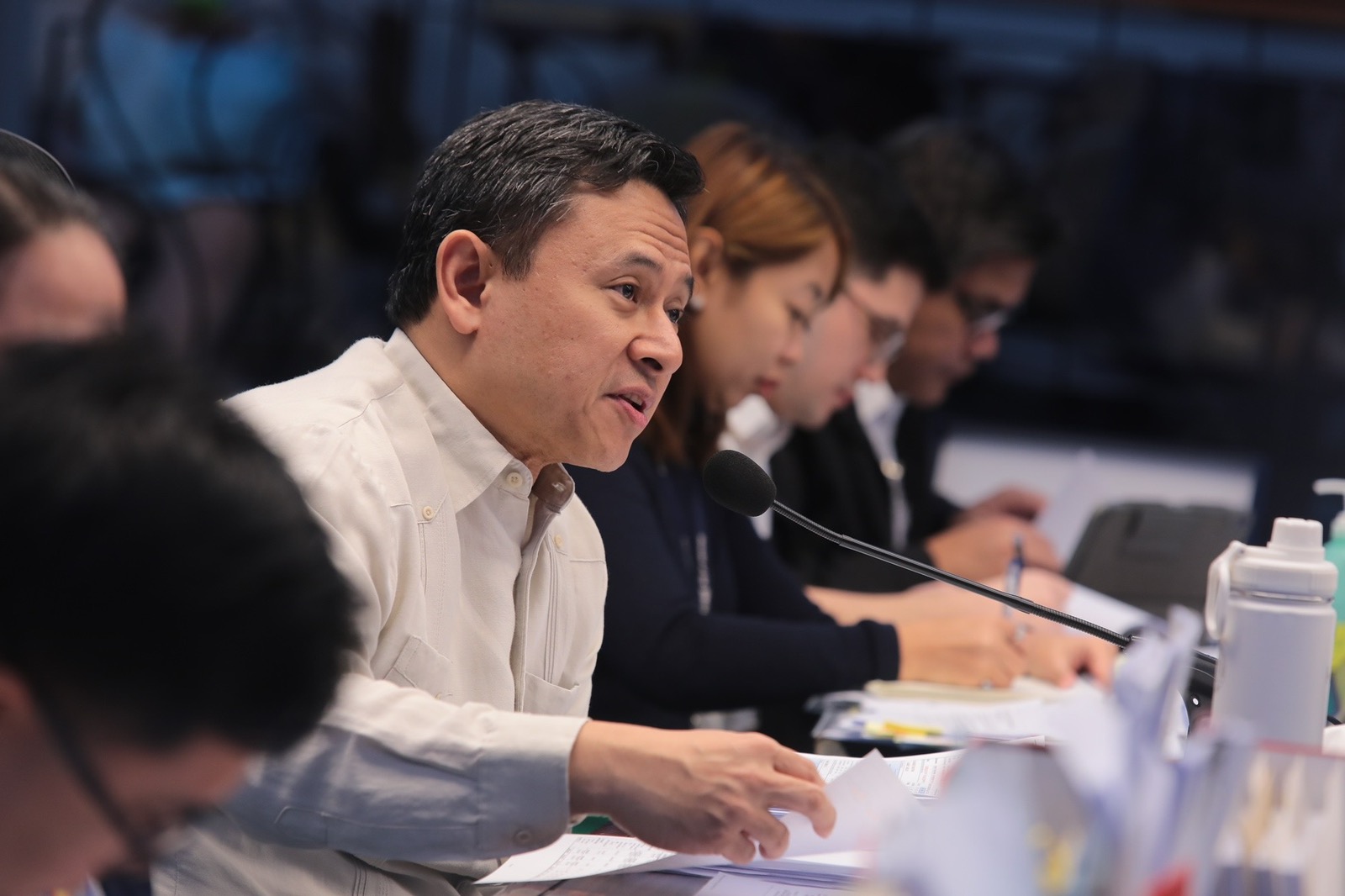
Sen. Juan Edgardo "Sonny" Angara, chairperson of the Committee on Finance, answers questions as the Senate begins plenary debates on the proposed P5.768-trillion national budget for 2024 Wednesday, Nov. 8, 2023. (Senate PRIB Photo)
Angara revealed this during the first day of the plenary debates on the proposed P5.768-trillion national budget for 2024, when he responded to Sen. Risa Hontiveros’ questions regarding the government’s spending performance.
Hontiveros wanted to know which specific departments and agencies of government that contributed to the underspending “and why they did not spent what they committed to spent in the first half of the year.”
According to Angara, the total unobligated amount total around P1.27.trillion, while the obligated amount total around P4.08-trillion.
The obligation rate for the 2023 budget, he said, is at 76 percent, while the disbursement rate is at 80 percent.
Angara, speaking in behalf of the Department of Budget and Management (DBM), identified the top agencies that commit underspending as the Department of Information and Communications Technology (DICT), Department of Migrant Workers (DMW), Department of Social Welfare and Development (DSWD), Department of Energy (DOE) and the Department of Tourism (DOT).
He also said the DBM has just presented to the President the various “catch up” plans of these various agencies.
The reasons for underspending is also varied but some are procurement-related difficulties such as the late delivery of goods, failed biddings and checks that have yet to be disbursed, according to Angara.
Angara, on Tuesday, November 7, sponsored the proposed P5.768-trillion national budget.
During the questioning of the minority bloc, the lawmaker assured that next year’s budget will encourage growth, slash poverty, narrow the budget deficit and reduce debt, jumpstart the economy’s transformation, and finally cement the country’s status as an upper middle-income nation.