







Filipino consumers find relief as food prices stabilize


Filipino consumers finally received some relief from the persistent price increases they had been facing since the start of the year, as the government's report highlighted a significant slowdown in the inflation of food prices.
The latest inflation report released by the Philippine Statistics Authority (PSA) is a much-needed development for consumers who had been grappling with the rising cost of essential food items, which have been putting a strain on their budgets.
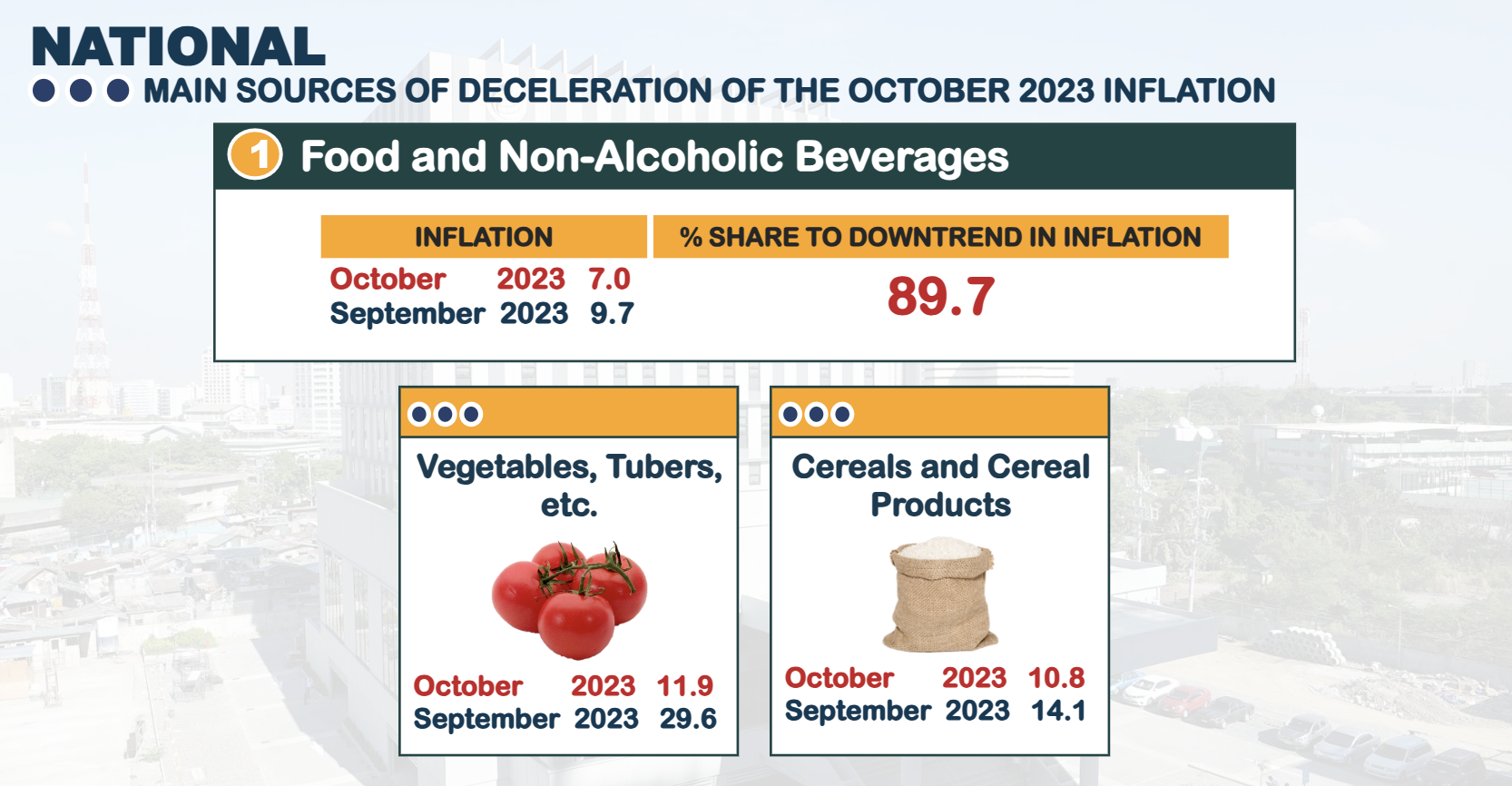
The impact of food prices on overall inflation was quiet notable in October, accounting for 50.6 percent or 2.5 percentage points.
According to the PSA, food inflation at the national level showed a considerable deceleration, settling at 7.1 percent. This marked a significant improvement from the previous month's 10 percent and a decrease compared to the 9.8 percent rate recorded in October 2022.
The slower rate of food price increases suggests that the measures implemented by the government to address the issue and stabilize food prices have started to yield positive results.
The deceleration in food inflation is particularly beneficial for consumers, as it eases the financial burden and provides some respite from the rising cost of essential food items.
It also contributes to overall price stability and helps to improve the purchasing power of consumers.
Based on the PSA data, the decrease in food inflation was mainly due to slower growth rates in vegetables, tubers, plantains, cooking bananas, and pulses, which saw a significant decline from 29.6 percent in September to 11.9 percent in October.
The inflation rate for rice also dropped from 17.9 percent in September to 13.2 percent.
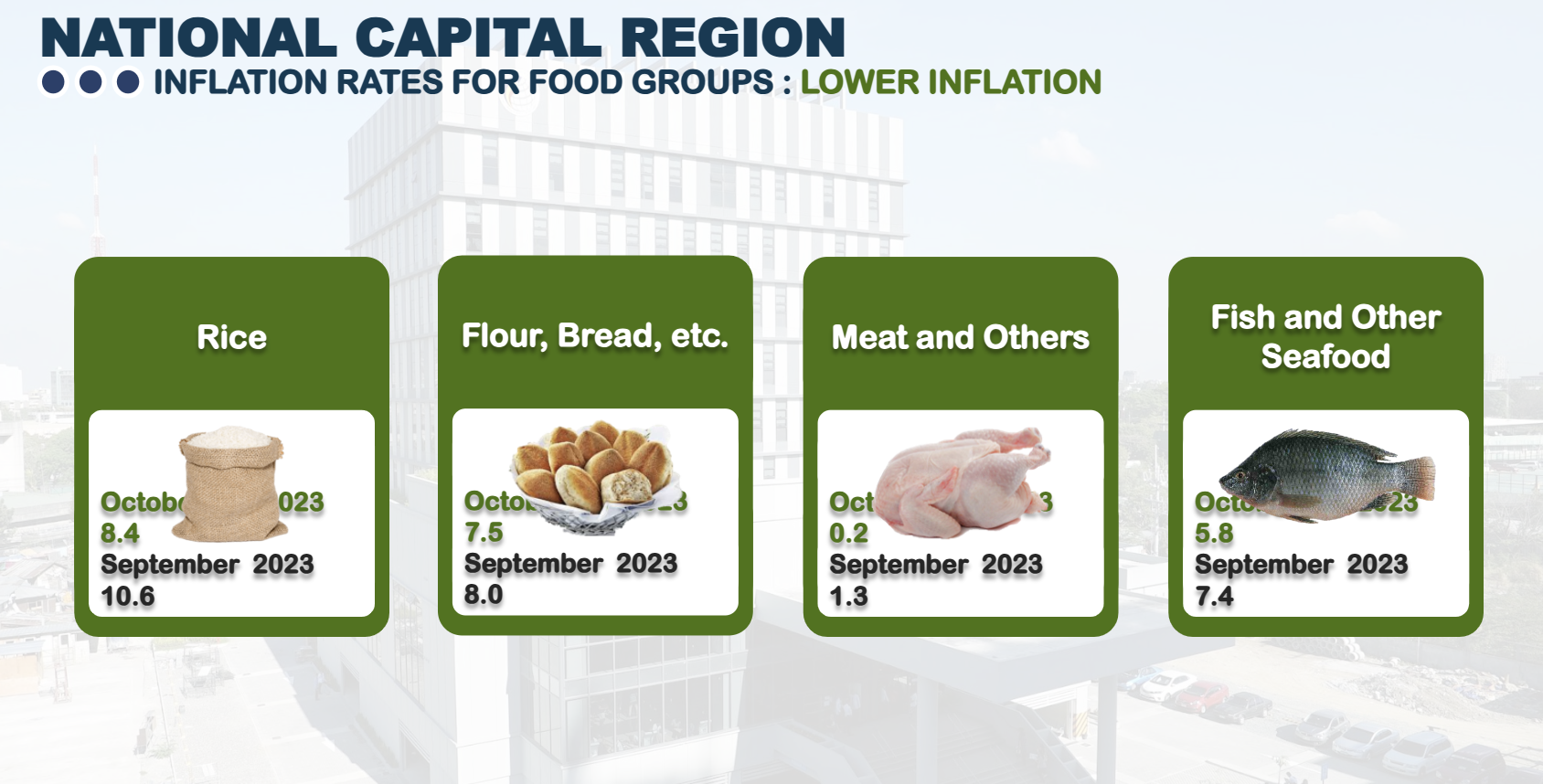
The growth rates of certain food groups were also lower compared to the previous year in October. This includes flour, bread, and other bakery products, pasta products, and other cereals, which had a growth rate of 7.4 percent, down from 8.1 percent.
Meat and other parts of slaughtered land animals had also slowed to 0.8 percent from 1.3 percent. Fish and other seafood had a growth rate of 5.6 percent, lower than the 6.1 percent in September.
Sugar, confectionery, and desserts, meanwhile, grew 4.9 percent, slower compared to 9.0 percent a month ago. Ready-made food and other food products had a growth rate of 5.8 percent, down from 6.8 percent.

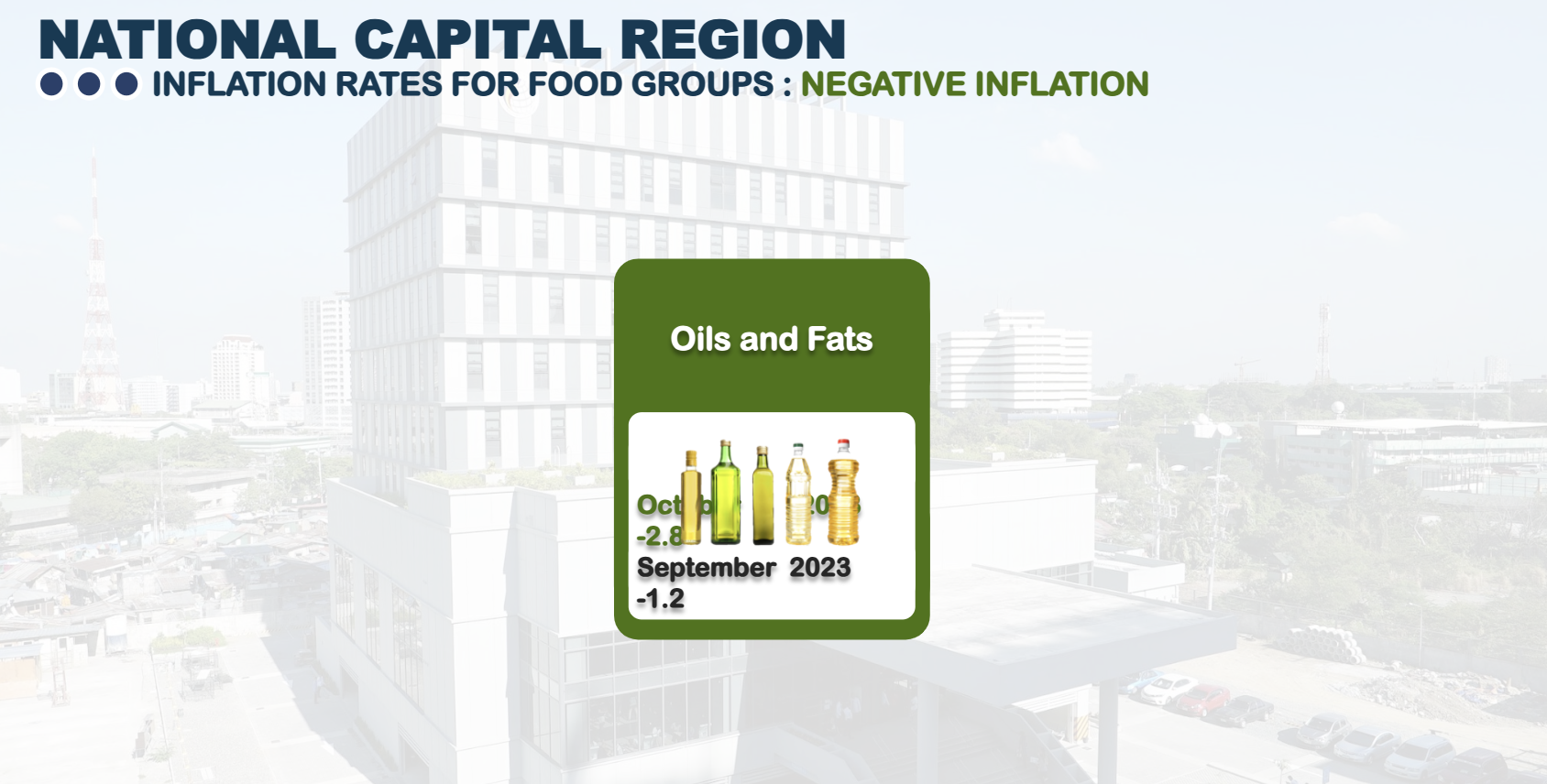
Moreover, the corn index decreased by 2.4 percent compared to the previous month’s 1.6 percent. Similarly, the oils and fats dropped by 2.5 percent compared to a 1.3 percent decline in the previous month.
On the other hand, the indices for milk, other dairy products, and eggs showed higher year-on-year growth rates at 7.5 percent from 7.3 percent in September.
Additionally, the fruits and nuts index saw a growth rate of 13.5 percent compared to 11.6 percent in the previous month.