







Scientists fighting fake news: A heroic, dangerous job


CLINICAL MATTERS
In 2019, the World Health Organization (WHO) recognized the dangers of health misinformation and included it among the top global health threats. Vaccine hesitancy has left millions of children without proper protection against deadly but preventable diseases. Every day, thousands of people continue to die from vaccine-preventable illnesses. This assessment was made before the Covid-19 pandemic, which unfortunately was made deadlier by a parallel fake news epidemic—an infodemic. During the Covid-19 pandemic, misinformation regarding ivermectin and other unproven medications exposed people to unnecessary risk and contributed to millions of unnecessary SARS-CoV-2 infections, which would otherwise have been prevented by vaccination.
As governments scrambled to contain and mitigate the spread of Covid-19, misinformation was rampant as people panicked and became willing to try anything that offered any kind of hope. It did not help that the science was rapidly changing and many institutions, including the WHO and the United States Centers for Diseases Control (CDC), had to backtrack on some recommendations.
One major controversy that was exploited by anti-science trolls was the changing recommendations on mask use. The initial scientific assessment was that if SARS-CoV-2 (the virus that causes Covid-19) was just like SARS-CoV (the original SARS virus), then the amount of asymptomatic transmission was negligible and people who did not have symptoms did not have to wear masks. As the evidence evolved, it turned out that about five to 10 percent of transmissions were from asymptomatic people with the initial viral lineages and increasing to much higher numbers with the emergence of variants. Delta and Omicron had such high viral loads that the dynamics of contact tracing changed and the impact of cloth masks was negated.
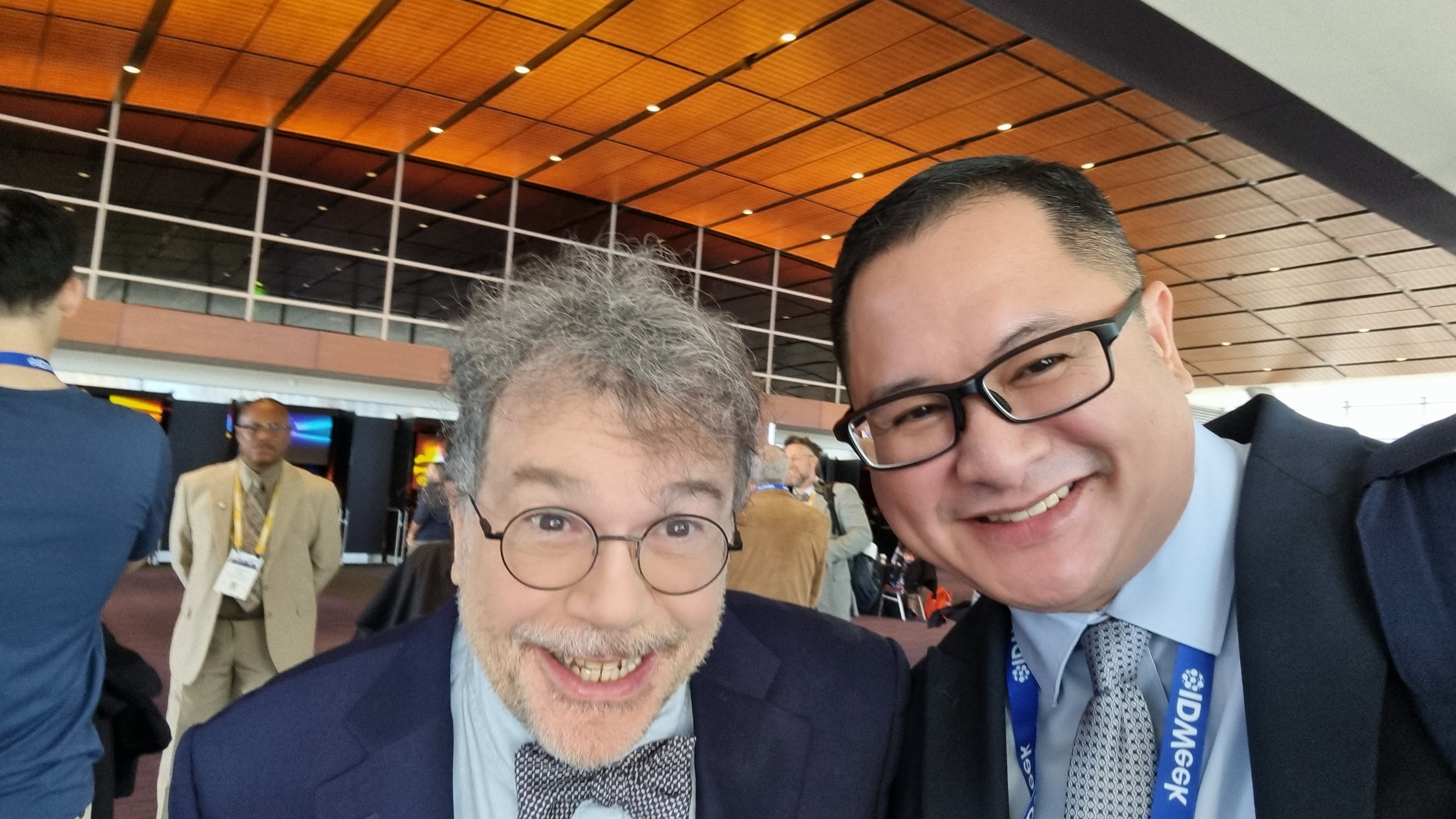
The author with Dr. Peter Hotez at IDWeek 2023 in Boston.
Another group, this time well-meaning aerosol scientists who had their own definitions of aerosol and droplet transmission, attacked WHO and infectious diseases societies for not using N95 masks the whole time without taking into consideration availability, comfort, and practicality. When stronger evidence showed that surgical masks performed just as well as N95s among the general public when viral culture was used as a surrogate for infectivity, they rejected these findings and attacked the clinical trial framework as being flawed. One bad side effect of this is that some people stopped wearing surgical masks when they couldn’t get N95 respirators, calling these useless and resulting in excess infections that could have been prevented with surgical masks.
Yet another group pushed “mass testing” without understanding the nuances of diagnostic tests. The push for mass testing diverted much-needed resources away from treatment and proper containment, resulting in confusion and more infections. Finally, the question of whether face shields had any effect on transmissions became a political issue, despite the presence of scientific evidence that these were especially helpful prior to widespread vaccination. Even a fact checker organization misrepresented the explanation of the Philippine Society for Microbiology and Infectious Diseases on this, misinterpreting the scientific terms “weak and very weak evidence” to mean there was not enough evidence, and equating this with the inability to make a recommendation. In fact, a recommendation in favor of using face shields was made. To be fair, the scientific community does employ terms that mean different things when read by the general population. In this case, grade of evidence was confused by the fact-checkers with strength of recommendation.
Opportunistic anti-science groups used these evolutions in recommendations to paint the scientific community as unreliable and untrustworthy. Within the scientific community, there were also unscrupulous groups who pushed unproven medications over vaccination and masking. One particularly notorious drug that gained traction was the use of the anti-worm medication ivermectin. Some of the strongest evidence suggesting that this drug did have utility against SARS-CoV-2 was shown to be either fake or flawed. Even as high quality randomized controlled trials (RCTs) came up negative, with some suggesting a harmful effect, some groups with physician members continued to push the drug and attack the mainstream science and health community.
In contrast, there was a real scientific battle going on with remdesivir. While the US National Institutes of Health recommended that remdesivir be used in severe Covid-19 based on an RCT published in the New England Journal of Medicine, the WHO inexplicably recommended against it. This was unusual because if there was a lack of evidence, then the WHO recommendation would normally have been neutral. Instead, the WHO recommended against usage of remdesivir, which confused a lot of people and disappointed scientists, since remdesivir was the only drug at that time that had any good evidence of antiviral activity. Several months later, as evidence continued to accumulate that remdesivir was effective, the WHO quietly changed its recommendation to a favorable one without ever explaining its initial recommendation.
The heterogeneity of the different instances of fake news and misinformation makes tackling the infodemic challenging and akin to navigating a minefield. Most scientists and doctors would prefer to continue the hard work of caring for patients in clinics and hospitals rather than wading into the fray. Lives can also be saved, however, by battling fake news. One leading proponent of this fight is Dr. Peter Hotez, a pediatric infectious diseases expert from the US, who specializes in neglected tropical diseases and vaccines. He was instrumental in developing the first patent-free Covid-19 vaccine Novavax, of which millions of doses have been produced. For this effort, he was nominated for the Nobel Peace Prize.
Dr. Hotez cut his teeth against misinformation when he objected to the falsehood that vaccines cause autism. His daughter Rachel is autistic, and he wrote a book aptly titled, “Vaccines Did Not Cause Rachel’s Autism: My Journey as a Vaccine Scientist, Pediatrician, and Autism Dad.” His vaccine advocacy and fight against anti-science has made him a hero among doctors and scientists. Unfortunately, it also made him a target for anti-vaxxers and he has been unfairly attacked by Robert F. Kennedy of the ironically named Children’s Defense Fund, and even Elon Musk. On the other hand, many famous people have rooted for him, including Mark Hamil (Luke Skywalker) and George Takei (Mr. Sulu from Star Trek). Dr. Hotez has since come out with many other articles, books, and materials that seek to fight the anti-science movement to save lives. I encountered Dr. Hotez when I was an infectious diseases fellow from 2005 to 2008 when I wrote a chapter on Schistosomiasis japonicum (a worm found in the Philippines) for his parasitology book.
I’ve since been following him on social media and doing my best to support his work. I had the good fortune of reconnecting with Dr. Hotez at IDWeek 2023 in Boston (see picture) where he received the first ever Anthony Fauci Courage in Leadership Award for his efforts to uphold and speak scientific truths. As someone who tries to follow his footsteps by leveraging science and communication, I found it thrilling to see him win this recognition. I hope more scientists and physicians emulate his example.