ADVERTISEMENT

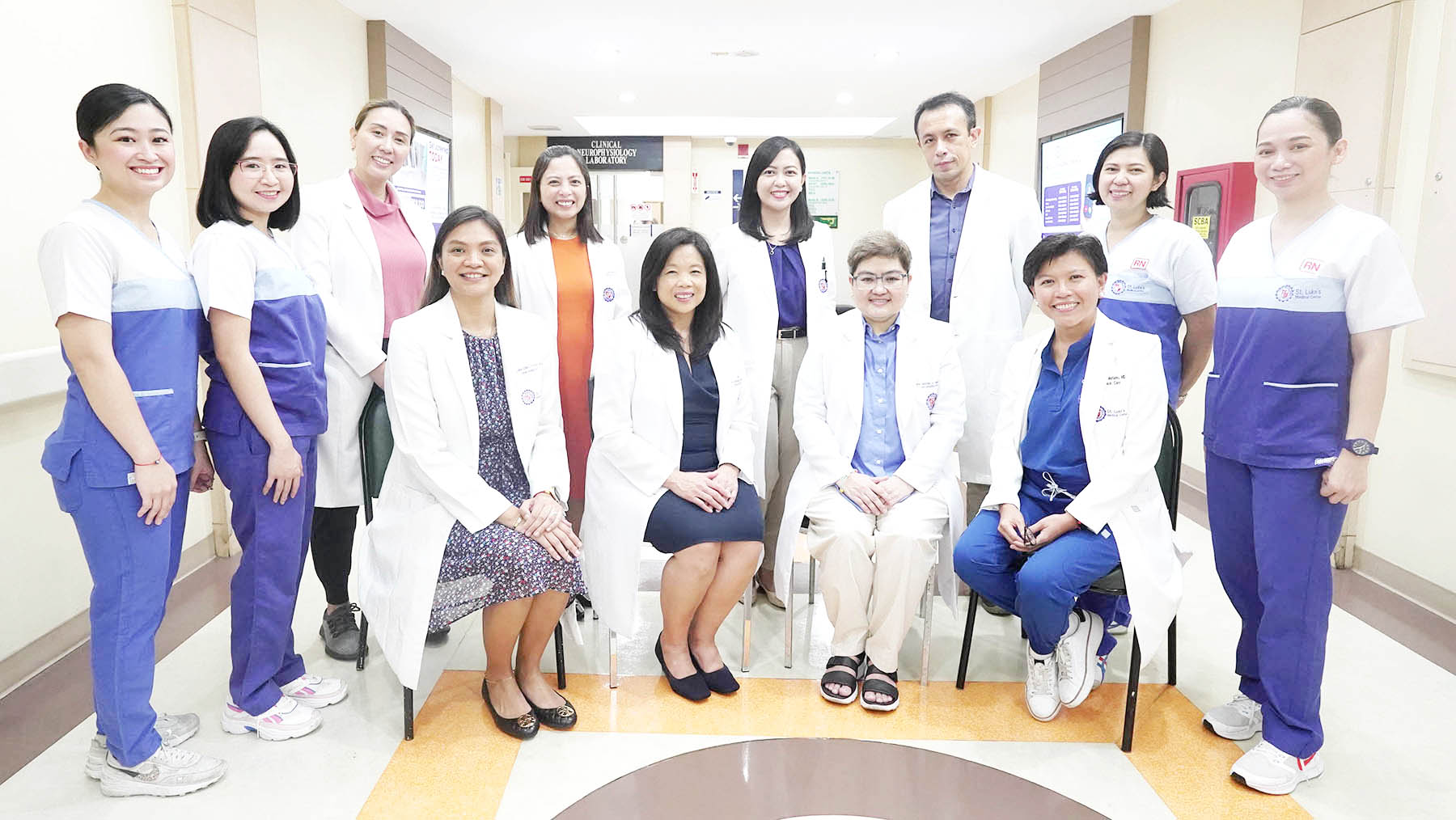
Meet the BAT, the Brain Attack Team

St. Luke's Medical Center launches its stroke service as a center of excellence

Published Nov 6, 2023 10:27 am

At A Glance

  • Majority of the patients show significant improvements in stroke-related disabilities. Within three months, many of them display minimal to no signs of stroke, allowing them to resume their daily lives

DSC02018_2.jpg

St. Luke’s Medical Center is proud to announce the official launch of its Stroke Service as the institution’s Center of Excellence.

With its unmatched dedication, cutting-edge technology, a team of compassionate experts, and readily available clinical data source, St. Luke’s Stroke Service stands as the only hospital in the Philippines that is certified by the Joint Commission International (JCI) for the gold standard of care in stroke.

St. Luke’s has a rich history of pioneering advancements in stroke care. The institution made a significant breakthrough by establishing the country’s first dedicated Acute Stroke Unit in 1999, a specialized unit that plays a pivotal role in closely monitoring acute stroke cases, enabling prompt and life-saving interventions during a patient’s most critical moments.

Furthermore, the unit has 24/7 on-duty vascular neurologists and stroke-trained nurses to ensure continuous care. In the year 2000, St. Luke’s embarked on another transformative journey by introducing the Brain Attack Team (BAT) and establishing the Brain Attack Code. The BAT comprises an interdisciplinary roster of experts, including vascular neurologists, neurosurgeons, Emergency Care Services physicians, radiologists, clinical pathologists, clinical pharmacists, nutritionists, nurses, and rehabilitation specialists. Together, they work to ensure that stroke patients receive the best medical care possible. When the brain attack code is activated, the BAT adheres to a rigorous timetable, ensuring the utmost efficiency and effectiveness in patient care.

The Brain Attack Code was strategically created to guarantee that strokes are treated promptly and accurately, minimizing permanent damage and reducing disability. These groundbreaking innovations have revolutionized the approach to handling stroke cases, resulting in rapid responses and delivering optimal care precisely when patients need it most. The team responds within six minutes upon activation of the brain attack code.

St. Luke’s Stroke Center boasts a highly trained multidisciplinary team of specialists, including renowned neurologists and neurosurgeons who bring their expertise to the forefront of stroke prevention, treatment, and rehabilitation, ensuring a comprehensive approach to patient care. Moreover, the center is staffed with stroke-trained nurses, further enhancing the quality of care provided to stroke patients and ensuring they receive the personalized attention they deserve. The hospital’s stroke service is enhanced by cutting-edge medical technology aimed at rapid assessment and treatment. One of its key assets is the utilization of Rapid AI stroke brain imaging analysis, enabling swift and precise evaluation of critical information. Additionally, the facility boasts of an always-open MRI available and a state-of-the-art 1152-slice CT Scan, both designed for quick, safe, and highly accurate diagnostics. This medical equipment complements the institution’s comprehensive range of stroke-related surgical procedures, ensuring they can provide timely interventions when needed. To further expedite diagnosis, they employ point-of-care testing that enables their medical professionals to make swift and accurate assessments.

St. Luke’s commitment to stroke care is underpinned by its readily available clinical data source, which reflects remarkable outcomes. The institution is proud to report a zero percent treatment complication rate among stroke patients administered with clot-busting medication, effectively mitigating the risk of hemorrhage. Moreover, the majority of the patients show significant improvements in stroke-related disabilities. Within three months, many of them display minimal to no signs of stroke, allowing them to resume their daily lives.

The launch of St. Luke’s stroke service as a center of excellence reaffirms the hospital’s commitment to combating stroke, a global health crisis that affects millions worldwide. By combining cutting-edge technology, a dedicated team of experts, and a rich history of pioneering stroke care, St. Luke’s is poised to make a lasting impact on preventing and treating this devastating condition. www.stlukes.com.ph

Related Tags

St. Luke’s Medical Center Health and Wellbeing
ADVERTISEMENT
.most-popular .layout-ratio{ padding-bottom: 79.13%; } @media (min-width: 768px) and (max-width: 1024px) { .widget-title { font-size: 15px !important; } }

{{ articles_filter_1561_widget.title }}

.most-popular .layout-ratio{ padding-bottom: 79.13%; } @media (min-width: 768px) and (max-width: 1024px) { .widget-title { font-size: 15px !important; } }

{{ articles_filter_1562_widget.title }}

.most-popular .layout-ratio{ padding-bottom: 79.13%; } @media (min-width: 768px) and (max-width: 1024px) { .widget-title { font-size: 15px !important; } }

{{ articles_filter_1563_widget.title }}

{{ articles_filter_1564_widget.title }}

.mb-article-details { position: relative; } .mb-article-details .article-body-preview, .mb-article-details .article-body-summary{ font-size: 17px; line-height: 30px; font-family: "Libre Caslon Text", serif; color: #000; } .mb-article-details .article-body-preview iframe , .mb-article-details .article-body-summary iframe{ width: 100%; margin: auto; } .read-more-background { background: linear-gradient(180deg, color(display-p3 1.000 1.000 1.000 / 0) 13.75%, color(display-p3 1.000 1.000 1.000 / 0.8) 30.79%, color(display-p3 1.000 1.000 1.000) 72.5%); position: absolute; height: 200px; width: 100%; bottom: 0; display: flex; justify-content: center; align-items: center; padding: 0; } .read-more-background a{ color: #000; } .read-more-btn { padding: 17px 45px; font-family: Inter; font-weight: 700; font-size: 18px; line-height: 16px; text-align: center; vertical-align: middle; border: 1px solid black; background-color: white; } .hidden { display: none; }
function initializeAllSwipers() { // Get all hidden inputs with cms_article_id document.querySelectorAll('[id^="cms_article_id_"]').forEach(function (input) { const cmsArticleId = input.value; const articleSelector = '#article-' + cmsArticleId + ' .body_images'; const swiperElement = document.querySelector(articleSelector); if (swiperElement && !swiperElement.classList.contains('swiper-initialized')) { new Swiper(articleSelector, { loop: true, pagination: false, navigation: { nextEl: '#article-' + cmsArticleId + ' .swiper-button-next', prevEl: '#article-' + cmsArticleId + ' .swiper-button-prev', }, }); } }); } setTimeout(initializeAllSwipers, 3000); const intersectionObserver = new IntersectionObserver( (entries) => { entries.forEach((entry) => { if (entry.isIntersecting) { const newUrl = entry.target.getAttribute("data-url"); if (newUrl) { history.pushState(null, null, newUrl); let article = entry.target; // Extract metadata const author = article.querySelector('.author-section').textContent.replace('By', '').trim(); const section = article.querySelector('.section-info ').textContent.replace(' ', ' '); const title = article.querySelector('.article-title h1').textContent; // Parse URL for Chartbeat path format const parsedUrl = new URL(newUrl, window.location.origin); const cleanUrl = parsedUrl.host + parsedUrl.pathname; // Update Chartbeat configuration if (typeof window._sf_async_config !== 'undefined') { window._sf_async_config.path = cleanUrl; window._sf_async_config.sections = section; window._sf_async_config.authors = author; } // Track virtual page view with Chartbeat if (typeof pSUPERFLY !== 'undefined' && typeof pSUPERFLY.virtualPage === 'function') { try { pSUPERFLY.virtualPage({ path: cleanUrl, title: title, sections: section, authors: author }); } catch (error) { console.error('ping error', error); } } // Optional: Update document title if (title && title !== document.title) { document.title = title; } } } }); }, { threshold: 0.1 } ); function showArticleBody(button) { const article = button.closest("article"); const summary = article.querySelector(".article-body-summary"); const body = article.querySelector(".article-body-preview"); const readMoreSection = article.querySelector(".read-more-background"); // Hide summary and read-more section summary.style.display = "none"; readMoreSection.style.display = "none"; // Show the full article body body.classList.remove("hidden"); } document.addEventListener("DOMContentLoaded", () => { let loadCount = 0; // Track how many times articles are loaded const offset = [1, 2, 3, 4, 5, 6, 7, 8, 9, 10]; // Offset values const currentUrl = window.location.pathname.substring(1); let isLoading = false; // Prevent multiple calls if (!currentUrl) { console.log("Current URL is invalid."); return; } const sentinel = document.getElementById("load-more-sentinel"); if (!sentinel) { console.log("Sentinel element not found."); return; } function isSentinelVisible() { const rect = sentinel.getBoundingClientRect(); return ( rect.top < window.innerHeight && rect.bottom >= 0 ); } function onScroll() { if (isLoading) return; if (isSentinelVisible()) { if (loadCount >= offset.length) { console.log("Maximum load attempts reached."); window.removeEventListener("scroll", onScroll); return; } isLoading = true; const currentOffset = offset[loadCount]; window.loadMoreItems().then(() => { let article = document.querySelector('#widget_1690 > div:nth-last-of-type(2) article'); intersectionObserver.observe(article) loadCount++; }).catch(error => { console.error("Error loading more items:", error); }).finally(() => { isLoading = false; }); } } window.addEventListener("scroll", onScroll); });

Sign up by email to receive news.