






 Philippines
National
House leader bemoans private doctors' rejection of indigent patients' guarantee letters
Philippines
National
House leader bemoans private doctors' rejection of indigent patients' guarantee letters
House leader bemoans private doctors' rejection of indigent patients' guarantee letters


At A Glance
- Camarines Sur 2nd district Rep. LRay Villafuerte has raised before Department of Health (DOH) Secretary Teodoro Herbosa the issue on the supposed rejection of guarantee letters (GLs) under the Medical Assistance for Indigent Patients (MAIP) by certain private doctors.
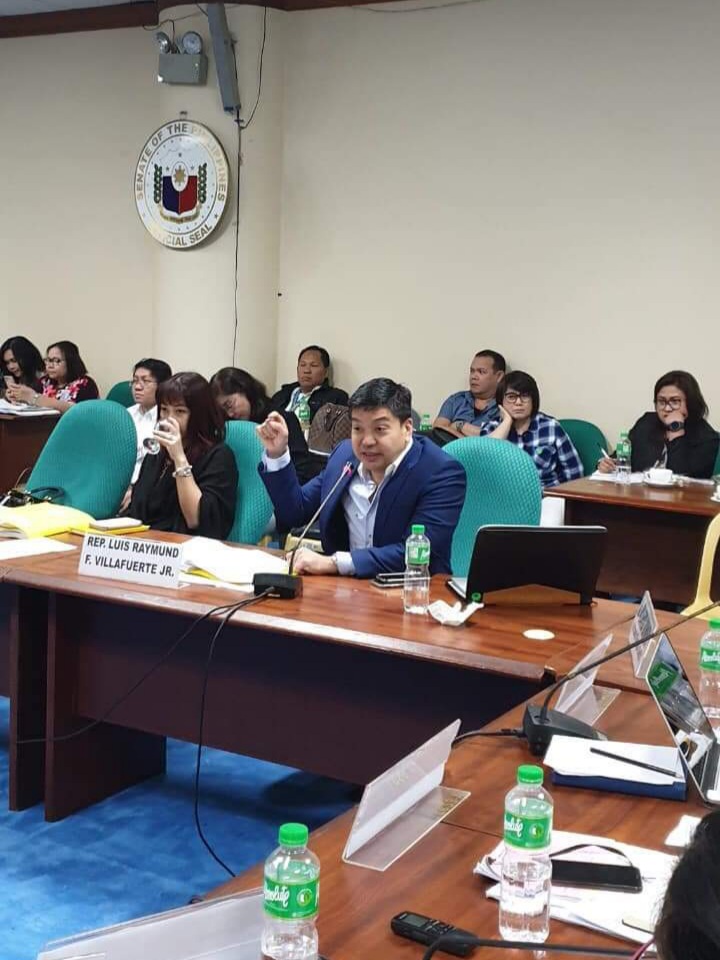 Camarines Sur 2nd district Rep. LRay Villafuerte (Facebook)
Camarines Sur 2nd district Rep. LRay Villafuerte has raised before Department of Health (DOH) Secretary Teodoro Herbosa the issue on the supposed rejection of guarantee letters (GLs) under the Medical Assistance for Indigent Patients (MAIP) by certain private doctors.
Villafuerte did so during Herbosa's confirmation hearing before the bicameral Commission on Appointments (CA). The solon sits as majority leader of the powerful body.
GLs--which are as good as cash--are given to indigent Filipinos under the DOH's MAIP, which has a proposed budget of P22 billion under the proposed 2024 General Appropriations Bill (GAB) that the House of Representatives passed last Sept. 27.
Villafuerte complained to the health secretary that a number of doctors, especially those who expect to get between P100,000 and P200,000 or more in professional fees (PFs) each for their services, do not accept GLs granted to their patients under MAIP for several reasons.
The Bicolano said these physicians don't want to get just half of their supposed PFs, as the MAIP only pays for a maximum of 50 percent of their approved fees. It also takes these doctorss about two months or more to encash the GLs.
The doctors also need to declare the government-issued GLs as income—even if there is no assurance yet as to when they will actually get paid—and thus have to pay the required income taxes on such earnings.
Herbosa informed Villafuerte and the rest of the CA that he was aware of this dilemma.
To address the problem, Herbosa said he would issue an order prohibiting private doctors accredited by the DOH to treat their patients confined in government hospitals from rejecting MAIP-issued GLs;
He also noted the possibility of wiithdrawing the DOH accreditation of such private doctors to practice in government-run hospitals.
This notwithstanding, the DOH chief suggested the reform and computerization of the MAIP system to make it faster for physicians to encash the GLs.
He said that with the proposed digitalization of the subsidy system, patient-beneficiaries can process more quickly the documentary requirements of their claims online or via designated website.
Herbosa also mentioned the need for the DOH to hire more staff so that it can handle the processing of documents, which gets more complex and tedious each year with the increase of the MAIP budget anps well as the number of beneficiaries.