

ADVERTISEMENT

Rescuers search for missing after US Osprey crashes off Japan

Published Nov 30, 2023 02:11 am

TOKYO, Japan - Rescuers scoured waters off Japan on Thursday for seven missing US Air Force personnel whose Osprey crashed during a training exercise, in the latest incident involving the tilt-rotor military aircraft.
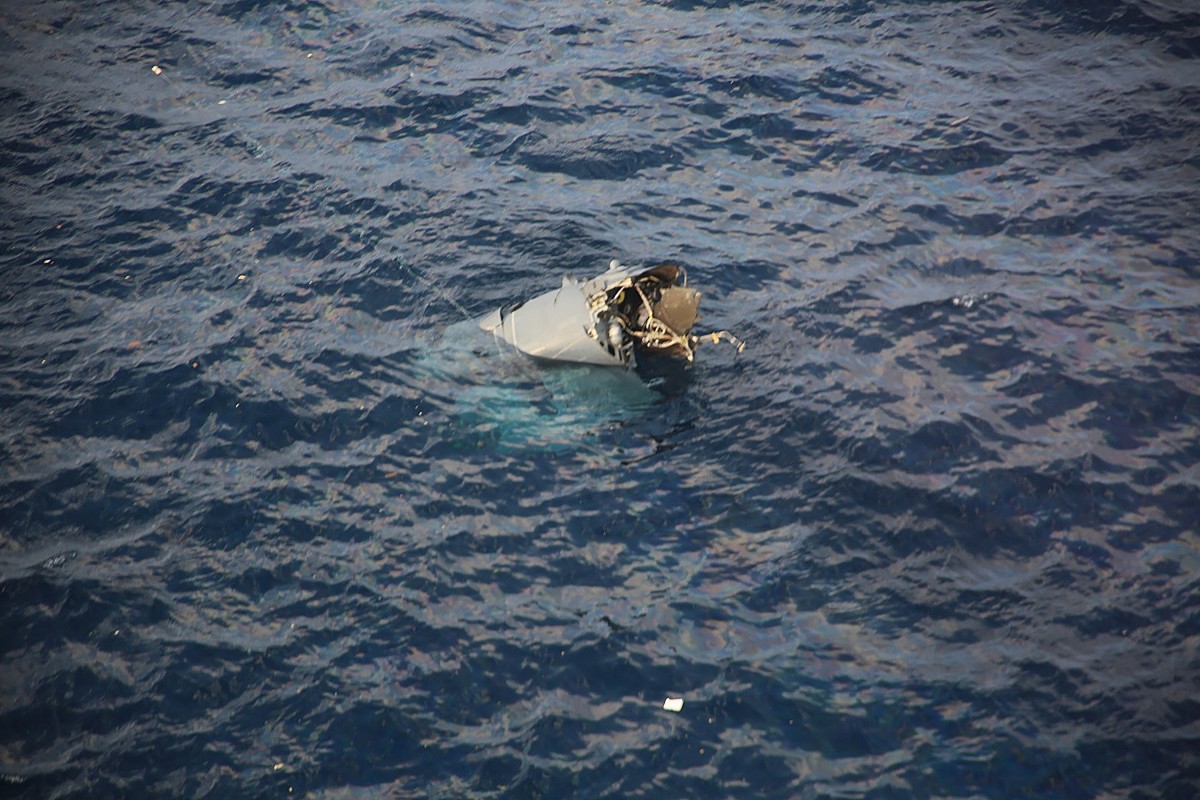
IMG_3885.jpeg

(AFP PHOTO / 10th Regional Coast Guard Headquarters)

Japan's defense minister said he had requested the commander of US forces in the country to suspend Osprey flights in the wake of the incident.

One unconscious person was found in the sea and later declared dead after the aircraft crashed off the island of Yakushima on Wednesday, according to the Japanese coastguard.

US Air Force Special Operations Command said eight crew had been aboard the CV-22B Osprey as it performed "a routine training mission" out of Yokota Air Base in Japan.

"The cause of the mishap is currently unknown," it said in a statement Wednesday, with emergency personnel "on scene conducting search and rescue operations."

An emergency management official in the Kagoshima region where the crash took place said police had received information that the aircraft had been "spewing fire from a left engine".

Photos released by the coastguard showed what appeared to be an overturned yellow life raft and other debris in the water off Yakushima, which lies south of Japan's southernmost main island of Kyushu.

A Japanese coastguard spokesman told AFP on Thursday that the search operation had continued through the night and involved six patrol ships and two aircraft.

Police and local rescuers were also involved, and the coastguard said it would use special sonar devices to scan the sea floor.

The coastguard had initially said eight crew were on board before revising the number down to six and then back to eight.


- String of crashes -


The Osprey, developed by Bell Helicopters and Boeing and which can operate like a helicopter or a fixed-wing plane, has suffered a string of fatal crashes over the years.

In August, a crash in northern Australia killed three US marines among the 23 on board.

The Boeing MV-22B Osprey crashed on Melville Island, north of Darwin during a military exercise for locally based troops. At the time the cause was unclear.

Four US Marines were killed in Norway last year when their MV-22B Osprey aircraft went down during NATO training exercises.

Three Marines were killed in 2017 when an Osprey crashed after clipping the back of a transport ship while trying to land at sea off Australia's north coast.

And 19 Marines died in 2000 when their Osprey crashed during drills in Arizona.


- Grounded -


In 2016, an MV-22 Osprey crash-landed off Okinawa, prompting the US Marines to temporarily ground the aircraft in Japan after the accident sparked anger among locals.

On Thursday, Defense Minister Minoru Kihara said that he had asked the US military to suspend flights again.

"After receiving the first news, we searched to save lives, and this morning we made the request to the USFJ's commander," Kihara told an upper house diplomacy and defence committee, referring to United States Forces Japan.

The US military has around 54,000 personnel in Japan.


Related Tags

world news
ADVERTISEMENT
.most-popular .layout-ratio{ padding-bottom: 79.13%; } @media (min-width: 768px) and (max-width: 1024px) { .widget-title { font-size: 15px !important; } }

{{ articles_filter_1561_widget.title }}

.most-popular .layout-ratio{ padding-bottom: 79.13%; } @media (min-width: 768px) and (max-width: 1024px) { .widget-title { font-size: 15px !important; } }

{{ articles_filter_1562_widget.title }}

.most-popular .layout-ratio{ padding-bottom: 79.13%; } @media (min-width: 768px) and (max-width: 1024px) { .widget-title { font-size: 15px !important; } }

{{ articles_filter_1563_widget.title }}

{{ articles_filter_1564_widget.title }}

.mb-article-details { position: relative; } .mb-article-details .article-body-preview, .mb-article-details .article-body-summary{ font-size: 17px; line-height: 30px; font-family: "Libre Caslon Text", serif; color: #000; } .mb-article-details .article-body-preview iframe , .mb-article-details .article-body-summary iframe{ width: 100%; margin: auto; } .read-more-background { background: linear-gradient(180deg, color(display-p3 1.000 1.000 1.000 / 0) 13.75%, color(display-p3 1.000 1.000 1.000 / 0.8) 30.79%, color(display-p3 1.000 1.000 1.000) 72.5%); position: absolute; height: 200px; width: 100%; bottom: 0; display: flex; justify-content: center; align-items: center; padding: 0; } .read-more-background a{ color: #000; } .read-more-btn { padding: 17px 45px; font-family: Inter; font-weight: 700; font-size: 18px; line-height: 16px; text-align: center; vertical-align: middle; border: 1px solid black; background-color: white; } .hidden { display: none; }
function initializeAllSwipers() { // Get all hidden inputs with cms_article_id document.querySelectorAll('[id^="cms_article_id_"]').forEach(function (input) { const cmsArticleId = input.value; const articleSelector = '#article-' + cmsArticleId + ' .body_images'; const swiperElement = document.querySelector(articleSelector); if (swiperElement && !swiperElement.classList.contains('swiper-initialized')) { new Swiper(articleSelector, { loop: true, pagination: false, navigation: { nextEl: '#article-' + cmsArticleId + ' .swiper-button-next', prevEl: '#article-' + cmsArticleId + ' .swiper-button-prev', }, }); } }); } setTimeout(initializeAllSwipers, 3000); const intersectionObserver = new IntersectionObserver( (entries) => { entries.forEach((entry) => { if (entry.isIntersecting) { const newUrl = entry.target.getAttribute("data-url"); if (newUrl) { history.pushState(null, null, newUrl); let article = entry.target; // Extract metadata const author = article.querySelector('.author-section').textContent.replace('By', '').trim(); const section = article.querySelector('.section-info ').textContent.replace(' ', ' '); const title = article.querySelector('.article-title h1').textContent; // Parse URL for Chartbeat path format const parsedUrl = new URL(newUrl, window.location.origin); const cleanUrl = parsedUrl.host + parsedUrl.pathname; // Update Chartbeat configuration if (typeof window._sf_async_config !== 'undefined') { window._sf_async_config.path = cleanUrl; window._sf_async_config.sections = section; window._sf_async_config.authors = author; } // Track virtual page view with Chartbeat if (typeof pSUPERFLY !== 'undefined' && typeof pSUPERFLY.virtualPage === 'function') { try { pSUPERFLY.virtualPage({ path: cleanUrl, title: title, sections: section, authors: author }); } catch (error) { console.error('ping error', error); } } // Optional: Update document title if (title && title !== document.title) { document.title = title; } } } }); }, { threshold: 0.1 } ); function showArticleBody(button) { const article = button.closest("article"); const summary = article.querySelector(".article-body-summary"); const body = article.querySelector(".article-body-preview"); const readMoreSection = article.querySelector(".read-more-background"); // Hide summary and read-more section summary.style.display = "none"; readMoreSection.style.display = "none"; // Show the full article body body.classList.remove("hidden"); } document.addEventListener("DOMContentLoaded", () => { let loadCount = 0; // Track how many times articles are loaded const offset = [1, 2, 3, 4, 5, 6, 7, 8, 9, 10]; // Offset values const currentUrl = window.location.pathname.substring(1); let isLoading = false; // Prevent multiple calls if (!currentUrl) { console.log("Current URL is invalid."); return; } const sentinel = document.getElementById("load-more-sentinel"); if (!sentinel) { console.log("Sentinel element not found."); return; } function isSentinelVisible() { const rect = sentinel.getBoundingClientRect(); return ( rect.top < window.innerHeight && rect.bottom >= 0 ); } function onScroll() { if (isLoading) return; if (isSentinelVisible()) { if (loadCount >= offset.length) { console.log("Maximum load attempts reached."); window.removeEventListener("scroll", onScroll); return; } isLoading = true; const currentOffset = offset[loadCount]; window.loadMoreItems().then(() => { let article = document.querySelector('#widget_1690 > div:nth-last-of-type(2) article'); intersectionObserver.observe(article) loadCount++; }).catch(error => { console.error("Error loading more items:", error); }).finally(() => { isLoading = false; }); } } window.addEventListener("scroll", onScroll); });

Sign up by email to receive news.