







DOLE discusses PH labor, employment plan with stakeholders


The Department of Labor and Employment has gathered social partners to discuss specific sectoral actions and joint undertakings under the Philippine Labor and Employment Plan (PLEP) 2023-2028 during a two-day session in Pasay City last week.
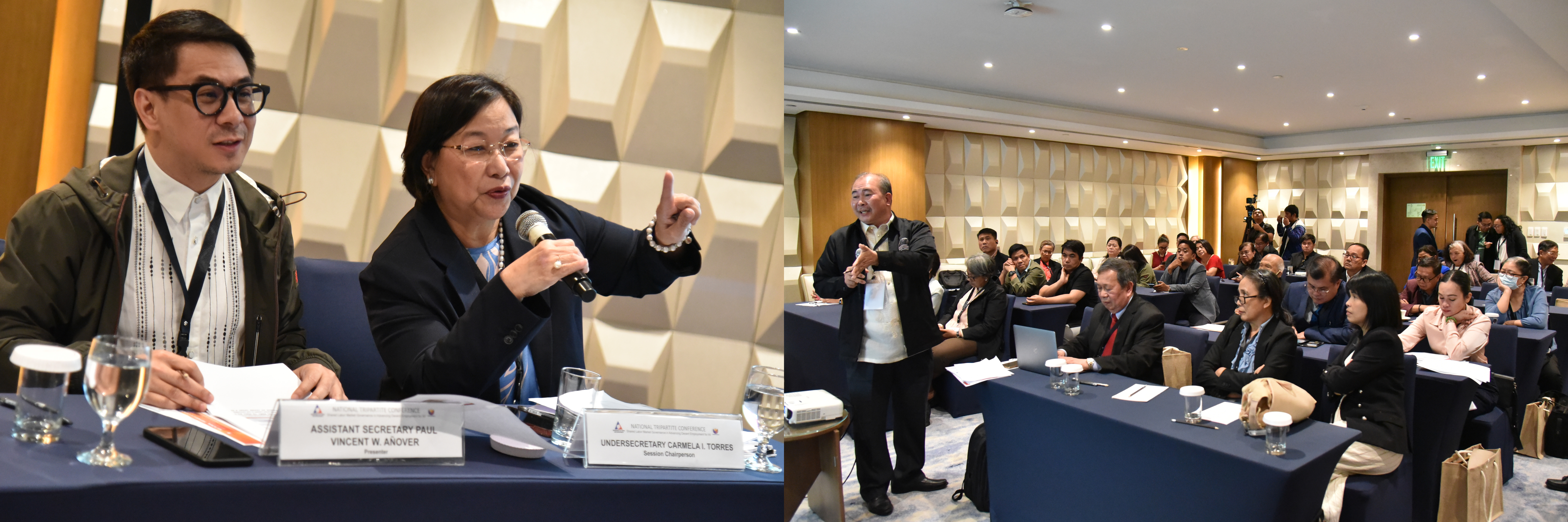
Facilitating the discussion on maximizing productive, remunerative, freely chosen, and sustainable work and employment opportunities are Undersecretary Carmela I. Torres (left photo, seated right) and Assistant Secretary Paul Vincent W. Añover (left photo, seated left) of the Employment and Human Resource Development Cluster. (Photos by Alejandro P. Echavez, DOLE-IPS)
The event, which happened on Nov. 16 and 17, discussed various issues that include sustainable work and employment opportunities, labor market governance, building an equitable and inclusive social protection.
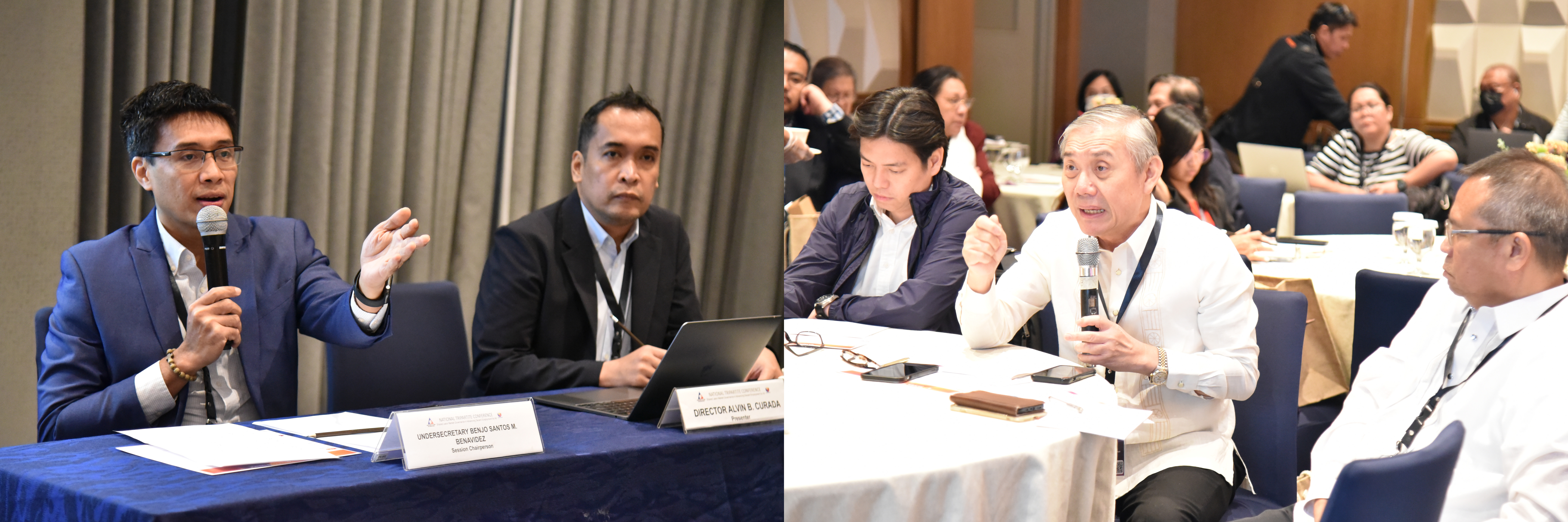
Leading the session on ensuring labor market governance that respects all fundamental principles and rights at work, international labor standards, and human rights are Workers’ Welfare and Protection Cluster Undersecretary Benjo Santos M. Benavidez (left photo, seated left) and Bureau of Working Conditions Director Alvin B. Curada (left photo, seated right). (Photos by Alejandro P. Echavez, DOLE-IPS)
The NTC was participated in by the National Tripartite Industrial Peace Council (NTIPC) and Technical Executive Committee (TEC) members, chairs and vice chairs of Regional Tripartite Industrial Peace Councils, Industry Tripartite Councils and industry associations representing key employment generators.
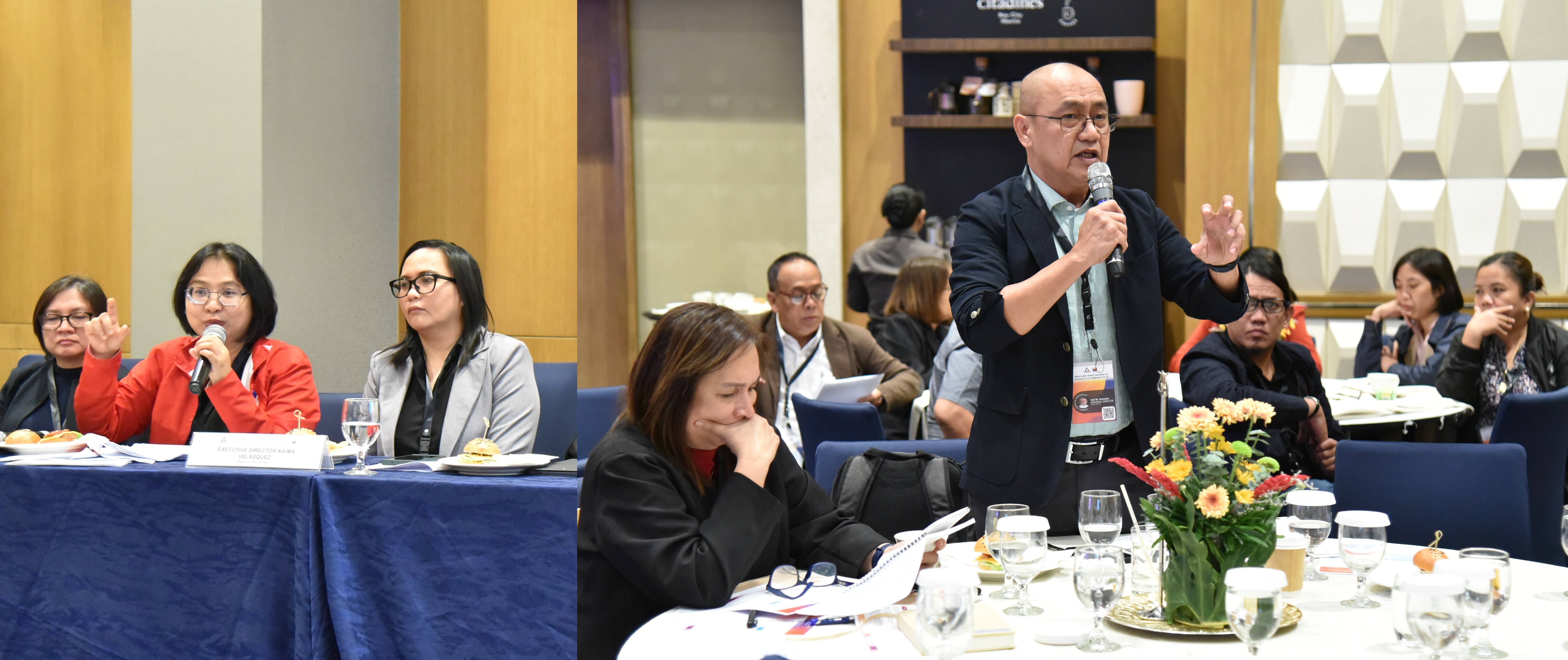
Handling the discussion on building an equitable and inclusive social protection are Employees’ Compensation Commission Executive Director Kaima Via B. Velasquez (left photo, seated right) and Bureau of Workers with Special Concerns Director Ahmma Charisma L. Satumba (left photo, seated center). (Photos by Alejandro P. Echavez, DOLE-IPS)
Those who participated also include national government agencies, informal sector representatives, sectoral groups, development partners, non-government organizations, civil society organizations, and the academe. (Trixee Rosel)