






 Philippines
National
This solon's gov't rice subsidy plan realizes Marcos' P20-kilo rice promise
Philippines
National
This solon's gov't rice subsidy plan realizes Marcos' P20-kilo rice promise
This solon's gov't rice subsidy plan realizes Marcos' P20-kilo rice promise


At A Glance
- Camarines Sur 2nd district Rep. LRay Villafuerte says that P20 per kilo rice is doable as early as next year, if only to benefit low-income families in the country.
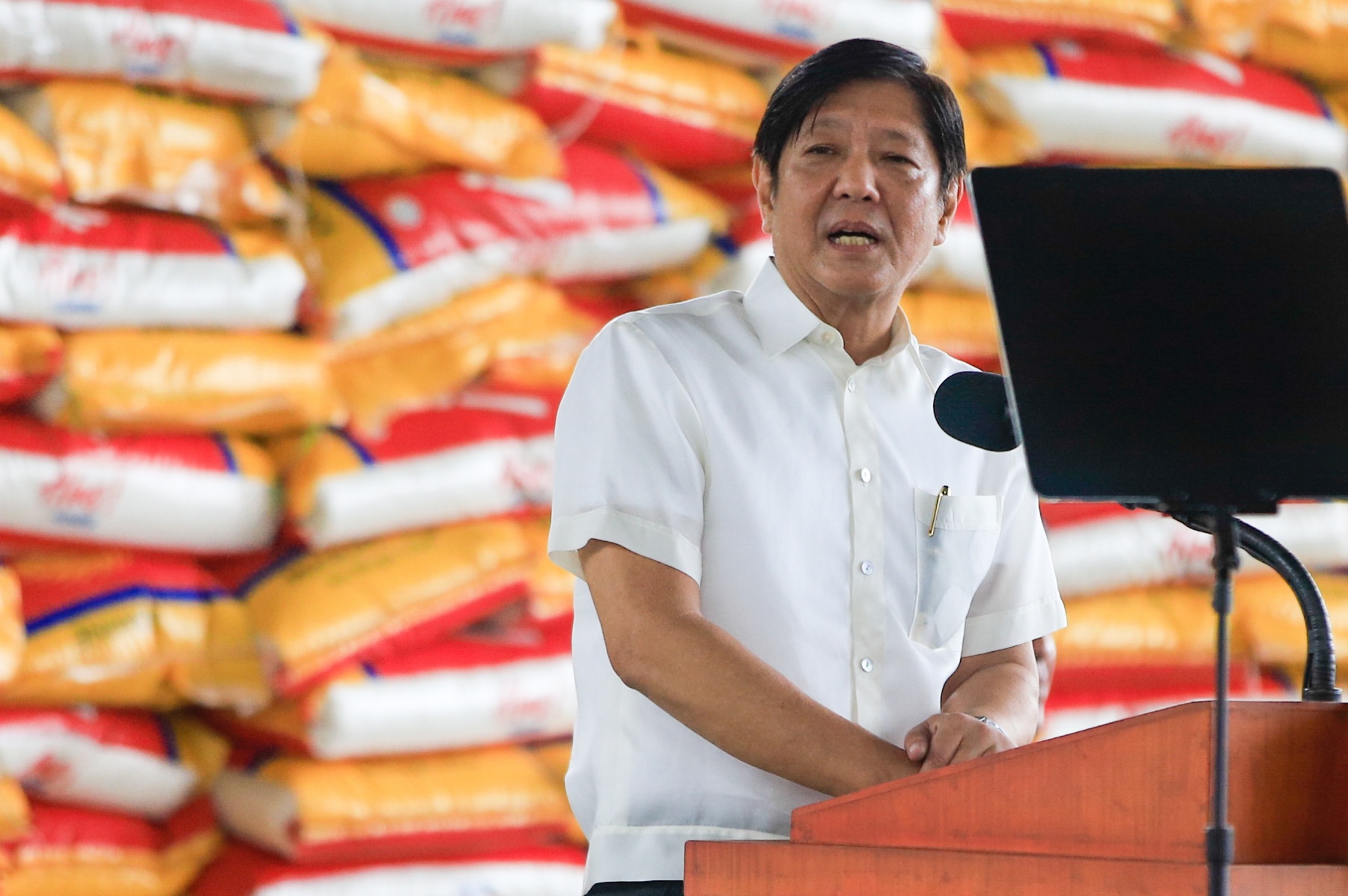 President Ferdinand 'Bongbong' Marcos Jr. (Noel Pabalate)
A staunch ally of President Marcos in the House of Representatives says that P20 per kilo rice is doable as early as next year, if only to benefit low-income families in the country.
According to Camarines Sur 2nd district Rep. LRay Villafuerte, the government's annual subsidies to the rice subsector worth P40 billion should instead be funneled to small farmers tilling an initial total land area of one million hectares (ha) in the Top 10 palay-producing provinces in the country.
This would translate to a financial aid of P40,000 per hectare for every target farmer-beneficiary. Villafuerte said the condition to be imposed on the farmer-beneficiaries would be for them to sell their produce to the government at P9 per kilogram (kg).
“With a projected total yield of five billion kilograms of palay (unhusked rice) from the one million hectare, based on an average output of five MT (metric tons) or 5,000 kilograms per hectare, this novel subsidy-cum-contract-growing proposal will translate into three billion kilograms, of rice, at the palay-to-rice, after-milling conversion rate of 60 percent,” explained Villafuerte in a statement Sunday, Nov. 19.
He said the government will have to set aside P45 billion for the procurement component of the proposed subsidy plan.
The Bicolano is proposing two selling rates for the government-procured, three billion kilos of palay: P20 per kilo for poor families and P30 per kilo for the rest of the population. These prices are just half or two-thirds of the current market rates for the staple food.
President Marcos, who served as (DA) secretary for the majority of his term, had promised Filipinos to reduce rice prices to P20 per kilo during the campaign period for the 2022 national elections.
“Of the final, post-milling rice output of three billion kilograms of the staple, the government can sell 1.5 billion kilograms or half of it at P20 a kilo through the President’s pet project Kadiwa ng Pangulo outlets nationwide for poor and other low-income families, and the remaining 1.5 billion kilograms at a higher P30 via retail markets for the benefit of other consumers,” Villafuerte said.
Buying the farmers’ produce after already giving them P40,000 each before the start of the planting season will encourage them to produce more from their respective farms as they will be paid P9 for every kilo of palay, noted Villafuerte.
To further incentivize the farmer-beneficiaries to produce more rice grains, the National Unity Party (NUP) president said that cash prizes and/or farm machinery like power tillers and harvesters, fertilizers, and other inputs can be offered under this rice productivity plan. The winners will come from the farmers with the highest per-hectare yields in the chosen provinces, he said.
He said the government will earn P30 billion from selling 1.5 billion kilos of rice at P20 per kilo and P45 billion more from selling the other 1.5 billion kilos at the higher P30 per kilo, or a total of P75 billion.
“Thus, at the end of this undertaking, the government will have spent just P10 billion in subsidies for the rice productivity program—in lieu of the current P40 billion—after collecting P75 billion in rice sales and deducting this amount from the P85 billion set aside for the farmers’ subsidy-and-grains-procurement plan,” said Villafuerte.
He said the DA will identify the Top 10 palay-producing provinces.