







PAL to invest in sustainable fuel for green fleet


In a bid to facilitate further growth in a greener aviation sector, country's flag carrier Philippine Airlines (PAL) announced it will invest in the use of Sustainable Aviation Fuel (SAF) to power its aircraft in the future.
PAL President and Chief Operating Officer (COO) Capt. Stanley K. Ng said in a meeting with business delegates during the Asian Pacific Economic Conference (APEC) Summit in San Francisco, California, that the airline will invest in sustainable aviation.
"We’re investing in a fleet of new-generation, more eco-friendly aircraft that give us the range we need to fly very long routes across the Pacific and polar regions. Nonstop flights are more convenient, and also kinder to our environment,"
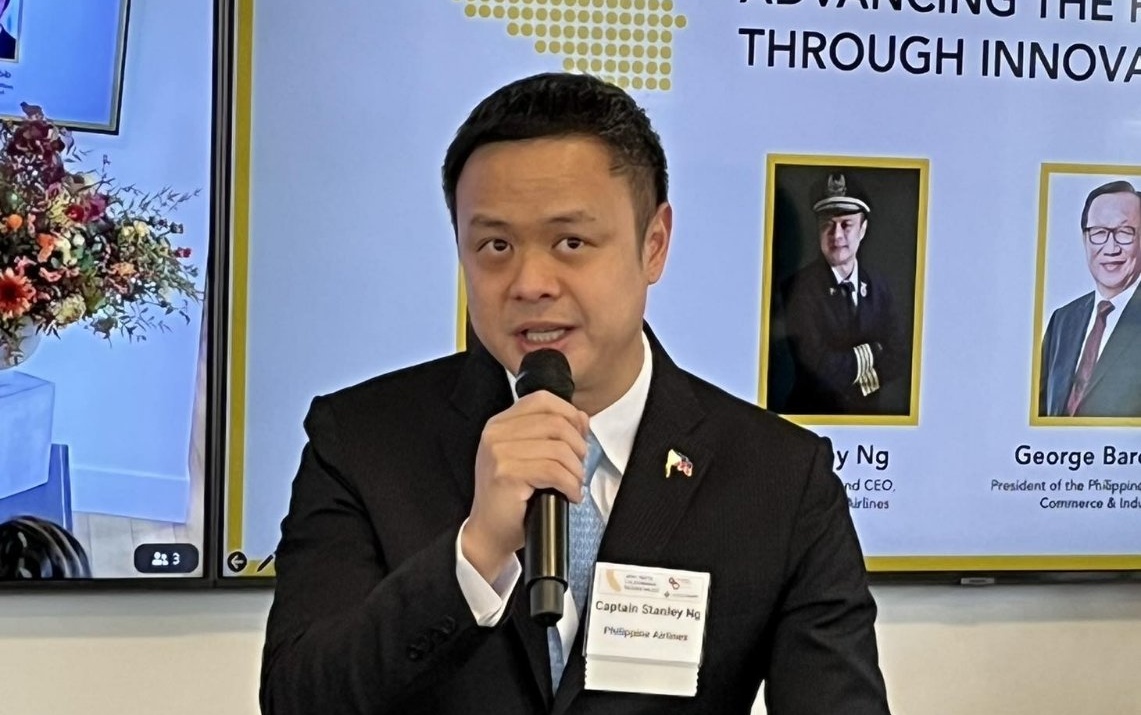
According to Ng, PAL is collaborating with partners and associations in the aviation industry to "find ways to reduce and offset carbon emissions, to develop and use alternative sustainable fuel to operate flights more efficiently with the help of technology."
During the Association of Asia Pacific Airlines (AAPA) meeting last week, Ng said that PAL pledged to use five percent of SAF by 2030.
According to the US Department of Energy, SAF is an alternative fuel made from organic or non-petroleum feedstock that can be blended with conventional jet fuel. It has been said to reduce carbon emissions from aircrafts by up to 94 percent.
Further exploration with stakeholders to produce more SAF is also actively being conducted by PAL, especially in terms of making the fuel more available and cheaper for airlines.
This is especially important for the airline since PAL operates nonstop flights to 14 APEC member economies, and caters to 32 destinations within the APEC region, as well as the 33 cities it flies to in the country.
"We go where the markets are. That’s why we offer daily or multiple daily flights on most of our routes. We serve multiple cities in key economies – here in the U.S., we serve San Francisco, New York, Los Angeles, Honolulu and Guam. We fly to two cities in Canada, four cities in Australia, five airports in Japan, and five cities in China," remarked Ng.
Moreover, PAL remains in close contact with government agencies and industry affiliates to serve as an essential flag carrier for travelling Filipinos, as well as a transport system for cargoes and vaccines, and repatriated overseas Filipino workers (OFWs).
"Thanks to the mandate of our President Bong Bong Marcos Jr. to prioritize the tourism sector, and the support given by the Department of Tourism (DOT) and other related agencies, 2022 was a banner year for PAL. With the financial success, PAL invested in new and more efficient aircrafts, and advanced back-end systems," said Ng.