







DOH, UN sign agreement to address malnutrition in PH


The Department of Health (DOH) inked a landmark agreement with United Nations agencies UNICEF, the United Nations Office for Project Services (UNOPS), and the World Bank on Monday, Nov. 13, formalizing a powerful partnership to tackle the issue of malnutrition in the Philippines.
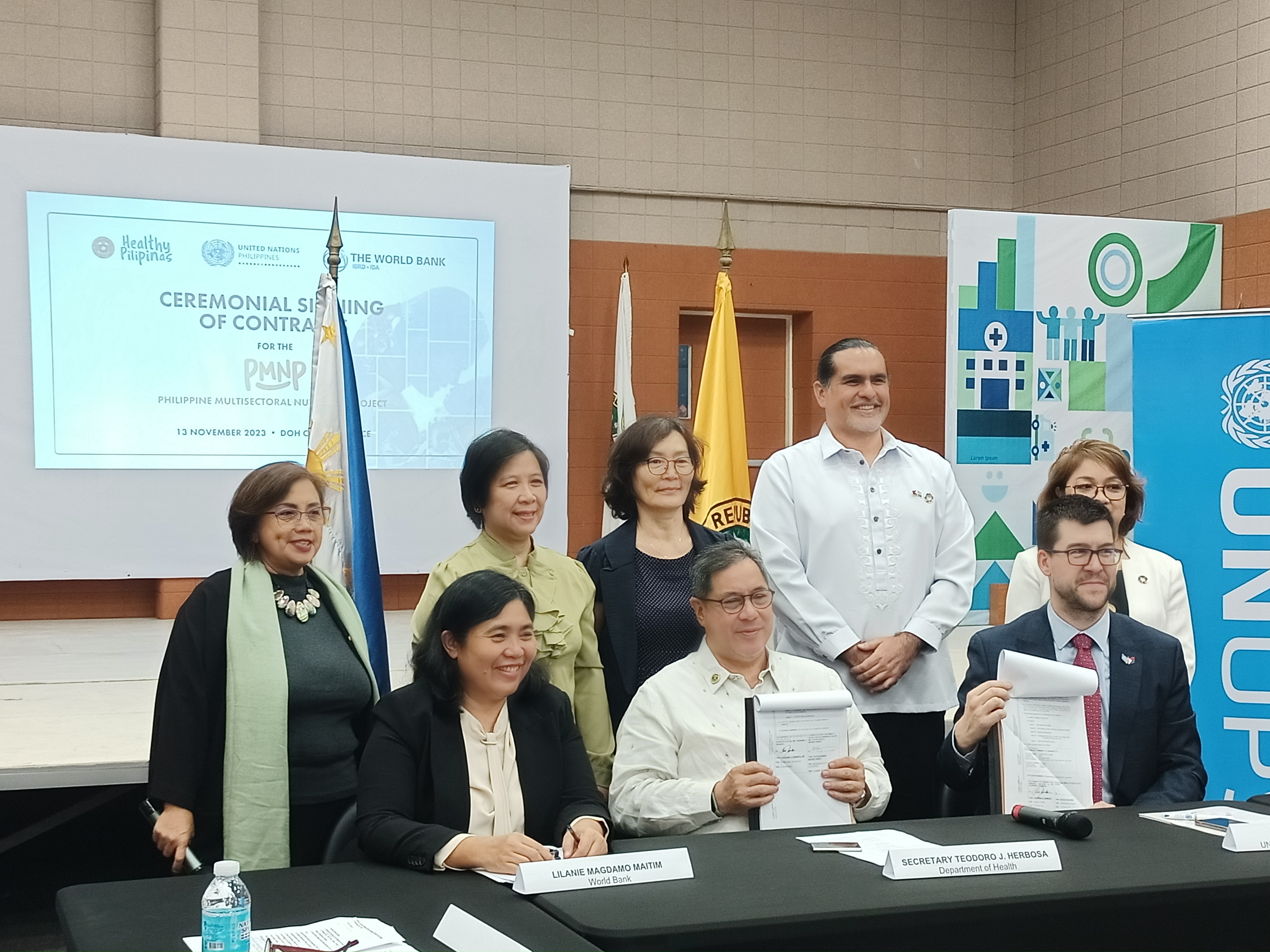
This groundbreaking partnership, formalized through a memorandum of understanding, marks the initiation of the Philippine Multisectoral Nutrition Project (PMNP), a four-year initiative designed to take a multi-faceted approach to addressing nutrition-specific and nutrition-sensitive interventions across 235 local government units in Luzon, Visayas, Mindanao, and 40 municipalities in the Bangsamoro Autonomous Region of Muslim Mindanao (BARMM).
DOH Secretary Teodoro Herbosa emphasized the comprehensive nature of the project, highlighting its strategic alignment with social and economic development goals.
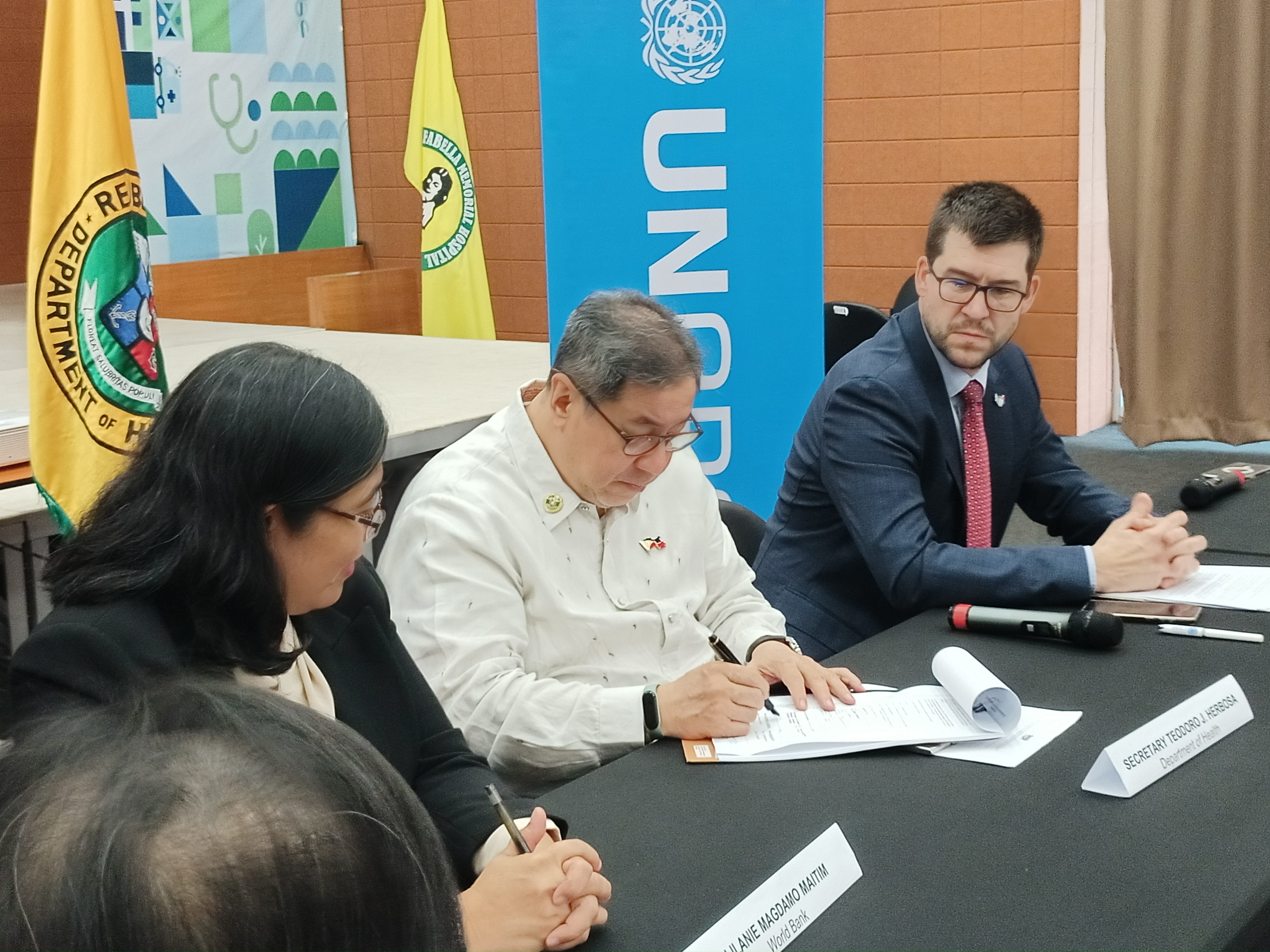
"The intervention is a crucial investment in the first 1,000 days of women and children, setting the stage for a healthier and more robust Filipino populace," he said.
The agency noted that the project aims to implement a package of interventions to combat malnutrition and enhance key behaviors known to reduce stunting.
It will also fortify the capacity of the DOH, particularly in areas burdened by poverty and malnutrition, by supporting the delivery of essential health and nutrition services at the grassroots level.
"Improving the nutritional status of children is crucial for achieving the country's goals of enhancing human capital, strengthening economic recovery, and fostering long-term growth," said World Bank Country Director for Brunei, Malaysia, the Philippines, and Thailand Ndiame Diop.
The collaborations formalized with UNICEF and UNOPS as implementing partners seek to strengthen primary healthcare and nutrition services.
These efforts, as said by the health department, will include providing equipment and supplies, developing information systems for localized decision-making, capacity building for healthcare workers, and governance initiatives at the local level, among other strategies.
UNICEF Philippines Representative Oyunsaikhan Dendevnorov underscored the fundamental right of children to good nutrition and expressed UNICEF's commitment to supporting efforts to end child stunting, ensuring every child has the opportunity to reach their full potential.
The DOH stated that this partnership aligns with the community-driven development approach of DSWD's KALAHI-CIDSS, dedicated to enhancing access to clean water, proper sanitation, improved hygiene practices, and early childhood care and development services.
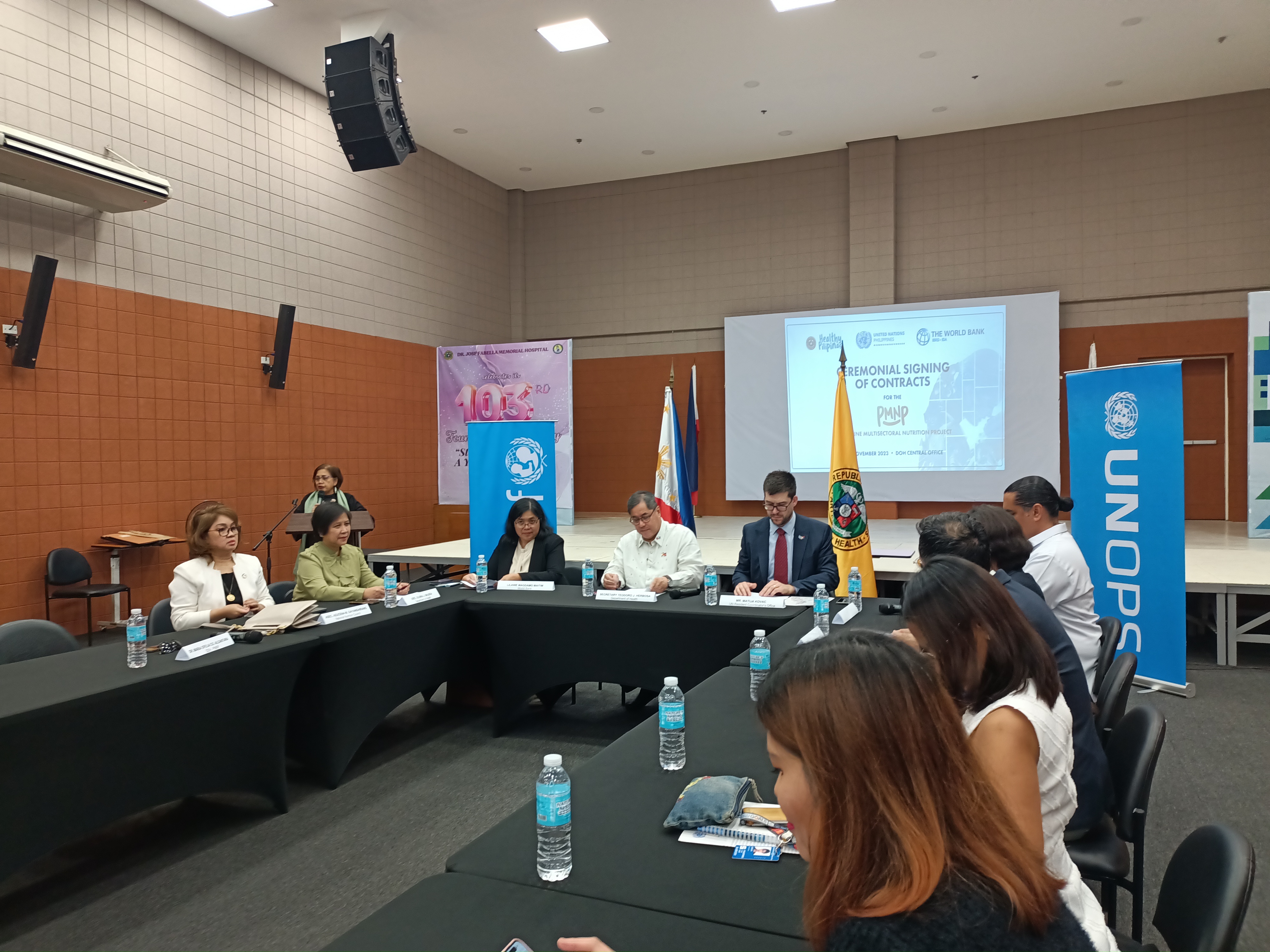
"When children have better nutrition, they learn better. They can create opportunities to break the cycles of poverty and hunger gradually by working together in the Philippine Multisectoral Nutrition Project, UNOPS and its partners will reach those furthest behind and help achieve the SDGs,” said UNOPS Philippines Country Manager Oscar Marenco.
The partnership promises to empower the DOH with global expertise and resources, expanding its knowledge base and network, it emphasized.
By leveraging the UN's extensive portfolio of programs and initiatives, the DOH aims to enhance and optimize its public health programs and services to combat the malnutrition crisis in the Philippines.