







Have you fallen asleep to these Filipino lullabies?
How the Cultural Center of the Philippines is reintroducing Philippine indigenous lullabies


At A Glance
- 'The heart of it is in the phrase lutaw na bunot (floating coconut husk), a local expression which means being useless and with no clear direction. The phrase made the rest of the song make sense. I want to aid the viewers visually in understanding the meaning of the words. We made the lutaw na bunot metaphor more explicit in the character of the music video.' — Vic Acedillo Jr.
Understanding the cultural and social importance of lullabies in Philippine society, the Cultural Center of the Philippines continues its mission to reintroduce Philippine indigenous lullabies to contemporary audiences and developing nurturers that are grounded in songs and hele through its Himig Himbing project.
Spearheaded by the CCP Arts Education Department, through its Audience Development Division, Himig Himbing is now on its second edition, featuring lullabies Bata Alimahi, Lubi-Lubi, Dandansoy, Uyug-Uyug, Gonon Klukab Tumabaga, O Matas a Banua, Tungas kay ta Sampaw, and Ligliway Teng.
Based on the research of ethnomusicologist Sol Trinidad, with musical arrangement by Krina Cayabyab, each indigenous lullaby is given a cinematic interpretation by talented Filipino filmmakers Zig Dulay, Jerrold Tarog, Sheron Dayoc, Doy and Ida Del Mundo, Ma-an Asuncion Dagñalan, Vic Acedillo Jr, Arden Rod Condez, and Christopher Gozum.
For Bata Alimahi, director Arden Rod Condez lets the song take him to where his mind should be when he directed the music video. He associates the piece with a bird seeking freedom from its cage. “She flies all over her cage to find a way to escape. And when she does, it is when she finally feels alive,” shared Condez. “But unlike a bird escaping, this one has to go back to her cage and get rid of all the things that make it a prison. This bird doesn’t just want to escape; she wants to build a better home.”
Unlike other lullabies, Bata Alimahi is quite jazzy, upbeat, and danceable, despite its melancholic lyrics of a mother wanting to go back to her childhood.
“I envisioned a dance video to jive with the upbeat melody of the lullaby while still expressing what the lyrics are saying. I have always been a fan of dance as an art form, and I’m happy to direct a dance performance through Himig Himbing,” said Condez.
Aside from this being his first time directing a music video, what made this project more exciting for the filmmaker is that the music video is for a regional lullaby. Condez has been known to promote what the regions have to offer in his cinematic works.
Director Vic Acedillo Jr., on the other hand, has been hoping for projects, like this, to help promote the lesser-known local arts and culture to the general public. He took charge of creating a music video for Tungas Kay Ta Sampaw, a lullaby from the place where he lives, Camiguin Island.
Being a non-Kinamigin speaker, it took a while for him to fully understand the song which has to be translated correctly first before we can understand its meaning in the local context. With the help of Nestor Tongol, a Kinamigin expert, the director makes the song comprehensible by telling a more complete story in the music video.
“The heart of it is in the phrase lutaw na bunot (floating coconut husk), a local expression which means being useless and with no clear direction. The phrase made the rest of the song make sense. I want to aid the viewers visually in understanding the meaning of the words. We made the lutaw na bunot metaphor more explicit in the character of the music video,” said Acedillo Jr.
The director and his team actually came up with three different storyboards before finalizing the concept due to the philosophical themes of the song. “The song is a very popular song that was transmitted orally for many generations. Why did it stick for so long, I wondered. Maybe, it is because the song teaches an important lesson in life,” shared Acedillo Jr..
For the lullaby, Ligliway Ateng, director Christopher Gozum based his interpretation from his experiences and reflections as a parent.
“I showed a young woman who does not value the love of her mother, but in the end arrives at a stark realization that it is in her mother's unconditional love that she will always fall back into when the world turns against her,” shared Gozum.
Meanwhile, director Ida del Mundo more than welcomes any opportunity to collaborate with the arts institution, especially in creating cinematic interpretation on the Blaan indigenous lullaby Gonon Klukab Tumabaga.
“It was very interesting to hear the lullaby for the first time. It doesn’t sound like the usual gentle lullaby. I knew it would be a challenge. Krina’s arrangement greatly influenced our interpretation in the flow of movement in the choreography and even in the dark ambience of the visuals. With the trance-like music, we are lulled into a dream state, where past, present, and future dance together,” shared del Mundo.
Knowing that dance is also an important part of indigenous culture and realizing that it is something that hasn’t been done in the previous edition of Himig Himbing, del Mundo collaborated with choreographer Ronelson Yadao, as well as production designer Eric Cruz, DOP Eric Liongoren, and editor Cindy Custodio to create a dance music video that shows the flow of the dance and also tells a story with music, movement, and visuals.
Finally, in the music video of O Matas a Banua, filmmaker Ma-an Asuncion-Dagñalan shows how parents pass their knowledge and inculcate values to their child through growing plants and preparing a dish, a metaphor on how parents prepare their kids to be adults.
Hailing from the agricultural province of Pampanga, the director incorporated farming and cooking in the music video, with contemporary dance aiding the stages of human life. The music video was done through a virtual process, a filming treatment where the filmmakers shot the talents over a Chroma green, and the environment is a 3D animation.
“This was very exciting for me because it is my first time doing this process, and I guess, it’s also the first time for CCP’s Himig Himbing. Carlon did a very creative and interesting choreography— which helps the storytelling of the whole music video,” shared Asuncion-Dagñalan.
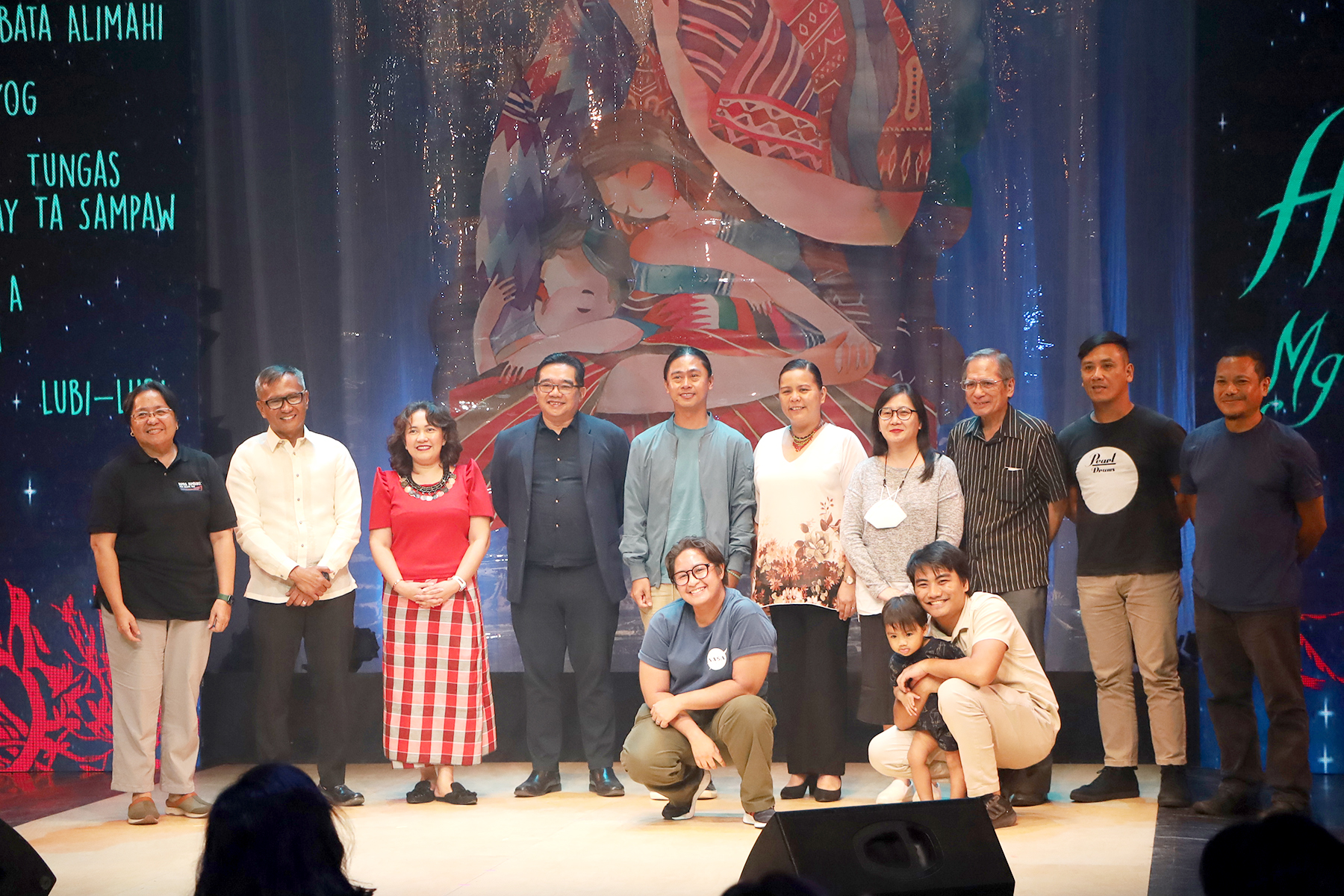
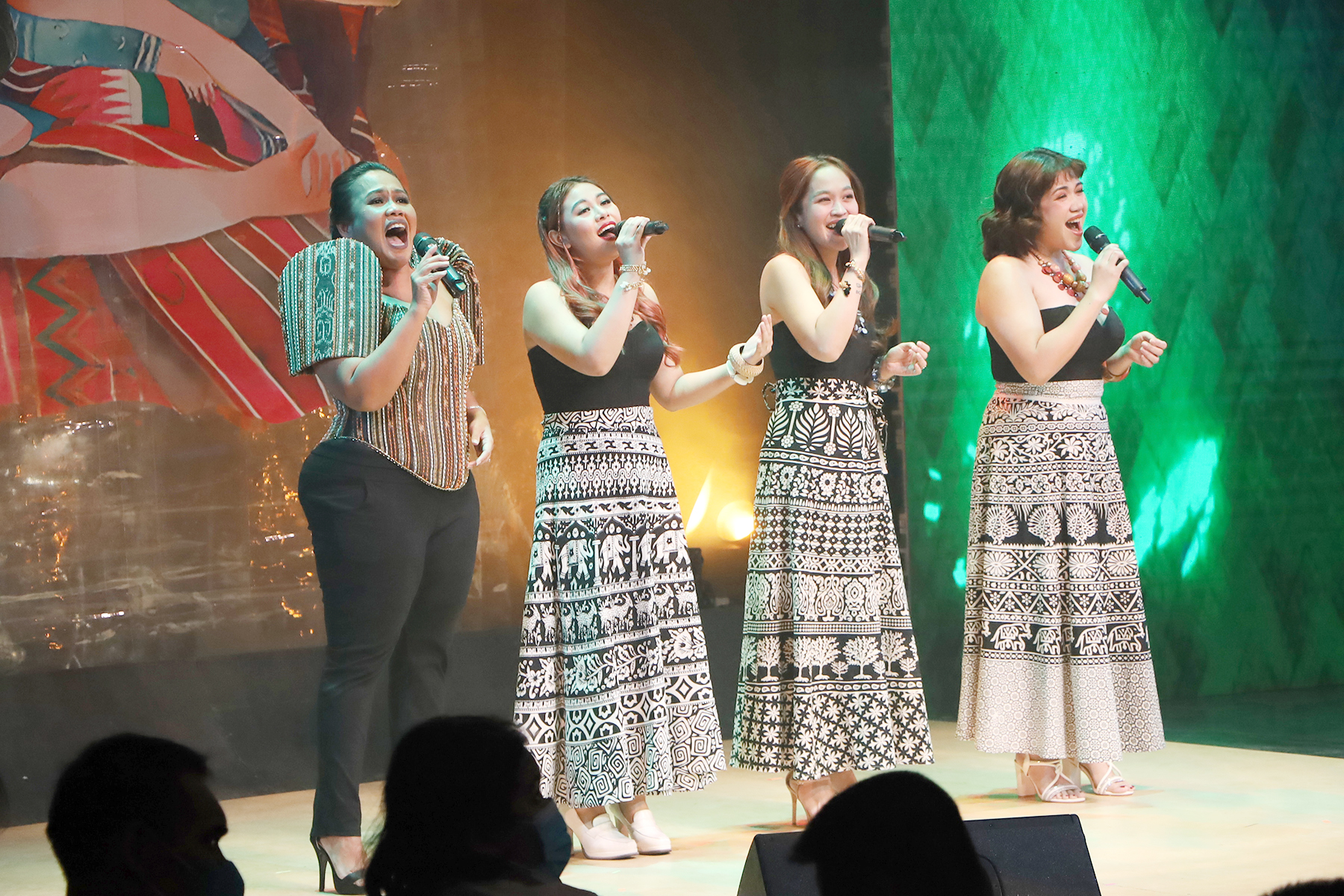
The music videos were launched during the Himig Himbing: Isang Araw Para sa Batang Sining last Nov. 5 at the Tanghalang Ignacio B. Gimenez. Hosted by actress Iza Calzado, the launch also featured performances by Bituin Escalante, Baihana, Aleron Male Ensemble, guitarist Ivar Nicholas Fojas, singer Lorelie Macaspac, and Jesper Mercado and Band.