ADVERTISEMENT

Phivolcs sees no need to raise Taal Volcano's alert level

Published Nov 10, 2023 05:10 am
IMG_3403.jpeg
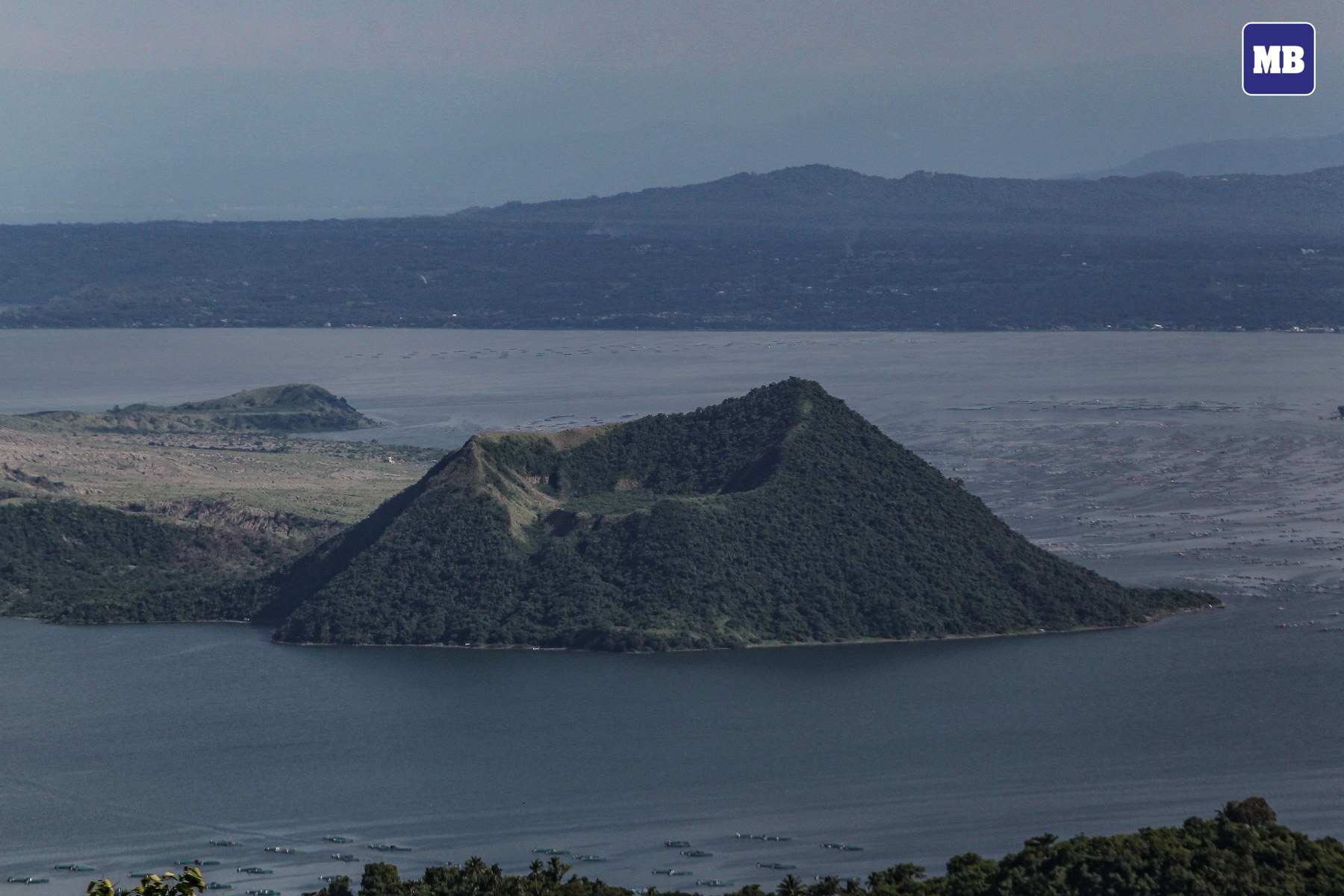
Taal Volcano (Juan Carlo de Vela / Manila Bulletin)

Despite the highest recorded sulfur dioxide emission from Taal Volcano this year, the Philippine Institute of Volcanology and Seismology (Phivolcs) said there is no need to raise the active volcano’s alert status just yet.

“Hindi pa kailangang itaas ito dahil mayroon kaming iba pang mga parameter na tinitingnan upang itaas ang Alert Level 1 sa Alert Level 2 (There is no need to raise it yet as we have other parameters to look at before raising Alert Level 1 to 2),” Phivolcs Officer-in-Charge Teresito Balcolcol said in a PTV public briefing on Friday, Nov. 10.

Phivolcs may consider raising Taal’s alert level from 1 to 2 if there is a significant increase in the number of volcanic earthquakes and long-term inflation in the volcano, he added.

Based on Phivolcs’ observations, Taal has recently displayed “moderate” seismicity, with 415 volcanic earthquakes recorded since Sept. 1—362 of which were weak volcanic tremors associated with volcanic gas activity.

Moreover, Bacolcol said Taal is still deflated, and an inflation will only be visible when a significant amount of magma ascends the volcano.

He noted that there had only been four earthquakes at Taal Volcano in the past 24 hours, and there was a “short-term inflation of the northern flanks of the volcano island and a long-term deflation of the Taal Caldera.”

He also allayed fears that a major eruption in Taal Volcano is imminent.

‘Degassing’ continues

Phivolcs released an advisory on Nov. 9 citing “increased and ongoing degassing activity” at Taal Volcano.

“A total of 11,499 tons per day of volcanic sulfur dioxide or SO2 gas emission from the Taal Main Crater was measured today, Nov. 9. This is the highest recorded SO2 emission from Taal for the year. Visual monitors show continued pronounced upwelling of volcanic fluids in the Main Crater that generated rather short and weak- to moderate-volume degassing plumes,” it said.

Phivolcs noted that Taal has been continuously releasing high concentrations of volcanic SO2 since March 2021.

It averaged 5,019 tons per day in September 2023.

Alert level 1 stays

Phivolcs said the active volcano is still on Alert Level 1, which means it is experiencing “low-level unrest.”

At Alert Level 1, sudden steam-driven or phreatic explosions, volcanic earthquakes, minor ashfall, and lethal accumulations or expulsions of volcanic gas are possible, threatening areas within the Taal Volcano Island, Phivolcs said.

It was recommended that entry into TVI—Taal’s permanent danger zone, particularly the vicinity of the main crater and the Daang Kastila fissure, be strictly prohibited.

Boating in Taal Lake is also strictly prohibited.

Related Tags

Taal Volcano PHIVOLCS Alert Level 1
ADVERTISEMENT
.most-popular .layout-ratio{ padding-bottom: 79.13%; } @media (min-width: 768px) and (max-width: 1024px) { .widget-title { font-size: 15px !important; } }

{{ articles_filter_1561_widget.title }}

.most-popular .layout-ratio{ padding-bottom: 79.13%; } @media (min-width: 768px) and (max-width: 1024px) { .widget-title { font-size: 15px !important; } }

{{ articles_filter_1562_widget.title }}

.most-popular .layout-ratio{ padding-bottom: 79.13%; } @media (min-width: 768px) and (max-width: 1024px) { .widget-title { font-size: 15px !important; } }

{{ articles_filter_1563_widget.title }}

{{ articles_filter_1564_widget.title }}

.mb-article-details { position: relative; } .mb-article-details .article-body-preview, .mb-article-details .article-body-summary{ font-size: 17px; line-height: 30px; font-family: "Libre Caslon Text", serif; color: #000; } .mb-article-details .article-body-preview iframe , .mb-article-details .article-body-summary iframe{ width: 100%; margin: auto; } .read-more-background { background: linear-gradient(180deg, color(display-p3 1.000 1.000 1.000 / 0) 13.75%, color(display-p3 1.000 1.000 1.000 / 0.8) 30.79%, color(display-p3 1.000 1.000 1.000) 72.5%); position: absolute; height: 200px; width: 100%; bottom: 0; display: flex; justify-content: center; align-items: center; padding: 0; } .read-more-background a{ color: #000; } .read-more-btn { padding: 17px 45px; font-family: Inter; font-weight: 700; font-size: 18px; line-height: 16px; text-align: center; vertical-align: middle; border: 1px solid black; background-color: white; } .hidden { display: none; }
function initializeAllSwipers() { // Get all hidden inputs with cms_article_id document.querySelectorAll('[id^="cms_article_id_"]').forEach(function (input) { const cmsArticleId = input.value; const articleSelector = '#article-' + cmsArticleId + ' .body_images'; const swiperElement = document.querySelector(articleSelector); if (swiperElement && !swiperElement.classList.contains('swiper-initialized')) { new Swiper(articleSelector, { loop: true, pagination: false, navigation: { nextEl: '#article-' + cmsArticleId + ' .swiper-button-next', prevEl: '#article-' + cmsArticleId + ' .swiper-button-prev', }, }); } }); } setTimeout(initializeAllSwipers, 3000); const intersectionObserver = new IntersectionObserver( (entries) => { entries.forEach((entry) => { if (entry.isIntersecting) { const newUrl = entry.target.getAttribute("data-url"); if (newUrl) { history.pushState(null, null, newUrl); let article = entry.target; // Extract metadata const author = article.querySelector('.author-section').textContent.replace('By', '').trim(); const section = article.querySelector('.section-info ').textContent.replace(' ', ' '); const title = article.querySelector('.article-title h1').textContent; // Parse URL for Chartbeat path format const parsedUrl = new URL(newUrl, window.location.origin); const cleanUrl = parsedUrl.host + parsedUrl.pathname; // Update Chartbeat configuration if (typeof window._sf_async_config !== 'undefined') { window._sf_async_config.path = cleanUrl; window._sf_async_config.sections = section; window._sf_async_config.authors = author; } // Track virtual page view with Chartbeat if (typeof pSUPERFLY !== 'undefined' && typeof pSUPERFLY.virtualPage === 'function') { try { pSUPERFLY.virtualPage({ path: cleanUrl, title: title, sections: section, authors: author }); } catch (error) { console.error('ping error', error); } } // Optional: Update document title if (title && title !== document.title) { document.title = title; } } } }); }, { threshold: 0.1 } ); function showArticleBody(button) { const article = button.closest("article"); const summary = article.querySelector(".article-body-summary"); const body = article.querySelector(".article-body-preview"); const readMoreSection = article.querySelector(".read-more-background"); // Hide summary and read-more section summary.style.display = "none"; readMoreSection.style.display = "none"; // Show the full article body body.classList.remove("hidden"); } document.addEventListener("DOMContentLoaded", () => { let loadCount = 0; // Track how many times articles are loaded const offset = [1, 2, 3, 4, 5, 6, 7, 8, 9, 10]; // Offset values const currentUrl = window.location.pathname.substring(1); let isLoading = false; // Prevent multiple calls if (!currentUrl) { console.log("Current URL is invalid."); return; } const sentinel = document.getElementById("load-more-sentinel"); if (!sentinel) { console.log("Sentinel element not found."); return; } function isSentinelVisible() { const rect = sentinel.getBoundingClientRect(); return ( rect.top < window.innerHeight && rect.bottom >= 0 ); } function onScroll() { if (isLoading) return; if (isSentinelVisible()) { if (loadCount >= offset.length) { console.log("Maximum load attempts reached."); window.removeEventListener("scroll", onScroll); return; } isLoading = true; const currentOffset = offset[loadCount]; window.loadMoreItems().then(() => { let article = document.querySelector('#widget_1690 > div:nth-last-of-type(2) article'); intersectionObserver.observe(article) loadCount++; }).catch(error => { console.error("Error loading more items:", error); }).finally(() => { isLoading = false; }); } } window.addEventListener("scroll", onScroll); });

Sign up by email to receive news.