

ADVERTISEMENT

On track with the BYD Seal

BYD's Tesla-killer

Published Nov 10, 2023 04:12 am

111023BYDSeal6.jpg

Chinese auto brand, BYD, may be new to our market, and is still quite some ways away from breaking into the top 10 brands, but that’s not to say it doesn’t plan on dominating in the near future.

Long a leader in electric vehicles in China, BYD has only begun to give Filipinos a taste of how far they’ve come in terms of electrification. In fact, they’re also quite close to matching or perhaps even beating the world’s EV leaders. Proof of that is the BYD Seal.

Exterior
111023BYDSeal1.jpg

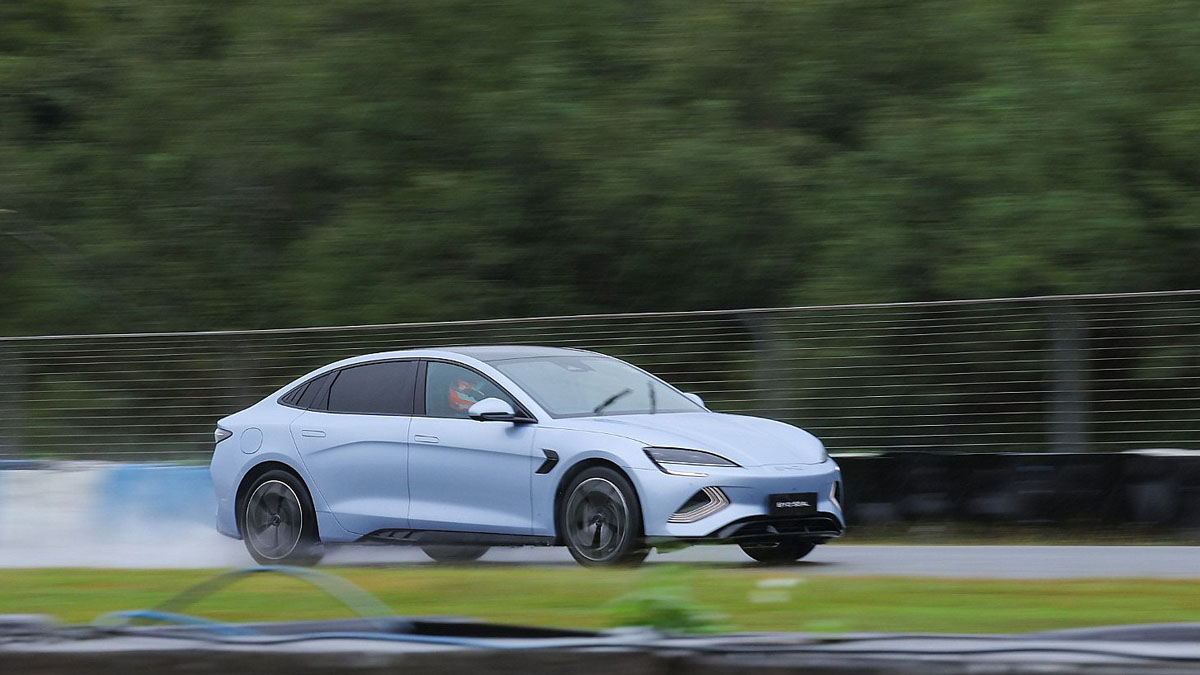
The BYD Seal is a sporty electric sedan that has its sights set on the Tesla Model 3. It was designed by a team led by BYD’s Global Design Director, Wolfgang Egger, inspired by lines in nature, called the “Ocean Aesthetic.” The design language conveys a “powerful sense of forward motion.” The front end is sculpted in a way provides a sense of the “momentum of waves”, which in turn gives it the look and feel of a sports car. 

Looking at it from the side shows that the lines are sleek and athletic, with a smooth silhouette. Its rounded roof provides generous headroom for rear seat occupants. Door handles are concealed automatically, flush with the body when the vehicles is in motion helps reduce drag, lessening energy consumption.

Interior

111023BYDSeal5.jpg

It's as big as a midsize sedan and interior space is also similar. This is thanks to BYD’s Blade Battery pack which has a slimmer profile than its competitors. Called CTB, the battery pack is integrated into the chassis design, allowing it to take up less space and become part of the structure. This gives the Seal higher torsional rigidity which translates to better handling and the ability to withstand significant impact forces. 

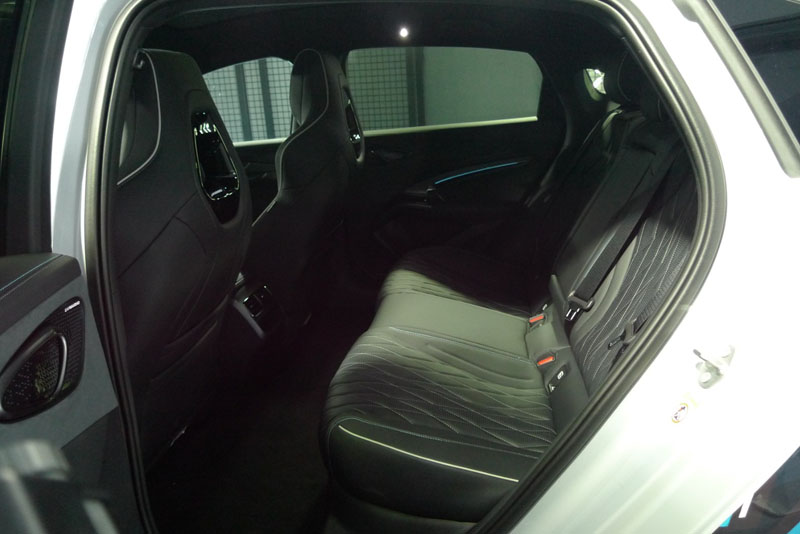
The front seats are both sporty and luxurious. The rear can seat three occupants, and the angle of the seat back is optimized for comfort on long trips.
111023BYDSeal4.jpg

There are more than 20 storage nooks for occupants’ things, wireless charging for two mobile phones, and even novel storage areas under the dashboard and armrest console. The seatbacks have pouches and additional smaller pouches for mobile phones or digital devices.

The Seal has a panoramic sunroof, and the door windows are double glazed laminated glass for better insulation from heat, safety and noise reduction. The trunk has 400 liters of trunk space and since there’s no engine up front, there’s an additional 53 liters of storage.

Tech

The Seal is loaded with tech; smart connectivity and infotainment are integrated into the 15.6-inch rotatable touchscreen located on the center of the dash. It has improved voice command response and has both Apple Carplay and Android Auto. The infotainment system hooks up to a premium 12-speaker Dynaudio performance audio system. It’s also equipped with a 4G intelligent connection allowing for Over The Air (OTA) updates for the infotainment system.

Safety and ADAS
111023BYDSeal2.jpg

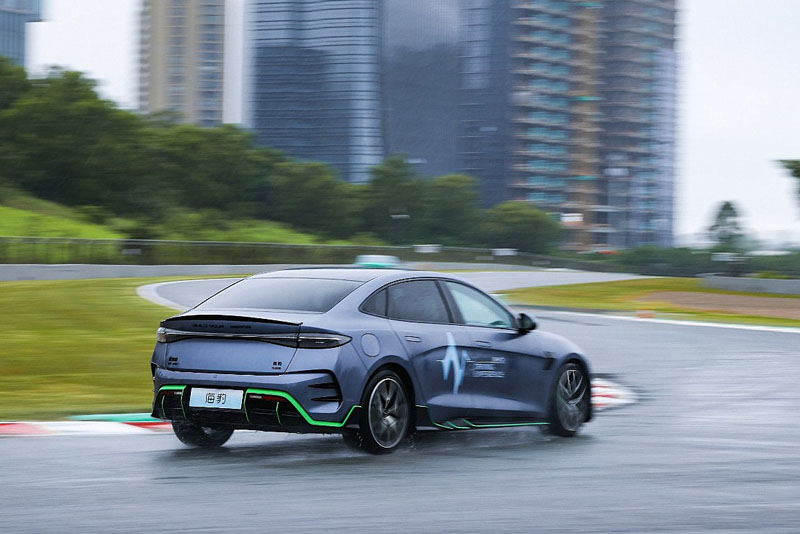
All variants are equipped with advanced driver assistance (ADAS) features as standard, forward collision warning, automatic emergency braking, rear collision warning, rear cross traffic alert and rear ross traffic brake, lane keep assistance, lane change assist and emergency lane keep. 

It also has adaptive cruise control and intelligent cruise control, a panoramic 360-degree camera, intelligent speed limit information and intelligent speed limit control. Advanced lighting technology provides a broader headlight-beam for better road visibility, along with adaptive headlights, high beam assist and follow me home features. 

Powertrain
111023BYDSeal3.jpg

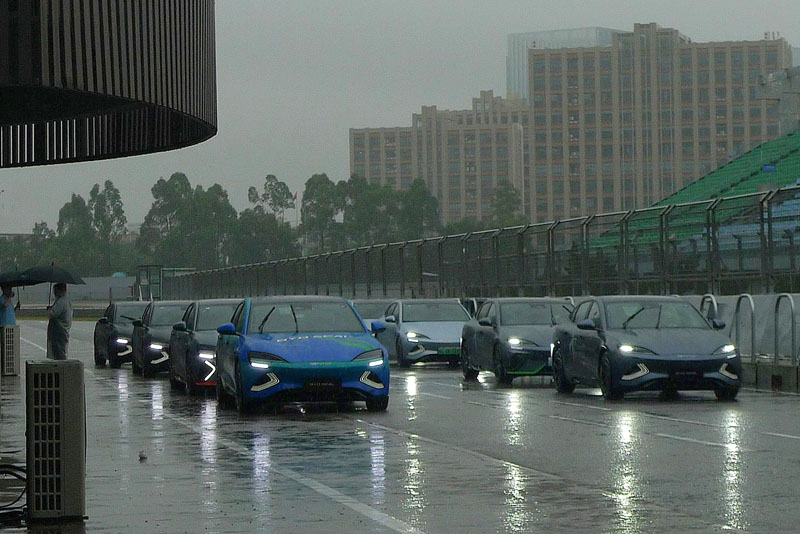
The variant we drove on the track features BYD’s 8-in-1 electric powertrain with an electric motor that delivers 313-Ps to the rear wheels that can get to a top speed of 180-kph. It’s powered by BYD’s lithium-iron phosphate Blade Battery pack with a capacity of 82-kWh and a combined WLTP range of 570-km. The Seal has four drive modes: ECO, Normal, Sport and Snow.

The wet Zuhai International Circuit had relatively easy turns, and generous straights. As you would expect from an EV, acceleration was instantaneous both in Normal and Sport mode, with the latter much more aggressive. 

The instructor in the car advised us to keep all the electronic safety assists switched on during hot laps. Even so, the car let the tail out just a little so we could practice a little counter steer, just enough to put a smile on your face. 

There was very little body roll, as the Seal was almost flat in the corners thanks to double front wishbones and five-link independent rear suspension. This was also helped along by the intelligent torque control system (iTAC) which made sure power went to the wheels that needed it.

The beefy brakes took what we threw at them, allowing us to brake late into the turns and bringing the sizable Seal to a quick stop if you ever chickened out from a quick takeoff. The way the weight is spread out in an EV helps as the Seal is nicely balanced and you feel this on the corners. 

All in all, the BYD Seal is a substantially sized car but is composed even in the wet. It feels light when at city speeds and very manageable at track speeds. This EV is far from boring and will exceed your expectations on what one can do on a racetrack, especially with an experienced driver. If the current crop BYD cars don’t quite appeal to you yet, the Seal certainly will.

We haven’t received official word as to when BYD Philippines intends to launch the Seal here in the Philippines, but the buzz online is that this will give the Tesla Model 3 a run for it’s money. 

Related Tags

battery electric vehicle BYD
ADVERTISEMENT
.most-popular .layout-ratio{ padding-bottom: 79.13%; } @media (min-width: 768px) and (max-width: 1024px) { .widget-title { font-size: 15px !important; } }

{{ articles_filter_1561_widget.title }}

.most-popular .layout-ratio{ padding-bottom: 79.13%; } @media (min-width: 768px) and (max-width: 1024px) { .widget-title { font-size: 15px !important; } }

{{ articles_filter_1562_widget.title }}

.most-popular .layout-ratio{ padding-bottom: 79.13%; } @media (min-width: 768px) and (max-width: 1024px) { .widget-title { font-size: 15px !important; } }

{{ articles_filter_1563_widget.title }}

{{ articles_filter_1564_widget.title }}

.mb-article-details { position: relative; } .mb-article-details .article-body-preview, .mb-article-details .article-body-summary{ font-size: 17px; line-height: 30px; font-family: "Libre Caslon Text", serif; color: #000; } .mb-article-details .article-body-preview iframe , .mb-article-details .article-body-summary iframe{ width: 100%; margin: auto; } .read-more-background { background: linear-gradient(180deg, color(display-p3 1.000 1.000 1.000 / 0) 13.75%, color(display-p3 1.000 1.000 1.000 / 0.8) 30.79%, color(display-p3 1.000 1.000 1.000) 72.5%); position: absolute; height: 200px; width: 100%; bottom: 0; display: flex; justify-content: center; align-items: center; padding: 0; } .read-more-background a{ color: #000; } .read-more-btn { padding: 17px 45px; font-family: Inter; font-weight: 700; font-size: 18px; line-height: 16px; text-align: center; vertical-align: middle; border: 1px solid black; background-color: white; } .hidden { display: none; }
function initializeAllSwipers() { // Get all hidden inputs with cms_article_id document.querySelectorAll('[id^="cms_article_id_"]').forEach(function (input) { const cmsArticleId = input.value; const articleSelector = '#article-' + cmsArticleId + ' .body_images'; const swiperElement = document.querySelector(articleSelector); if (swiperElement && !swiperElement.classList.contains('swiper-initialized')) { new Swiper(articleSelector, { loop: true, pagination: false, navigation: { nextEl: '#article-' + cmsArticleId + ' .swiper-button-next', prevEl: '#article-' + cmsArticleId + ' .swiper-button-prev', }, }); } }); } setTimeout(initializeAllSwipers, 3000); const intersectionObserver = new IntersectionObserver( (entries) => { entries.forEach((entry) => { if (entry.isIntersecting) { const newUrl = entry.target.getAttribute("data-url"); if (newUrl) { history.pushState(null, null, newUrl); let article = entry.target; // Extract metadata const author = article.querySelector('.author-section').textContent.replace('By', '').trim(); const section = article.querySelector('.section-info ').textContent.replace(' ', ' '); const title = article.querySelector('.article-title h1').textContent; // Parse URL for Chartbeat path format const parsedUrl = new URL(newUrl, window.location.origin); const cleanUrl = parsedUrl.host + parsedUrl.pathname; // Update Chartbeat configuration if (typeof window._sf_async_config !== 'undefined') { window._sf_async_config.path = cleanUrl; window._sf_async_config.sections = section; window._sf_async_config.authors = author; } // Track virtual page view with Chartbeat if (typeof pSUPERFLY !== 'undefined' && typeof pSUPERFLY.virtualPage === 'function') { try { pSUPERFLY.virtualPage({ path: cleanUrl, title: title, sections: section, authors: author }); } catch (error) { console.error('ping error', error); } } // Optional: Update document title if (title && title !== document.title) { document.title = title; } } } }); }, { threshold: 0.1 } ); function showArticleBody(button) { const article = button.closest("article"); const summary = article.querySelector(".article-body-summary"); const body = article.querySelector(".article-body-preview"); const readMoreSection = article.querySelector(".read-more-background"); // Hide summary and read-more section summary.style.display = "none"; readMoreSection.style.display = "none"; // Show the full article body body.classList.remove("hidden"); } document.addEventListener("DOMContentLoaded", () => { let loadCount = 0; // Track how many times articles are loaded const offset = [1, 2, 3, 4, 5, 6, 7, 8, 9, 10]; // Offset values const currentUrl = window.location.pathname.substring(1); let isLoading = false; // Prevent multiple calls if (!currentUrl) { console.log("Current URL is invalid."); return; } const sentinel = document.getElementById("load-more-sentinel"); if (!sentinel) { console.log("Sentinel element not found."); return; } function isSentinelVisible() { const rect = sentinel.getBoundingClientRect(); return ( rect.top < window.innerHeight && rect.bottom >= 0 ); } function onScroll() { if (isLoading) return; if (isSentinelVisible()) { if (loadCount >= offset.length) { console.log("Maximum load attempts reached."); window.removeEventListener("scroll", onScroll); return; } isLoading = true; const currentOffset = offset[loadCount]; window.loadMoreItems().then(() => { let article = document.querySelector('#widget_1690 > div:nth-last-of-type(2) article'); intersectionObserver.observe(article) loadCount++; }).catch(error => { console.error("Error loading more items:", error); }).finally(() => { isLoading = false; }); } } window.addEventListener("scroll", onScroll); });

Sign up by email to receive news.