

ADVERTISEMENT

WHO says thousands in Gaza need medical help

Published Nov 1, 2023 01:39 pm

GENEVA , Switzerland - The World Health Organization welcomed Wednesday's first evacuations of wounded patients out of the Gaza Strip, but stressed that thousands of injured civilians and people with chronic illnesses also needed treatment.

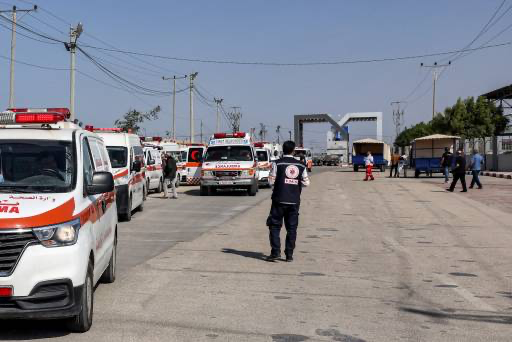
Ambulances transported wounded residents out of the Palestinian enclave for urgent medical care in neighbouring Egypt.
IMG_2517.png
Palestinian health ministry ambulances cross the gate to enter the Rafah border crossing in the southern Gaza Strip before crossing into Egypt on November 1, 2023. (MOHAMMED ABED/AFP)

Israel has heavily bombarded Gaza since Hamas gunmen stormed across the border on October 7, killing 1,400 people, mostly civilians, and kidnapping at least 240 others, including children, according to Israeli officials.

The health ministry in Hamas-run Gaza says nearly 8,800 people have been killed since the war with Israel erupted. The death toll includes more than 3,600 children, while more than 22,000 people have been wounded.

"The World Health Organization welcomes Egypt's decision to accept 81 injured and sick people from the Gaza Strip for treatment," the WHO's Eastern Mediterranean regional branch said in a statement.

Palestinian sources on the ground said they expected 88 patients to be taken across.

The WHO said Al-Arish Hospital, in the closest major city to the border, would be the main first referral hospital.

"It has fully equipped resuscitation and intensive care facilities, and a range of surgical teams to manage severe injuries, including major trauma and burns," the organisation said.

Onward referral arrangements to second-line hospitals in Egypt are also in place, it added.

While welcoming the first evacuations, the WHO said that within the Gaza Strip, "thousands of seriously injured civilians" were in need of treatment.

More than 1,000 patients need kidney dialysis to stay alive; more than 2,000 patients are on cancer therapy; 45,000 people have cardiovascular diseases; and more than 60,000 have diabetes, it said.

"These patients must be able to have sustained access to health care inside Gaza. Hospitals and other health facilities must be protected from bombardment and military use," the UN health agency said.

Before October 7, around 100 patients a day needed specialised health treatment outside the Gaza Strip due to the lack of such services within the territory.

The WHO maintained its call for urgent, accelerated access for humanitarian aid -- including fuel, water, food and medical supplies -- into and throughout the Gaza Strip, and access for patients to referral services outside Gaza.

"Ultimately, WHO calls for a humanitarian ceasefire to prevent further loss and suffering," it said.  

Related Tags

world news
ADVERTISEMENT
.most-popular .layout-ratio{ padding-bottom: 79.13%; } @media (min-width: 768px) and (max-width: 1024px) { .widget-title { font-size: 15px !important; } }

{{ articles_filter_1561_widget.title }}

.most-popular .layout-ratio{ padding-bottom: 79.13%; } @media (min-width: 768px) and (max-width: 1024px) { .widget-title { font-size: 15px !important; } }

{{ articles_filter_1562_widget.title }}

.most-popular .layout-ratio{ padding-bottom: 79.13%; } @media (min-width: 768px) and (max-width: 1024px) { .widget-title { font-size: 15px !important; } }

{{ articles_filter_1563_widget.title }}

{{ articles_filter_1564_widget.title }}

.mb-article-details { position: relative; } .mb-article-details .article-body-preview, .mb-article-details .article-body-summary{ font-size: 17px; line-height: 30px; font-family: "Libre Caslon Text", serif; color: #000; } .mb-article-details .article-body-preview iframe , .mb-article-details .article-body-summary iframe{ width: 100%; margin: auto; } .read-more-background { background: linear-gradient(180deg, color(display-p3 1.000 1.000 1.000 / 0) 13.75%, color(display-p3 1.000 1.000 1.000 / 0.8) 30.79%, color(display-p3 1.000 1.000 1.000) 72.5%); position: absolute; height: 200px; width: 100%; bottom: 0; display: flex; justify-content: center; align-items: center; padding: 0; } .read-more-background a{ color: #000; } .read-more-btn { padding: 17px 45px; font-family: Inter; font-weight: 700; font-size: 18px; line-height: 16px; text-align: center; vertical-align: middle; border: 1px solid black; background-color: white; } .hidden { display: none; }
function initializeAllSwipers() { // Get all hidden inputs with cms_article_id document.querySelectorAll('[id^="cms_article_id_"]').forEach(function (input) { const cmsArticleId = input.value; const articleSelector = '#article-' + cmsArticleId + ' .body_images'; const swiperElement = document.querySelector(articleSelector); if (swiperElement && !swiperElement.classList.contains('swiper-initialized')) { new Swiper(articleSelector, { loop: true, pagination: false, navigation: { nextEl: '#article-' + cmsArticleId + ' .swiper-button-next', prevEl: '#article-' + cmsArticleId + ' .swiper-button-prev', }, }); } }); } setTimeout(initializeAllSwipers, 3000); const intersectionObserver = new IntersectionObserver( (entries) => { entries.forEach((entry) => { if (entry.isIntersecting) { const newUrl = entry.target.getAttribute("data-url"); if (newUrl) { history.pushState(null, null, newUrl); let article = entry.target; // Extract metadata const author = article.querySelector('.author-section').textContent.replace('By', '').trim(); const section = article.querySelector('.section-info ').textContent.replace(' ', ' '); const title = article.querySelector('.article-title h1').textContent; // Parse URL for Chartbeat path format const parsedUrl = new URL(newUrl, window.location.origin); const cleanUrl = parsedUrl.host + parsedUrl.pathname; // Update Chartbeat configuration if (typeof window._sf_async_config !== 'undefined') { window._sf_async_config.path = cleanUrl; window._sf_async_config.sections = section; window._sf_async_config.authors = author; } // Track virtual page view with Chartbeat if (typeof pSUPERFLY !== 'undefined' && typeof pSUPERFLY.virtualPage === 'function') { try { pSUPERFLY.virtualPage({ path: cleanUrl, title: title, sections: section, authors: author }); } catch (error) { console.error('ping error', error); } } // Optional: Update document title if (title && title !== document.title) { document.title = title; } } } }); }, { threshold: 0.1 } ); function showArticleBody(button) { const article = button.closest("article"); const summary = article.querySelector(".article-body-summary"); const body = article.querySelector(".article-body-preview"); const readMoreSection = article.querySelector(".read-more-background"); // Hide summary and read-more section summary.style.display = "none"; readMoreSection.style.display = "none"; // Show the full article body body.classList.remove("hidden"); } document.addEventListener("DOMContentLoaded", () => { let loadCount = 0; // Track how many times articles are loaded const offset = [1, 2, 3, 4, 5, 6, 7, 8, 9, 10]; // Offset values const currentUrl = window.location.pathname.substring(1); let isLoading = false; // Prevent multiple calls if (!currentUrl) { console.log("Current URL is invalid."); return; } const sentinel = document.getElementById("load-more-sentinel"); if (!sentinel) { console.log("Sentinel element not found."); return; } function isSentinelVisible() { const rect = sentinel.getBoundingClientRect(); return ( rect.top < window.innerHeight && rect.bottom >= 0 ); } function onScroll() { if (isLoading) return; if (isSentinelVisible()) { if (loadCount >= offset.length) { console.log("Maximum load attempts reached."); window.removeEventListener("scroll", onScroll); return; } isLoading = true; const currentOffset = offset[loadCount]; window.loadMoreItems().then(() => { let article = document.querySelector('#widget_1690 > div:nth-last-of-type(2) article'); intersectionObserver.observe(article) loadCount++; }).catch(error => { console.error("Error loading more items:", error); }).finally(() => { isLoading = false; }); } } window.addEventListener("scroll", onScroll); });

Sign up by email to receive news.