






 Philippines
National
More Filipino families consider themselves poor in Q3 2023 — SWS
Philippines
National
More Filipino families consider themselves poor in Q3 2023 — SWS
More Filipino families consider themselves poor in Q3 2023 — SWS


At A Glance
- Forty-eight percent of Filipino families rated themselves as "mahirap" or poor, 27 percent rated themselves as "borderline"—by placing themselves on a horizontal line dividing poor and not poor, and 25 percent rated themselves as "hindi mahirap" or not poor.
- Self-rated poverty rose sharply in Mindanao from 54 percent to 71 percent.
- 1.8 million Filipino families are "newly poor."
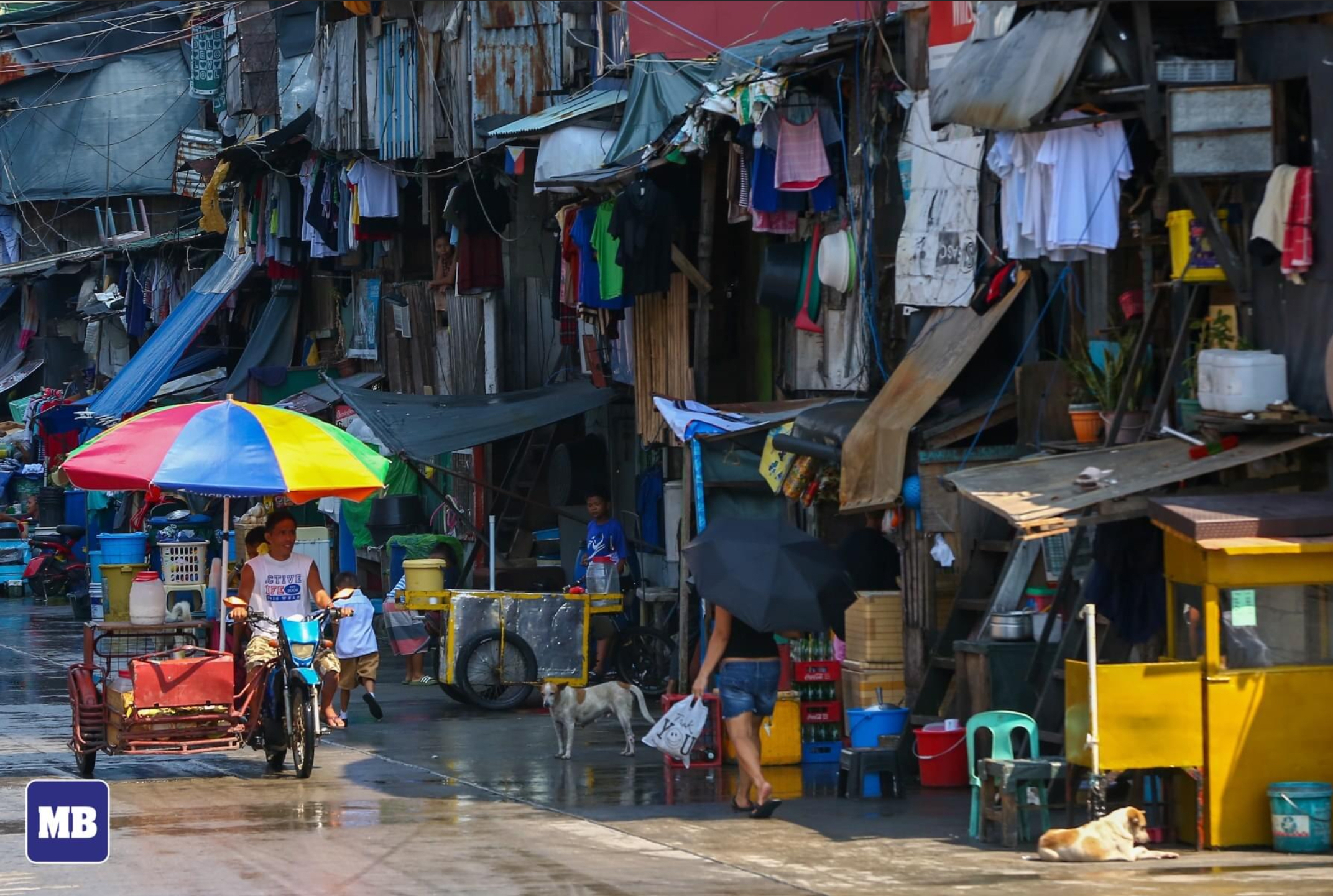
A Social Weather Stations (SWS) survey results released on Wednesday, Nov. 1 revealed that more Filipino households perceived themselves as poor in the third quarter of this year, up from 12.5 million in June to 13.2 million in September.
In the survey, which was conducted from Sept. 28 to Oct. 1, 48 percent of Filipino families rated themselves as “mahirap” or poor, 27 percent rated themselves as “borderline”—by placing themselves on a horizontal line dividing poor and not poor, and 25 percent rated themselves as “hindi mahirap” or not poor.
“Compared to June 2023, the percentage of poor families rose by three points from 45 percent, while borderline families fell by six points from 33 percent, and not poor families rose by three points from 22 percent,” SWS said.
Self-rated poverty rises significantly in Mindanao
SWS attributed the three-point rise in the nationwide self-rated poverty figure between June and September to the increases in all areas, especially in Mindanao, combined with a decline in Balance Luzon, or Luzon outside Metro Manila.
“Compared to June 2023, self-rated poor rose sharply in Mindanao from 54 percent to 71 percent. It rose slightly in Metro Manila, from 35 percent to 38 percent, and in the Visayas, from 57 percent to 59 percent. However, it fell in Balance Luzon from 39 percent to 35 percent,” it pointed out.
Meanwhile, borderline families rose in Metro Manila from 23 to 29 percent and in the Visayas from 28 to 32 percent.
However, it fell in Balance Luzon from 38 to 25 percent and in Mindanao from 33 to 25 percent.
SWS also found that families who consider themselves not poor rose in Balance Luzon from 23 to 40 percent, while it fell in Metro Manila from 42 to 33 percent, in Mindanao from 13 to 4 percent, and in the Visayas from 15 to 8 percent.
6.6% of families are ‘newly poor’
The September 2023 survey asked the self-rated poor if they had ever experienced being non-poor—either not poor or borderline—in the past.
The total percentage of poor families consisted of 6.6 percent who were non-poor one to four years ago (newly poor), 6.1 percent who were non-poor five or more years ago (usually poor), and 35.3 percent who never experienced being non-poor (always poor).
“Of the estimated 13.2 million self-rated poor families in September 2023, 1.8 million were newly poor, 1.7 million were usually poor, and 9.7 million were always poor,” SWS said.
It also asked those who were self-rated non-poor—either borderline or not poor—if they had ever experienced being poor in the past.
“The total percentage of non-poor families consists of 18.1 percent who were poor one to four years ago (newly non-poor), 8.9 percent who were poor five or more years ago (usually non-poor), and 24.9 percent who never experienced being poor (always non-poor),” SWS said.
It noted that of the estimated 14.3 million self-rated non-poor families in September 2023, 5 million were newly non-poor, 2.4 million were usually non-poor, and 6.8 million were always non-poor.
9.2M families still ‘food-poor’
Based on the type of food eaten by their families, the September 2023 SWS survey found 34 percent of families rated themselves as “food-poor,” 35 percent rated themselves as “food borderline” by placing themselves on the horizontal line dividing food-poor and not food-poor, and 31 percent rated themselves “not food-poor.”
“This compares with June 2023, when 34 percent of families were food-poor, 38 percent were food borderline, and 26 percent were not food-poor,” SWS noted.
It estimated 9.2 million households to be food-poor in September, the same number in June.
Food-poor rises in Mindanao
SWS pointed out that the steady percentage of self-rated food-poor from June 2023 to September 2023 was due to a rise in Mindanao, combined with slight decreases in Metro Manila, Balance Luzon, and the Visayas.
“Compared to June 2023, self-rated food-poor rose in Mindanao from 40 percent to 51 percent. However, it fell slightly in Metro Manila from 32 percent to 29 percent, in Balance Luzon from 28 percent to 24 percent, and in the Visayas from 42 percent to 39 percent,” it added.
Meanwhile, food borderline rose in the Visayas from 33 to 44 percent and in Metro Manila from 21 to 31 percent.
However, it fell in Balance Luzon from 42 to 29 percent, while it hardly changed in Mindanao from 43 to 42 percent.
At the same time, not food-poor rose in Balance Luzon from 33 to 47 percent, but stayed at 18 percent in the Visayas.
Meanwhile, it “fell slightly” in Metro Manila from 43 to 40 percent, and “hardly changed” in Mindanao from 9 to 7 percent.
The Third Quarter 2023 SWS nationwide survey interviewed 1,200 adults aged 18 and up.
The sampling error margins are ±2.8 percent for national percentages, and ±5.7 percent each for Metro Manila, Balance Luzon, the Visayas, and Mindanao.