

ADVERTISEMENT

Farmer's Day: A rendezvous of agri-entrepreneurs and advocacy

Published Oct 9, 2023 09:00 am

By Rex M. Rubio

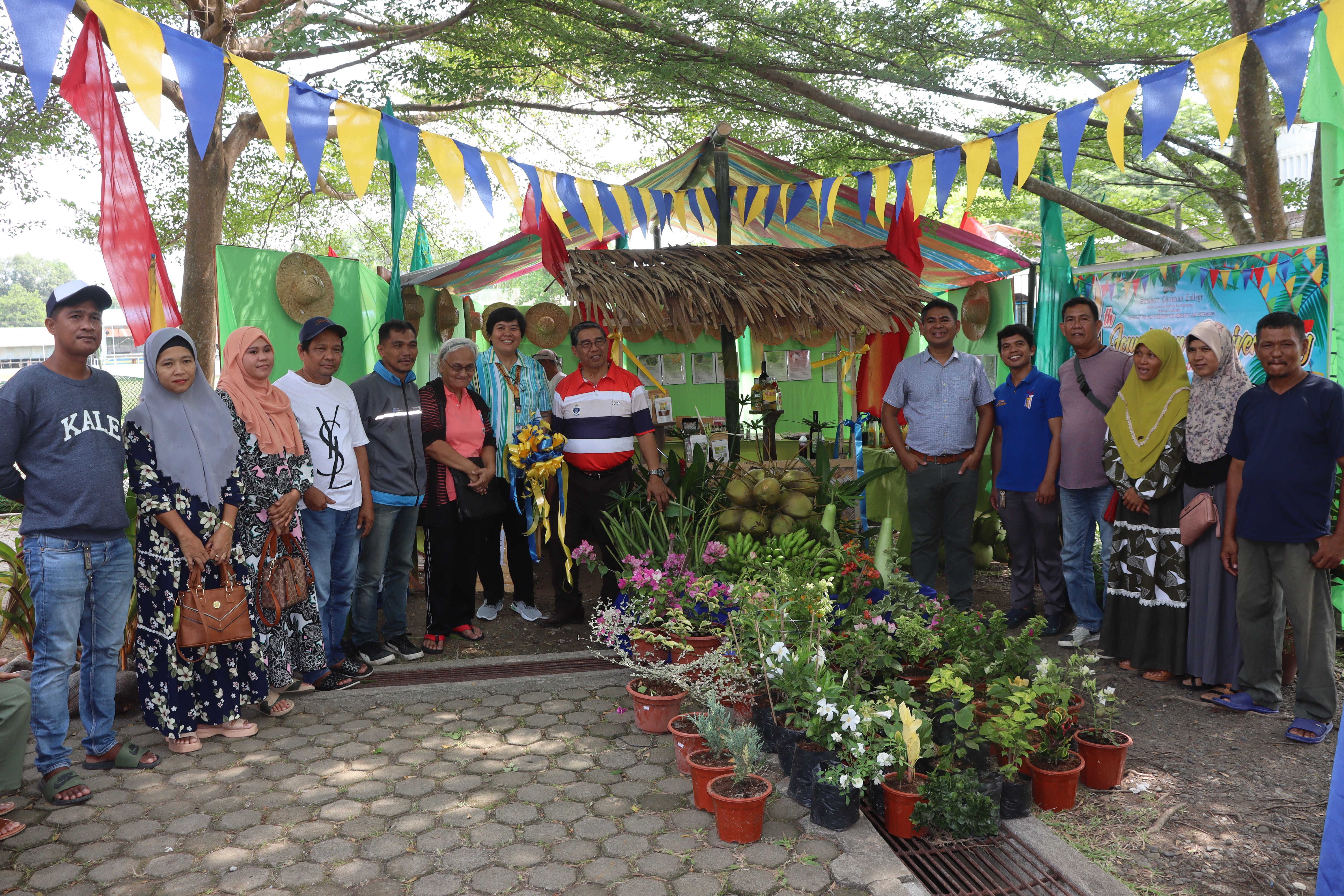
The active men and women farmers in the First District of Cotabato Province gathered from September 27 to September 30, 2023, for an Annual Celebration called Farmer’s Day dubbed “Barangay sa SCC Agri Fair Trade and Exhibits, timely for the 74 th Founding Anniversary of Southern Christian College.

Analyn V. Derequito, Program Head of the Sustainable Ecological Agriculture and Food Security (SEAFS) Programme of the Peace and Tri-people Dialogue Project of Southern Christian College (SCC), and who led the event, explained that Farmer’s Day is part of its advocacy to highlight the essential role of farmers in food sufficiency and security.
FD1.JPG
(L- R) The Organizers , personnel, SEAF Program Head Analyn V. Derequito (holding a bouquet of flowers), the SCC President Dr. Edwin T. Balaki, Dr. Rodelio N. Ambangan, the Vice President for Research and Extension, and Robert F. Cambel, Jr., the Director of Extension Office, and with other guests, during the mounting of Farmer’s Field Day inside the campus for its anniversary celebration that started on September 27-30, 2023. (SEAF Team)

“This event was organized in collaboration with government agencies and other non-government organizations, where we gave our farmers the venue to highlight their products and innovation in agriculture,” Derequito said.

Derequito added that during the field day, other farmers and agri-entrepreneurs are introduced to various sustainable farming practices that may complement and add to their existing techniques in farming.

Farmer’s impact

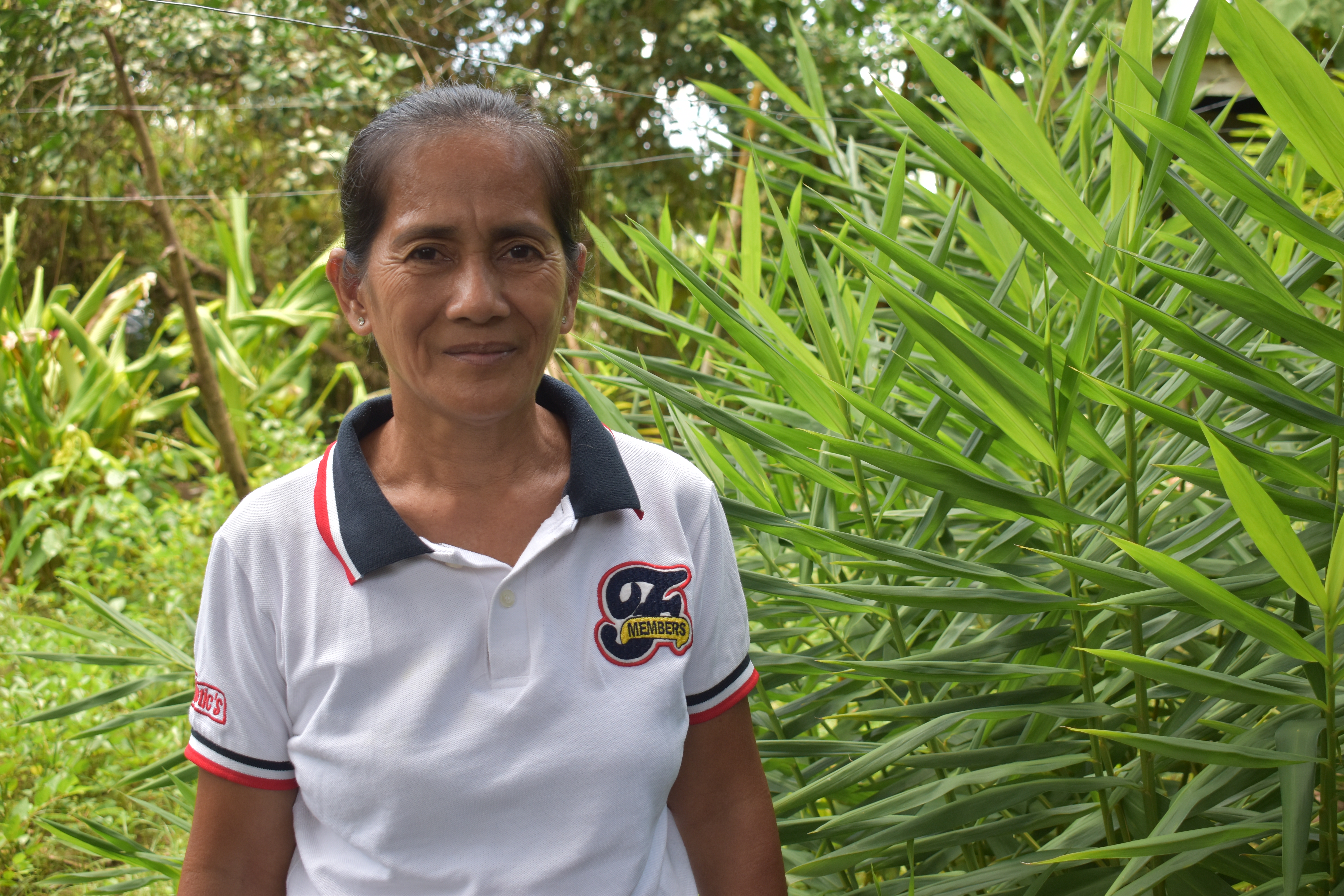
Emma N. Calianga, 57 years old and one of the active farmer participants from Aleosan, Cotabato, shared that since joining the group in 2018, the Farmer’s Day event helped her gain new ideas and adopt new technology in farming.
FD3.JPG
Emma Calianga, 57 years old and one of the active natural farming practitioners of SEAFS Project. She develops now a vegetable garden in their small farm in Barangay Pagangan, Aleosan, Cotabato. (Rex M. Rubio)

“I am always excited to attend this kind of event. It is a learning experience for me. The techniques challenged me to explore more to maintain my small vegetable farm,” Calianga said in Ilonggo.

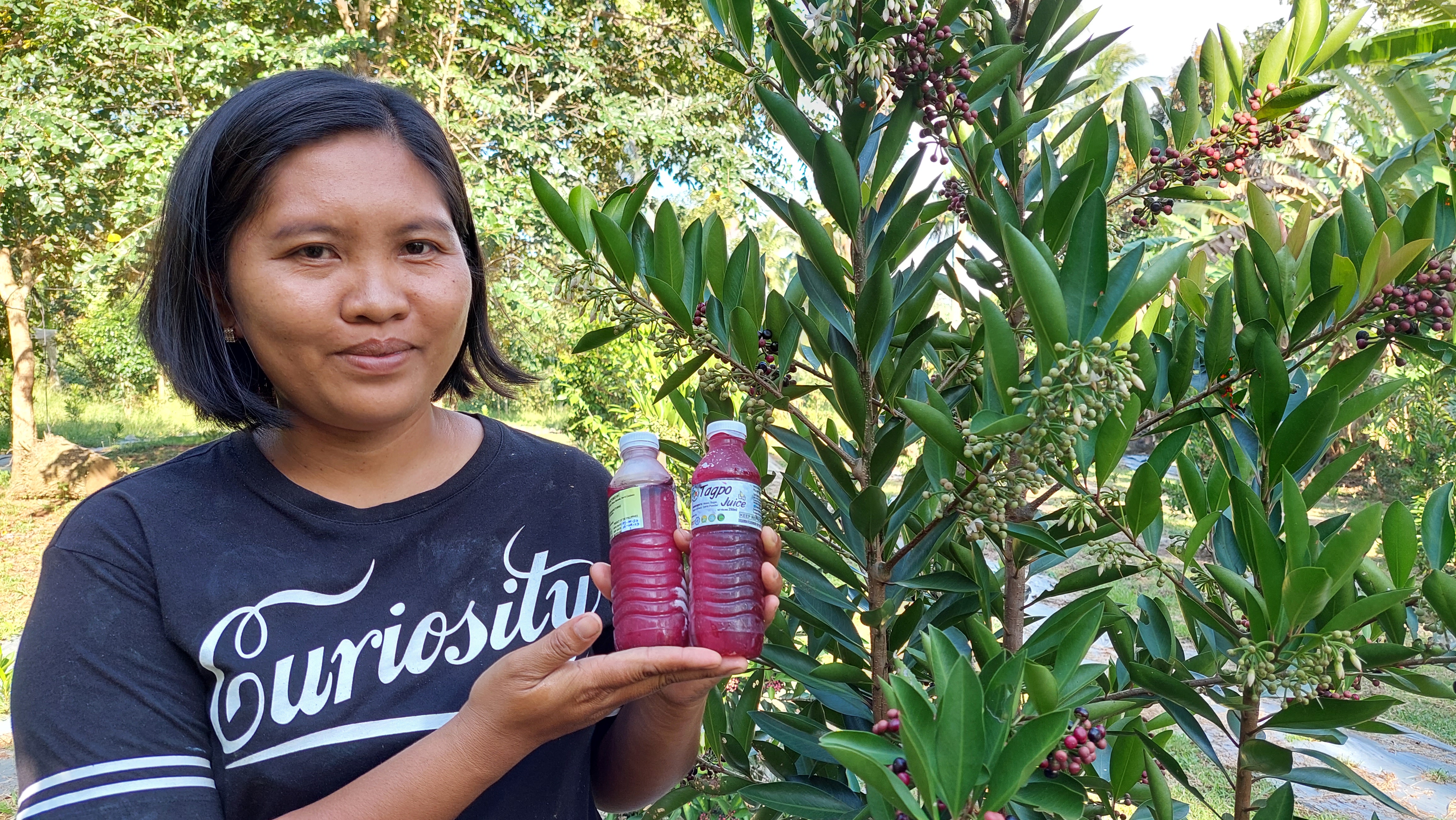
Meanwhile, Ivy Joy B. Antiquera, an agripreneur who is also an avid Farmer's Day attendee, said that it is a wonderful experience to be with a group of people who love farming. Ivy created Tagpo Juice, a brand of fruit juices made with raw materials available in her backyard that has become popular among elementary school students in her area.
FD5 (1).jpg
Ivy Joy B. Antiquera shows one of her processed fruit juices whose raw materials are just available in their backyard. This juice has become the favorite snack of elementary pupils in their community. (photo by Rex M. Rubio)

“Although my college degree is related to agriculture [animal science] I never imagined staying in a far-flung area and living as a typical housewife. My engagement with the SCC agriculture-related program changed my perspective to re-love farming and becomes my way of life,”

Antiquera said, also in Ilonggo.

For Ivy, it was like a 360-degree turn for she never wished to go back to farming again. “When I was young, I vividly recalled that my mother used to tell me that I have to keep up in school because farming will not give me a good future, but this changed when I got exposed again to the SCC group of farmers.”

After a series of training and exposure, Antiquera regains her love for farming. “I was inspired by one of the trainings, where our facilitator shared her fruit juice business which I also explored and tried at home.”

Although exploring a business, like juice making, needs a lot of patience to set a desirable taste for customers, Ivy patiently tried until finally got a good nod from her neighborhood. “Most of my customers are usually grade pupils and they love our fruit juice. I am thankful that even young people appreciate natural juice over commercial ones. This is our way to educate them on the value of drinking healthy juice.”

Mounting annual events and creating a platform for lovers of farming

Derequito believes that running this regular event will provide farmers the opportunity to learn the benefits and essentials of sustainable ecological agriculture.

“Since we launched this event in the year 2000, more farmers from Cotabato province are enjoying and learning the innovation in farming and are able to scale up their local produce through value adding. The firsthand experience of farmers gives them the confidence and motivation to adopt appropriate practices in their respective farms or agri-business.”

The said event becomes a platform also for farmers to exchange ideas and experiences, and how their individual challenges transform into valuable farm assets.

“Through the years, this event connects farmers with local agricultural experts and acquired appropriate guidance from them while some even access support [project] for their own farm,” she reiterated.

Derequito further said that among the farming technologies adopted by farmers are diversified integrated farming systems for upland, lowland, and marshland like the establishment of organic backyard gardening, rice-fish, or rice-duck farming, organic aquaculture production, organic animal and crop production, and even agroforestry project.

The SEAFS Programme is one of the tri-programmes of the Amplifying Peace and Development through Tri-people Partnership in Local and Global Education and Linkages or locally known as the SCC Peace and Tri-people Dialogue Project, a cooperative project of the Bread for the World, Berlin, Germany and Southern Christian College, Midsayap, Cotabato, Philippines.

Today, according to Derequito, six farmers’ associations and 3,382 beneficiaries, composed of 482 farmers as direct beneficiaries and 2,880 household members and other farmers as indirect beneficiaries, benefit regular capacity building, field exposure, and even formal training to become holder of national competency (NC) related to agriculture through Technical Education and Skills Development Authority (TESDA).

The number of farmers continues to increase as the farmers’ associations members continuously push their own campaigns and advocacy on the essentials of sustainable ecological agriculture in their neighborhood.

Photos by Rex M. Rubio and courtesy of SEAF Team

Read more about farming and gardening at agriculture.com.ph

Related Tags

COTABATO PROVINCE Farmer's Day
ADVERTISEMENT
.most-popular .layout-ratio{ padding-bottom: 79.13%; } @media (min-width: 768px) and (max-width: 1024px) { .widget-title { font-size: 15px !important; } }

{{ articles_filter_1561_widget.title }}

.most-popular .layout-ratio{ padding-bottom: 79.13%; } @media (min-width: 768px) and (max-width: 1024px) { .widget-title { font-size: 15px !important; } }

{{ articles_filter_1562_widget.title }}

.most-popular .layout-ratio{ padding-bottom: 79.13%; } @media (min-width: 768px) and (max-width: 1024px) { .widget-title { font-size: 15px !important; } }

{{ articles_filter_1563_widget.title }}

{{ articles_filter_1564_widget.title }}

.mb-article-details { position: relative; } .mb-article-details .article-body-preview, .mb-article-details .article-body-summary{ font-size: 17px; line-height: 30px; font-family: "Libre Caslon Text", serif; color: #000; } .mb-article-details .article-body-preview iframe , .mb-article-details .article-body-summary iframe{ width: 100%; margin: auto; } .read-more-background { background: linear-gradient(180deg, color(display-p3 1.000 1.000 1.000 / 0) 13.75%, color(display-p3 1.000 1.000 1.000 / 0.8) 30.79%, color(display-p3 1.000 1.000 1.000) 72.5%); position: absolute; height: 200px; width: 100%; bottom: 0; display: flex; justify-content: center; align-items: center; padding: 0; } .read-more-background a{ color: #000; } .read-more-btn { padding: 17px 45px; font-family: Inter; font-weight: 700; font-size: 18px; line-height: 16px; text-align: center; vertical-align: middle; border: 1px solid black; background-color: white; } .hidden { display: none; }
function initializeAllSwipers() { // Get all hidden inputs with cms_article_id document.querySelectorAll('[id^="cms_article_id_"]').forEach(function (input) { const cmsArticleId = input.value; const articleSelector = '#article-' + cmsArticleId + ' .body_images'; const swiperElement = document.querySelector(articleSelector); if (swiperElement && !swiperElement.classList.contains('swiper-initialized')) { new Swiper(articleSelector, { loop: true, pagination: false, navigation: { nextEl: '#article-' + cmsArticleId + ' .swiper-button-next', prevEl: '#article-' + cmsArticleId + ' .swiper-button-prev', }, }); } }); } setTimeout(initializeAllSwipers, 3000); const intersectionObserver = new IntersectionObserver( (entries) => { entries.forEach((entry) => { if (entry.isIntersecting) { const newUrl = entry.target.getAttribute("data-url"); if (newUrl) { history.pushState(null, null, newUrl); let article = entry.target; // Extract metadata const author = article.querySelector('.author-section').textContent.replace('By', '').trim(); const section = article.querySelector('.section-info ').textContent.replace(' ', ' '); const title = article.querySelector('.article-title h1').textContent; // Parse URL for Chartbeat path format const parsedUrl = new URL(newUrl, window.location.origin); const cleanUrl = parsedUrl.host + parsedUrl.pathname; // Update Chartbeat configuration if (typeof window._sf_async_config !== 'undefined') { window._sf_async_config.path = cleanUrl; window._sf_async_config.sections = section; window._sf_async_config.authors = author; } // Track virtual page view with Chartbeat if (typeof pSUPERFLY !== 'undefined' && typeof pSUPERFLY.virtualPage === 'function') { try { pSUPERFLY.virtualPage({ path: cleanUrl, title: title, sections: section, authors: author }); } catch (error) { console.error('ping error', error); } } // Optional: Update document title if (title && title !== document.title) { document.title = title; } } } }); }, { threshold: 0.1 } ); function showArticleBody(button) { const article = button.closest("article"); const summary = article.querySelector(".article-body-summary"); const body = article.querySelector(".article-body-preview"); const readMoreSection = article.querySelector(".read-more-background"); // Hide summary and read-more section summary.style.display = "none"; readMoreSection.style.display = "none"; // Show the full article body body.classList.remove("hidden"); } document.addEventListener("DOMContentLoaded", () => { let loadCount = 0; // Track how many times articles are loaded const offset = [1, 2, 3, 4, 5, 6, 7, 8, 9, 10]; // Offset values const currentUrl = window.location.pathname.substring(1); let isLoading = false; // Prevent multiple calls if (!currentUrl) { console.log("Current URL is invalid."); return; } const sentinel = document.getElementById("load-more-sentinel"); if (!sentinel) { console.log("Sentinel element not found."); return; } function isSentinelVisible() { const rect = sentinel.getBoundingClientRect(); return ( rect.top < window.innerHeight && rect.bottom >= 0 ); } function onScroll() { if (isLoading) return; if (isSentinelVisible()) { if (loadCount >= offset.length) { console.log("Maximum load attempts reached."); window.removeEventListener("scroll", onScroll); return; } isLoading = true; const currentOffset = offset[loadCount]; window.loadMoreItems().then(() => { let article = document.querySelector('#widget_1690 > div:nth-last-of-type(2) article'); intersectionObserver.observe(article) loadCount++; }).catch(error => { console.error("Error loading more items:", error); }).finally(() => { isLoading = false; }); } } window.addEventListener("scroll", onScroll); });

Sign up by email to receive news.