ADVERTISEMENT

46% of Filipinos believe environmental destruction primary cause of calamities

Published Oct 9, 2023 04:49 am
IMG_3366.jpeg
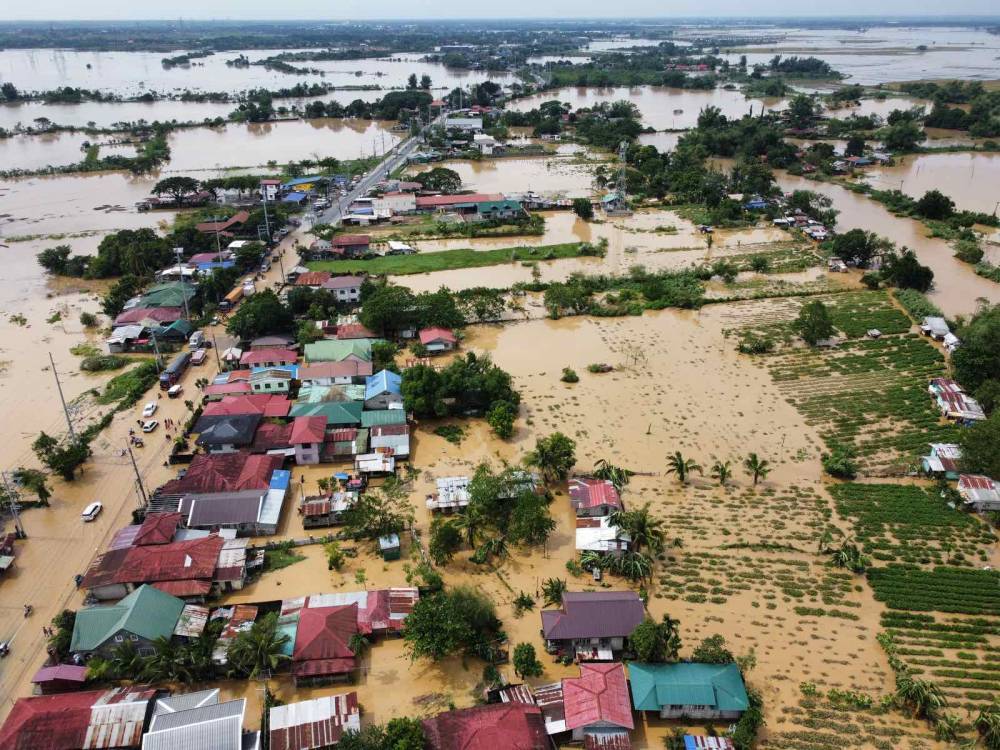
Brgy. Salangan in San Miguel, Bulacan is submerged in flood on Sept. 26, 2022 after the onslaught of Supertyphoon Noru (Karding). (Mark Balmores / Manila Bulletin File Photo)

Almost half of Filipinos attribute calamities to the destructive actions of people who frequently abuse the environment, a Pulse Asia survey conducted from Sept. 10 to 14 showed.

According to the Pulse Asia survey results released on Monday, Oct. 9, 46 percent of Filipinos believe that disasters were brought on by people who frequently mistreated the environment.

Meanwhile, 32 percent said “natural processes” are to be blamed for such calamities, and about 21 percent believe that natural disasters occur as a sign from God, a warning, or as a form of retribution for countries that have adopted evil practices.

“For the period June 2022 to September 2023, there is an increase in the percentage of those who believe calamities occur either due to natural processes (+13 percentage points) or as a warning from God (+6 percentage points),” Pulse Asia pointed out.

“The reverse occurs as far as those who blame calamities on the destructive ways of human beings are concerned (-18 percentage points),” it added.

Majority of respondents in Metro Manila (64 percent), Mindanao (48 percent), and Classes D and E (47 percent and 43 percent) believe that calamities are caused by human destructive behavior.

However, this view decreased between June 2022 and September 2023 in Luzon (-28 percentage points), Visayas (-23 percentage points), and every class (-15 percentage to -26 percentage points).

In the rest of Luzon, Visayas, and Class ABC, calamities were attributed to human destructive ways (38 to 46 percent) or natural processes occurring globally (35 to 40 percent).

Pulse Asia pointed out that from June 2022 to September 2023, agreement with the calamities occurring due to natural processes became more notable in the rest of Luzon (+22 percentage points), Visayas (+25 percentage points), and Classes ABC and D (+26 and +11 percentage points, respectively).

The only other significant change in public opinion on this matter during the said period is the increase in the percentage of those in Class E who see calamities as a warning or punishment from God (+16 percentage points), it added.

Pulse Asia’s “Ulat ng Bayan” survey has 1,200 adult respondents nationwide.

It has a ± 2.8 percent error margin at the 95 percent confidence level.

Subnational estimates for the geographic areas covered in the survey have the following error margins at 95 percent confidence level: ± 5.7 percent for Metro Manila, the rest of Luzon, Visayas, and Mindanao.

Related Tags

ulat ng bayan survey pulse asia Environmental destruction
ADVERTISEMENT
.most-popular .layout-ratio{ padding-bottom: 79.13%; } @media (min-width: 768px) and (max-width: 1024px) { .widget-title { font-size: 15px !important; } }

{{ articles_filter_1561_widget.title }}

.most-popular .layout-ratio{ padding-bottom: 79.13%; } @media (min-width: 768px) and (max-width: 1024px) { .widget-title { font-size: 15px !important; } }

{{ articles_filter_1562_widget.title }}

.most-popular .layout-ratio{ padding-bottom: 79.13%; } @media (min-width: 768px) and (max-width: 1024px) { .widget-title { font-size: 15px !important; } }

{{ articles_filter_1563_widget.title }}

{{ articles_filter_1564_widget.title }}

.mb-article-details { position: relative; } .mb-article-details .article-body-preview, .mb-article-details .article-body-summary{ font-size: 17px; line-height: 30px; font-family: "Libre Caslon Text", serif; color: #000; } .mb-article-details .article-body-preview iframe , .mb-article-details .article-body-summary iframe{ width: 100%; margin: auto; } .read-more-background { background: linear-gradient(180deg, color(display-p3 1.000 1.000 1.000 / 0) 13.75%, color(display-p3 1.000 1.000 1.000 / 0.8) 30.79%, color(display-p3 1.000 1.000 1.000) 72.5%); position: absolute; height: 200px; width: 100%; bottom: 0; display: flex; justify-content: center; align-items: center; padding: 0; } .read-more-background a{ color: #000; } .read-more-btn { padding: 17px 45px; font-family: Inter; font-weight: 700; font-size: 18px; line-height: 16px; text-align: center; vertical-align: middle; border: 1px solid black; background-color: white; } .hidden { display: none; }
function initializeAllSwipers() { // Get all hidden inputs with cms_article_id document.querySelectorAll('[id^="cms_article_id_"]').forEach(function (input) { const cmsArticleId = input.value; const articleSelector = '#article-' + cmsArticleId + ' .body_images'; const swiperElement = document.querySelector(articleSelector); if (swiperElement && !swiperElement.classList.contains('swiper-initialized')) { new Swiper(articleSelector, { loop: true, pagination: false, navigation: { nextEl: '#article-' + cmsArticleId + ' .swiper-button-next', prevEl: '#article-' + cmsArticleId + ' .swiper-button-prev', }, }); } }); } setTimeout(initializeAllSwipers, 3000); const intersectionObserver = new IntersectionObserver( (entries) => { entries.forEach((entry) => { if (entry.isIntersecting) { const newUrl = entry.target.getAttribute("data-url"); if (newUrl) { history.pushState(null, null, newUrl); let article = entry.target; // Extract metadata const author = article.querySelector('.author-section').textContent.replace('By', '').trim(); const section = article.querySelector('.section-info ').textContent.replace(' ', ' '); const title = article.querySelector('.article-title h1').textContent; // Parse URL for Chartbeat path format const parsedUrl = new URL(newUrl, window.location.origin); const cleanUrl = parsedUrl.host + parsedUrl.pathname; // Update Chartbeat configuration if (typeof window._sf_async_config !== 'undefined') { window._sf_async_config.path = cleanUrl; window._sf_async_config.sections = section; window._sf_async_config.authors = author; } // Track virtual page view with Chartbeat if (typeof pSUPERFLY !== 'undefined' && typeof pSUPERFLY.virtualPage === 'function') { try { pSUPERFLY.virtualPage({ path: cleanUrl, title: title, sections: section, authors: author }); } catch (error) { console.error('ping error', error); } } // Optional: Update document title if (title && title !== document.title) { document.title = title; } } } }); }, { threshold: 0.1 } ); function showArticleBody(button) { const article = button.closest("article"); const summary = article.querySelector(".article-body-summary"); const body = article.querySelector(".article-body-preview"); const readMoreSection = article.querySelector(".read-more-background"); // Hide summary and read-more section summary.style.display = "none"; readMoreSection.style.display = "none"; // Show the full article body body.classList.remove("hidden"); } document.addEventListener("DOMContentLoaded", () => { let loadCount = 0; // Track how many times articles are loaded const offset = [1, 2, 3, 4, 5, 6, 7, 8, 9, 10]; // Offset values const currentUrl = window.location.pathname.substring(1); let isLoading = false; // Prevent multiple calls if (!currentUrl) { console.log("Current URL is invalid."); return; } const sentinel = document.getElementById("load-more-sentinel"); if (!sentinel) { console.log("Sentinel element not found."); return; } function isSentinelVisible() { const rect = sentinel.getBoundingClientRect(); return ( rect.top < window.innerHeight && rect.bottom >= 0 ); } function onScroll() { if (isLoading) return; if (isSentinelVisible()) { if (loadCount >= offset.length) { console.log("Maximum load attempts reached."); window.removeEventListener("scroll", onScroll); return; } isLoading = true; const currentOffset = offset[loadCount]; window.loadMoreItems().then(() => { let article = document.querySelector('#widget_1690 > div:nth-last-of-type(2) article'); intersectionObserver.observe(article) loadCount++; }).catch(error => { console.error("Error loading more items:", error); }).finally(() => { isLoading = false; }); } } window.addEventListener("scroll", onScroll); });

Sign up by email to receive news.