

ADVERTISEMENT

DOST honors 45 'Balik Scientists' for their contribution to the PH S&T sector

Published Oct 6, 2023 04:04 am

The Department of Science and Technology (DOST) recognized a total of 45 Balik Scientists for their contributions that helped shape the country's science and technology (S&T) landscape during the 9th Annual Balik Scientist Program (BSP) Convention.
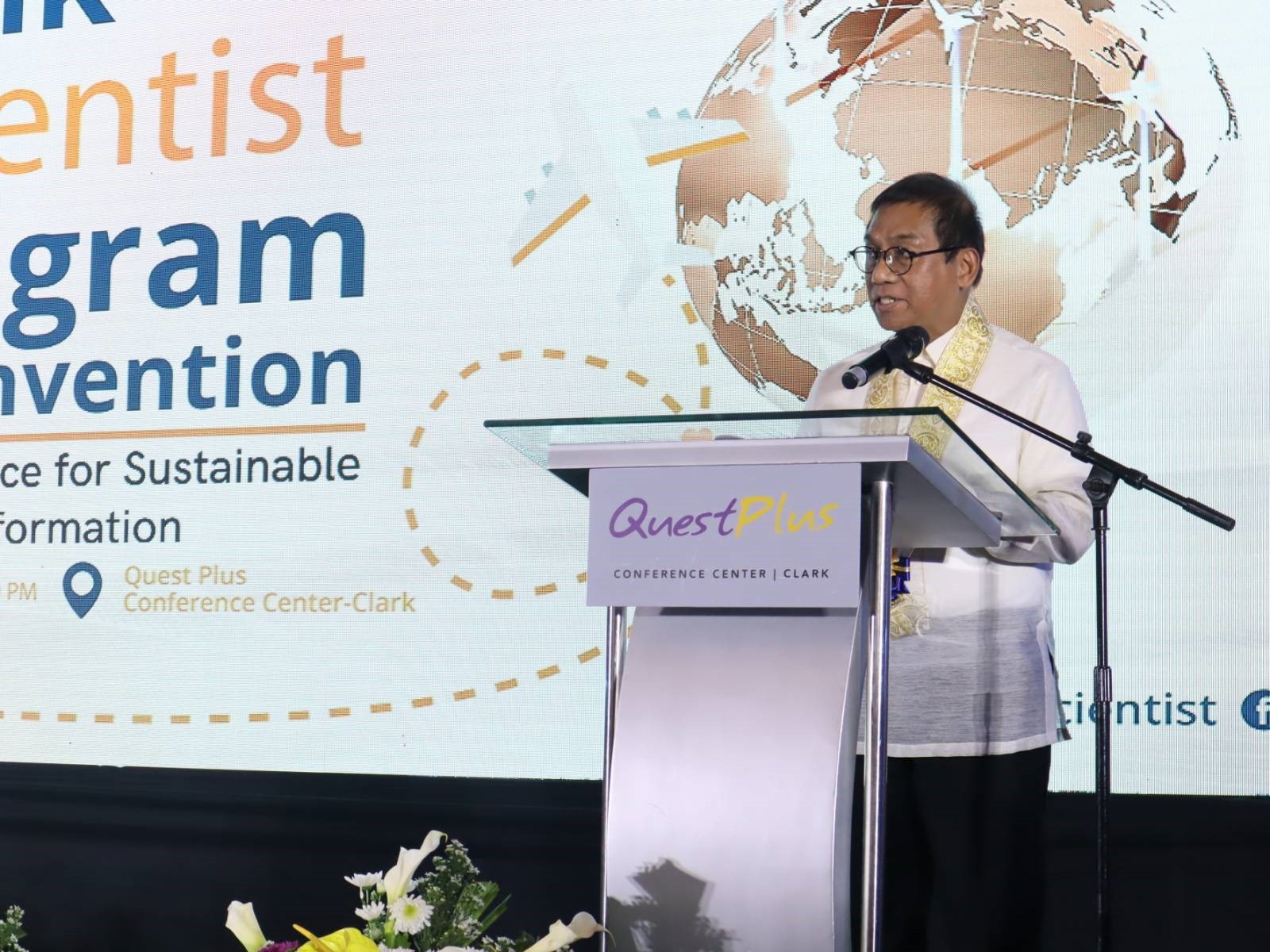
Quest.jpg
DOST Secretary Renato Solidum, Jr. gives the welcome remarks during the 9th DOST Balik Scientist Convention at Clark, Pampanga.

Also honored were their respective host institutions at the ceremony in Quest Plus Conference Center, Clark, Pampanga.

According to the DOST-Philippine Council for Industry, Energy, and Emerging Technology Research and Development (DOST-PCIEERD), the BSP Convention is an annual gathering of Balik Scientists, host institutions, and stakeholders that showcases the accomplishments and contributions of currently engaged Balik Scientists in the advancement of science, technology, and innovation.

In addition to the plenary presentations, this year’s Convention also featured poster exhibits by select Balik Scientists and generated discussions on timely topics related to climate-smart agriculture, health security and health system resilience, and policy and practical applications of artificial intelligence.

The Balik Scientist Program is a pioneering initiative of the Philippine government in response to the nationwide concern about “brain drain.” Through the program, foreign-based Filipino experts are encouraged to return and impart their knowledge and expertise to advance research and development in the country.

In his keynote address, DOST Secretary Renato U. Solidum, Jr. reflected on this year’s Convention theme, Balik Scientist Harnessing Global Science for Sustainable Development and Transformation.

“We must continue to support and invest in our Filipino scientists. Their role in fostering national development has become increasingly vital and solutions to complex challenges often require a global perspective and collaboration,” he emphasized.

DOST Undersecretary Leah J. Buendia cited several notable Balik Scientist accomplishments in the likes of Dr. Syrus Gomari, a mobility planning expert who developed the Mobility Vision+. This application is now being used by the LGUs of Taguig and Pasig to address their traffic problems. Dr. Miguel Mervin Pajate, a veterinarian and embryologist whose expertise was instrumental in effectively producing the second kid born through embryo transfer at Isabela State University.

Buendia mentioned that “not only do Balik Scientists who are currently engaged create further impact in harnessing STI in the country.” Former Balik Scientists help in addressing pressing challenges the country faces such as the recent oil spill in Mindoro as led by Dr. Hernando Bacosa, Dr. Arnold Alguno, and Dr. Arnold Lubguban.

In closing, DOST Region III Regional Director Dr. Julius Caesar V. Sicat underlined the unyielding spirit of "bayanihan" and said that “it is through this spirit of unity and collaboration that we can truly harness the power of global science for the sustainable development and transformation of the Philippines.”

Since its establishment in 1975, the Balik Scientist Program has engaged 631 Balik Scientists who served under 150 Host Institutions across 16 regions in the Philippines.

Related Tags

Balik Scientist Program DOST Secretary Renato Solidum Jr. department of science and technology (DOST)
ADVERTISEMENT
.most-popular .layout-ratio{ padding-bottom: 79.13%; } @media (min-width: 768px) and (max-width: 1024px) { .widget-title { font-size: 15px !important; } }

{{ articles_filter_1561_widget.title }}

.most-popular .layout-ratio{ padding-bottom: 79.13%; } @media (min-width: 768px) and (max-width: 1024px) { .widget-title { font-size: 15px !important; } }

{{ articles_filter_1562_widget.title }}

.most-popular .layout-ratio{ padding-bottom: 79.13%; } @media (min-width: 768px) and (max-width: 1024px) { .widget-title { font-size: 15px !important; } }

{{ articles_filter_1563_widget.title }}

{{ articles_filter_1564_widget.title }}

.mb-article-details { position: relative; } .mb-article-details .article-body-preview, .mb-article-details .article-body-summary{ font-size: 17px; line-height: 30px; font-family: "Libre Caslon Text", serif; color: #000; } .mb-article-details .article-body-preview iframe , .mb-article-details .article-body-summary iframe{ width: 100%; margin: auto; } .read-more-background { background: linear-gradient(180deg, color(display-p3 1.000 1.000 1.000 / 0) 13.75%, color(display-p3 1.000 1.000 1.000 / 0.8) 30.79%, color(display-p3 1.000 1.000 1.000) 72.5%); position: absolute; height: 200px; width: 100%; bottom: 0; display: flex; justify-content: center; align-items: center; padding: 0; } .read-more-background a{ color: #000; } .read-more-btn { padding: 17px 45px; font-family: Inter; font-weight: 700; font-size: 18px; line-height: 16px; text-align: center; vertical-align: middle; border: 1px solid black; background-color: white; } .hidden { display: none; }
function initializeAllSwipers() { // Get all hidden inputs with cms_article_id document.querySelectorAll('[id^="cms_article_id_"]').forEach(function (input) { const cmsArticleId = input.value; const articleSelector = '#article-' + cmsArticleId + ' .body_images'; const swiperElement = document.querySelector(articleSelector); if (swiperElement && !swiperElement.classList.contains('swiper-initialized')) { new Swiper(articleSelector, { loop: true, pagination: false, navigation: { nextEl: '#article-' + cmsArticleId + ' .swiper-button-next', prevEl: '#article-' + cmsArticleId + ' .swiper-button-prev', }, }); } }); } setTimeout(initializeAllSwipers, 3000); const intersectionObserver = new IntersectionObserver( (entries) => { entries.forEach((entry) => { if (entry.isIntersecting) { const newUrl = entry.target.getAttribute("data-url"); if (newUrl) { history.pushState(null, null, newUrl); let article = entry.target; // Extract metadata const author = article.querySelector('.author-section').textContent.replace('By', '').trim(); const section = article.querySelector('.section-info ').textContent.replace(' ', ' '); const title = article.querySelector('.article-title h1').textContent; // Parse URL for Chartbeat path format const parsedUrl = new URL(newUrl, window.location.origin); const cleanUrl = parsedUrl.host + parsedUrl.pathname; // Update Chartbeat configuration if (typeof window._sf_async_config !== 'undefined') { window._sf_async_config.path = cleanUrl; window._sf_async_config.sections = section; window._sf_async_config.authors = author; } // Track virtual page view with Chartbeat if (typeof pSUPERFLY !== 'undefined' && typeof pSUPERFLY.virtualPage === 'function') { try { pSUPERFLY.virtualPage({ path: cleanUrl, title: title, sections: section, authors: author }); } catch (error) { console.error('ping error', error); } } // Optional: Update document title if (title && title !== document.title) { document.title = title; } } } }); }, { threshold: 0.1 } ); function showArticleBody(button) { const article = button.closest("article"); const summary = article.querySelector(".article-body-summary"); const body = article.querySelector(".article-body-preview"); const readMoreSection = article.querySelector(".read-more-background"); // Hide summary and read-more section summary.style.display = "none"; readMoreSection.style.display = "none"; // Show the full article body body.classList.remove("hidden"); } document.addEventListener("DOMContentLoaded", () => { let loadCount = 0; // Track how many times articles are loaded const offset = [1, 2, 3, 4, 5, 6, 7, 8, 9, 10]; // Offset values const currentUrl = window.location.pathname.substring(1); let isLoading = false; // Prevent multiple calls if (!currentUrl) { console.log("Current URL is invalid."); return; } const sentinel = document.getElementById("load-more-sentinel"); if (!sentinel) { console.log("Sentinel element not found."); return; } function isSentinelVisible() { const rect = sentinel.getBoundingClientRect(); return ( rect.top < window.innerHeight && rect.bottom >= 0 ); } function onScroll() { if (isLoading) return; if (isSentinelVisible()) { if (loadCount >= offset.length) { console.log("Maximum load attempts reached."); window.removeEventListener("scroll", onScroll); return; } isLoading = true; const currentOffset = offset[loadCount]; window.loadMoreItems().then(() => { let article = document.querySelector('#widget_1690 > div:nth-last-of-type(2) article'); intersectionObserver.observe(article) loadCount++; }).catch(error => { console.error("Error loading more items:", error); }).finally(() => { isLoading = false; }); } } window.addEventListener("scroll", onScroll); });

Sign up by email to receive news.