

ADVERTISEMENT

Amazon launches test satellites in challenge to Musk's Starlink

Published Oct 6, 2023 11:50 pm

WASHINGTON, United States - Amazon launched two satellites on Friday as part of its plan to deliver the internet from space and compete with Elon Musk's Starlink service.
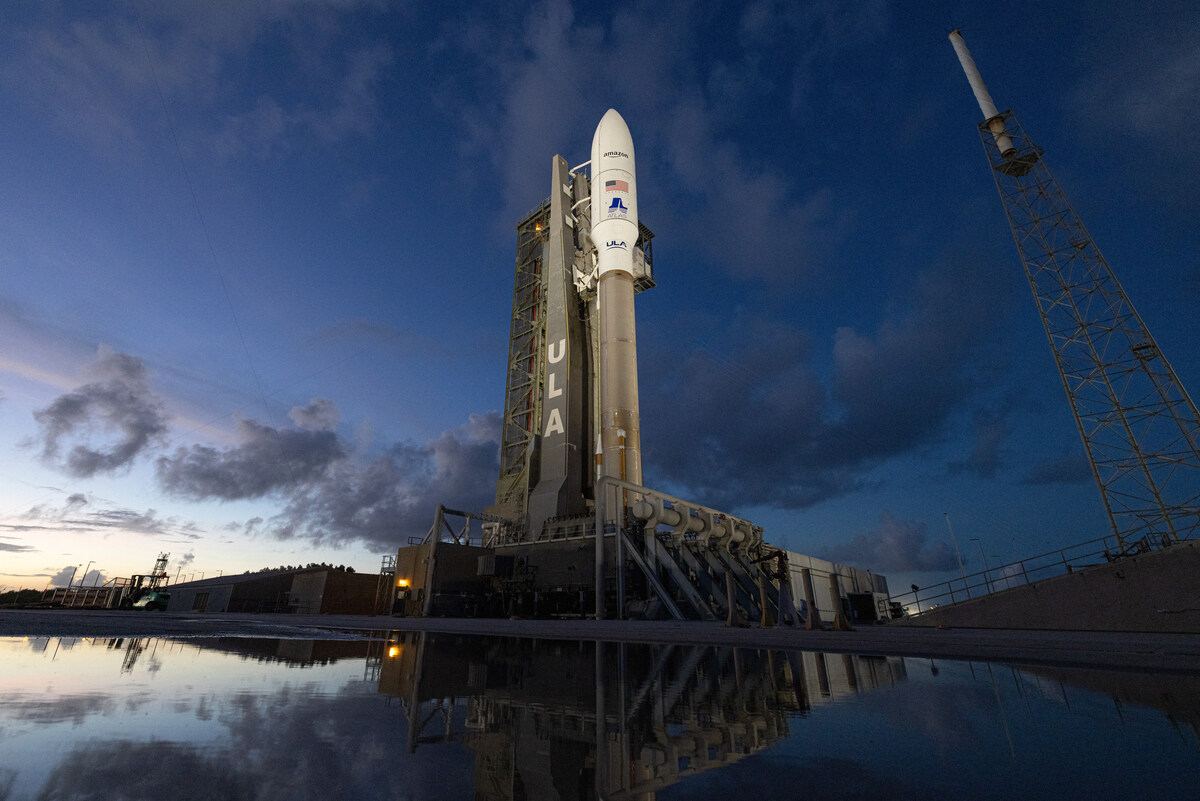
IMG_3430.jpeg

(Photo from AFP)

The Atlas V rocket carrying the satellites lifted off from Cape Canaveral in Florida at 2:06 pm local time (6:06 pm GMT).

The launch was carried out by the United Launch Alliance (ULA) industrial group, a joint venture between Boeing and Lockheed Martin.

Once up and running, the company founded by Jeff Bezos says its Project Kuiper will provide "fast, affordable broadband to unserved and underserved communities around the world," with a constellation of more than 3,200 satellites in low Earth orbit (LEO).

"We've done extensive testing here in our lab and have a high degree of confidence in our satellite design, but there's no substitute for on-orbit testing," said Rajeev Badyal, Project Kuiper's vice president of technology.

The company has said it would invest $10 billion in the project and has booked 77 heavy-lift launches with commercial providers Arianespace, ULA, and Bezos-owned Blue Origin.

The first operational satellites of the Kuiper project are due to be launched in early 2024, according to Amazon, which hopes for initial tests with customers at the end of next year.

The test on Friday attempted to establish contact between the probes and Earth, deploy their solar panels, and confirm that all instruments are operating correctly and at the desired temperatures.

The two prototypes will then be removed from orbit and disintegrated in the Earth's atmosphere at the end of the test mission.

These services are designed to provide internet access to even the most remote and underserved areas around the world, including war zones or disaster-struck areas.

Musk's SpaceX launched the first batch of its more than 3,700 operational Starlink satellites in 2019 and is by far the biggest player.

Musk's ownership of Starlink caused uproar in Ukraine last month when it was revealed that he refused to turn on the service for a planned attack by Kyiv forces on Russia's Black Sea navy fleet last year.

London-headquartered OneWeb is another early entrant in the emerging sector. Given the technology's strategic importance, governments are also keen to join the rush into the sector.

China plans to launch 13,000 satellites as part of its GuoWang constellation, while Canada's Telesat will add 300 and German start-up Rivada is eyeing 600.

That will be in addition to the European Union's Iris project -- 170 satellites -- and the 300-500 satellites planned to be launched by the US military's Space Development Agency.


Related Tags

world news
ADVERTISEMENT
.most-popular .layout-ratio{ padding-bottom: 79.13%; } @media (min-width: 768px) and (max-width: 1024px) { .widget-title { font-size: 15px !important; } }

{{ articles_filter_1561_widget.title }}

.most-popular .layout-ratio{ padding-bottom: 79.13%; } @media (min-width: 768px) and (max-width: 1024px) { .widget-title { font-size: 15px !important; } }

{{ articles_filter_1562_widget.title }}

.most-popular .layout-ratio{ padding-bottom: 79.13%; } @media (min-width: 768px) and (max-width: 1024px) { .widget-title { font-size: 15px !important; } }

{{ articles_filter_1563_widget.title }}

{{ articles_filter_1564_widget.title }}

.mb-article-details { position: relative; } .mb-article-details .article-body-preview, .mb-article-details .article-body-summary{ font-size: 17px; line-height: 30px; font-family: "Libre Caslon Text", serif; color: #000; } .mb-article-details .article-body-preview iframe , .mb-article-details .article-body-summary iframe{ width: 100%; margin: auto; } .read-more-background { background: linear-gradient(180deg, color(display-p3 1.000 1.000 1.000 / 0) 13.75%, color(display-p3 1.000 1.000 1.000 / 0.8) 30.79%, color(display-p3 1.000 1.000 1.000) 72.5%); position: absolute; height: 200px; width: 100%; bottom: 0; display: flex; justify-content: center; align-items: center; padding: 0; } .read-more-background a{ color: #000; } .read-more-btn { padding: 17px 45px; font-family: Inter; font-weight: 700; font-size: 18px; line-height: 16px; text-align: center; vertical-align: middle; border: 1px solid black; background-color: white; } .hidden { display: none; }
function initializeAllSwipers() { // Get all hidden inputs with cms_article_id document.querySelectorAll('[id^="cms_article_id_"]').forEach(function (input) { const cmsArticleId = input.value; const articleSelector = '#article-' + cmsArticleId + ' .body_images'; const swiperElement = document.querySelector(articleSelector); if (swiperElement && !swiperElement.classList.contains('swiper-initialized')) { new Swiper(articleSelector, { loop: true, pagination: false, navigation: { nextEl: '#article-' + cmsArticleId + ' .swiper-button-next', prevEl: '#article-' + cmsArticleId + ' .swiper-button-prev', }, }); } }); } setTimeout(initializeAllSwipers, 3000); const intersectionObserver = new IntersectionObserver( (entries) => { entries.forEach((entry) => { if (entry.isIntersecting) { const newUrl = entry.target.getAttribute("data-url"); if (newUrl) { history.pushState(null, null, newUrl); let article = entry.target; // Extract metadata const author = article.querySelector('.author-section').textContent.replace('By', '').trim(); const section = article.querySelector('.section-info ').textContent.replace(' ', ' '); const title = article.querySelector('.article-title h1').textContent; // Parse URL for Chartbeat path format const parsedUrl = new URL(newUrl, window.location.origin); const cleanUrl = parsedUrl.host + parsedUrl.pathname; // Update Chartbeat configuration if (typeof window._sf_async_config !== 'undefined') { window._sf_async_config.path = cleanUrl; window._sf_async_config.sections = section; window._sf_async_config.authors = author; } // Track virtual page view with Chartbeat if (typeof pSUPERFLY !== 'undefined' && typeof pSUPERFLY.virtualPage === 'function') { try { pSUPERFLY.virtualPage({ path: cleanUrl, title: title, sections: section, authors: author }); } catch (error) { console.error('ping error', error); } } // Optional: Update document title if (title && title !== document.title) { document.title = title; } } } }); }, { threshold: 0.1 } ); function showArticleBody(button) { const article = button.closest("article"); const summary = article.querySelector(".article-body-summary"); const body = article.querySelector(".article-body-preview"); const readMoreSection = article.querySelector(".read-more-background"); // Hide summary and read-more section summary.style.display = "none"; readMoreSection.style.display = "none"; // Show the full article body body.classList.remove("hidden"); } document.addEventListener("DOMContentLoaded", () => { let loadCount = 0; // Track how many times articles are loaded const offset = [1, 2, 3, 4, 5, 6, 7, 8, 9, 10]; // Offset values const currentUrl = window.location.pathname.substring(1); let isLoading = false; // Prevent multiple calls if (!currentUrl) { console.log("Current URL is invalid."); return; } const sentinel = document.getElementById("load-more-sentinel"); if (!sentinel) { console.log("Sentinel element not found."); return; } function isSentinelVisible() { const rect = sentinel.getBoundingClientRect(); return ( rect.top < window.innerHeight && rect.bottom >= 0 ); } function onScroll() { if (isLoading) return; if (isSentinelVisible()) { if (loadCount >= offset.length) { console.log("Maximum load attempts reached."); window.removeEventListener("scroll", onScroll); return; } isLoading = true; const currentOffset = offset[loadCount]; window.loadMoreItems().then(() => { let article = document.querySelector('#widget_1690 > div:nth-last-of-type(2) article'); intersectionObserver.observe(article) loadCount++; }).catch(error => { console.error("Error loading more items:", error); }).finally(() => { isLoading = false; }); } } window.addEventListener("scroll", onScroll); });

Sign up by email to receive news.