






 Philippines
National
95% of Filipinos spent more on food in past 3 months; 53% decreased food consumption — Pulse Asia
Philippines
National
95% of Filipinos spent more on food in past 3 months; 53% decreased food consumption — Pulse Asia
95% of Filipinos spent more on food in past 3 months; 53% decreased food consumption — Pulse Asia


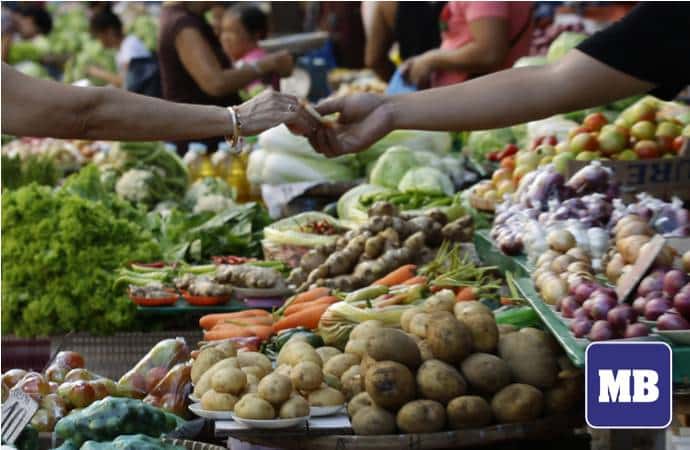
The results of a Pulse Asia survey released on Thursday, Oct. 5 revealed that most Filipinos spent more on food (95 percent), with 83 percent citing rice and 61 percent identifying non-rice food items as their top household items, in the previous three months.
Pulse Asia’s “Ulat ng Bayan” survey, which was conducted from Sept. 10 to 14 with 1,200 adult respondents, also found a “sizeable majority” of the respondents spending more on electricity (62 percent).
Meanwhile, non-majority figures are recorded in relation to other items, including gasoline/diesel (22 percent), medicine and other health-related needs (17 percent), water (16 percent), LPG (15 percent), transportation (13 percent), cellphone load (4 percent), and recreation-related expenses (3 percent).
Other items are volunteered by 3 percent of respondents.
“Across geographic areas and socio-economic, majorities cite food as one of the household items they spent more on in the previous quarter (89 to 98 percent and 94 to 99 percent, respectively),” Pulse Asia said.
“More specifically, most Filipino adults across the same sub-groupings report spending more on rice (64 to 94 percent and 72 to 85 percent, respectively) and non-rice food items (52 to 71 percent and 57 to 74 percent, respectively). Electricity is the only other household item identified by majorities in these sub-groupings (55 to 85 percent and 65 to 73 percent, respectively), with Mindanao and Class E as exceptions (44 percent and 40 percent, respectively),” it added.
Pulse Asia pointed out that there have been significant changes in spending on food and electricity, with an increase in spending on rice and a decrease in electricity spending.
“Year-on-year, the only significant changes are recorded in relation to spending on food and electricity. At the national level, there is an increase in the percentage of adults who spent more on food (+6 percentage points), specifically rice (+16 percentage points), while the reverse hold true in connection with spending on electricity (-6 percentage points),” it said.
Rice spending increased across various areas and classes, with figures increasing by 13 to 24 percentage points and 16 to 20 percentage points, respectively, except for Class E.
The only other marked movement between September 2022 and September 2023 is the decline in the percentage of those in Mindanao who spent more on electricity (-14 percentage points), Pulse Asia said.
Half of Filipinos decreased their food consumption in past three months
Pulse Asia also noted that over half of Filipino adults (53 percent) decreased their food consumption in the past three months, with notable differences observed between September 2022 and September 2023.
“At the same time that nearly all adults (95 percent) report spending more on food in the previous quarter, a small majority of the adult population (53 percent) say they consumed less food in the same period. Specifically, 41 percent reduced their consumption of non-rice food items while 21 percent consumed less rice,” it said.
“Meanwhile, almost half of the adult population (49 percent) consumed less electricity. Other items that Filipino adults consumed less of in the last quarter are cellphone load (28 percent), water (25 percent), LPG (21 percen), gasoline/diesel (20 percent), recreation-related expenses (17 percent), transportation (16 percent), and medicine and other health-related needs (11 percent). On the other hand, 8 percent say they did not reduce their consumption of any of these items during the said period,” it added.
Pulse Asia also observed that the percentage of Metro Manilans and Visayans who consume less food has decreased by 26 percentage points and 29 percentage points, respectively.
This trend is particularly evident in the consumption of non-rice food items in Metro Manila (-24 percentage points) and rice and non-rice foodstuff in the Visayas (-18 and -26 percentage points).
In addition, power consumption among Metro Manilans has decreased by 15 percentage points, transportation in Class D has decreased by 8 percentage points, and cellphone load in Luzon and Class E has decreased by -17 and -16 percentage points, respectively.
‘Virtually’ all Filipinos observed price increases in commodities
“In the Philippines as a whole (99 percent), as well as across geographic areas and socio-economic groupings (98 to 100 percent and 99 to 100 percent, respectively), essentially every adult observes an increase in the prices of basic goods that they regularly consume,” Pulse Asia said.
The commodities cited by most adults are food (95 percent), particularly rice (90 percent) and non-rice foodstuff (60 percent). Other items with price increases in the past three months are electricity (44 percent), gasoline/diesel (24 percent), LPG (19 percent), sugar-sweetened beverages (13 percent), transportation (12 percent), medicines (11 percent), water (7 percent), recreation (3 percent), cellphone load (3 percent), cigarettes (2 percent), and alcoholic drinks (1 percent).
For the period September 2022 to September 2023, Pulse Asia noted that there is an increase in the percentage of adults who observe an increase in the price of food in the past quarter (+9 percentage points), specifically rice (+35 percentage points).
“Conversely, figures decline in relation to transportation (-6 percentage points), sugar-sweetened beverages (-8 percentage points), and electricity (-10 percentage points),” it said.