

ADVERTISEMENT

Sabalenka tries to seal year-end No. 1 spot at WTA Finals

Published Oct 28, 2023 01:14 am

At A Glance

  • The $9 million season-ending outdoor hardcourt showdown of eight top players features round-robin group matches to decide semifinal pairings ahead of the November 5 championship match.

CANCUN (AFP) -- Top-ranked Aryna Sabalenka will try to hold off Poland's second-placed Iga Swiatek for the year-end world number one spot when the WTA Finals begin on Sunday, Oct 29, at Cancun, Mexico.
33UH3PW-highres.jpg
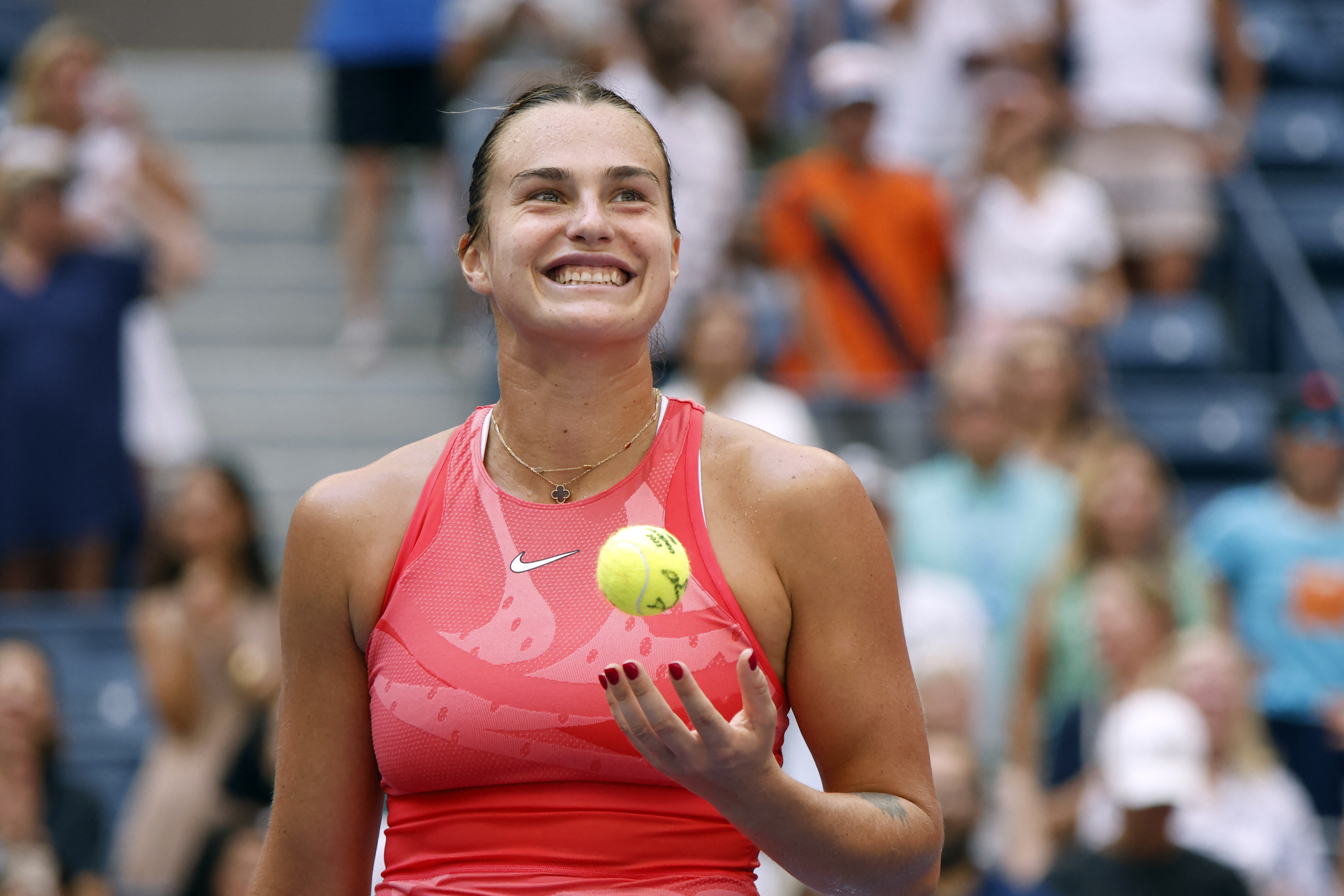
Belarus' Aryna Sabalenka (AFP)

The $9 million season-ending outdoor hardcourt showdown of eight top players features round-robin group matches to decide semifinal pairings ahead of the November 5 championship match.

Sabalenka, the reigning Australian Open champion, was the runner-up in last month's US Open and reached the semifinals at Wimbledon and the French Open.

The 25-year-old from Belarus also won WTA titles this year at Madrid and Adelaide and enters the WTA Finals with a 630-point lead over 22-year-old reigning French Open champion Swiatek.

Four-time Grand Slam winner Swiatek, the 2022 year-end world number one, also took 2023 titles at Stuttgart, Qatar, Poland and earlier this month at Beijing.

Sabalenka can clinch the year-end top spot by reaching the final with a 2-1 group stage record no matter what Swiatek does.

"It's not just about becoming world number one," Sabalenka said last month in China.

"I think it's about finishing the year as world number one and staying there as long as you can."

If Swiatek loses a round-robin match, Sabalenka can secure the year-end number one by going unbeaten in group play or reaching the final.

Should Swiatek drop two matches in the group stage, a 2-1 round-robin record would be enough to make Sabalenka the year-end rankings leader.

Swiatek, this year's WTA match wins leader with 63, must make the final to have a chance at the year-end number one provided Sabalenka plays all her group matches.

If Sabalenka wins even one group stage match, Swiatek would need to win the title for a chance at the throne.

Others in the field include 19-year-old US Open champion Coco Gauff, fellow American Jessica Pegula, Greece's Maria Sakkari, Ons Jabeur of Tunisia, Kazakhstan's Elena Rybakina and Czech Marketa Vondrousova, the reigning Wimbledon champion.

Sabalenka became world number one after her run to the US Open final in September, ending Swiatek's 75-week reign atop the rankings after reaching number one for the first time in April 2022.

In last year's WTA Finals, Sabalenka snapped a four-match losing streak to Swiatek with a semifinal triumph but dropped the final to France's Caroline Garcia.

In two meetings this year, both in WTA clay finals, Swiatek won at Stuttgart and Sabalenka won at Madrid.

Related Tags

Aryna Sabalenka WTA
ADVERTISEMENT
.most-popular .layout-ratio{ padding-bottom: 79.13%; } @media (min-width: 768px) and (max-width: 1024px) { .widget-title { font-size: 15px !important; } }

{{ articles_filter_1561_widget.title }}

.most-popular .layout-ratio{ padding-bottom: 79.13%; } @media (min-width: 768px) and (max-width: 1024px) { .widget-title { font-size: 15px !important; } }

{{ articles_filter_1562_widget.title }}

.most-popular .layout-ratio{ padding-bottom: 79.13%; } @media (min-width: 768px) and (max-width: 1024px) { .widget-title { font-size: 15px !important; } }

{{ articles_filter_1563_widget.title }}

{{ articles_filter_1564_widget.title }}

.mb-article-details { position: relative; } .mb-article-details .article-body-preview, .mb-article-details .article-body-summary{ font-size: 17px; line-height: 30px; font-family: "Libre Caslon Text", serif; color: #000; } .mb-article-details .article-body-preview iframe , .mb-article-details .article-body-summary iframe{ width: 100%; margin: auto; } .read-more-background { background: linear-gradient(180deg, color(display-p3 1.000 1.000 1.000 / 0) 13.75%, color(display-p3 1.000 1.000 1.000 / 0.8) 30.79%, color(display-p3 1.000 1.000 1.000) 72.5%); position: absolute; height: 200px; width: 100%; bottom: 0; display: flex; justify-content: center; align-items: center; padding: 0; } .read-more-background a{ color: #000; } .read-more-btn { padding: 17px 45px; font-family: Inter; font-weight: 700; font-size: 18px; line-height: 16px; text-align: center; vertical-align: middle; border: 1px solid black; background-color: white; } .hidden { display: none; }
function initializeAllSwipers() { // Get all hidden inputs with cms_article_id document.querySelectorAll('[id^="cms_article_id_"]').forEach(function (input) { const cmsArticleId = input.value; const articleSelector = '#article-' + cmsArticleId + ' .body_images'; const swiperElement = document.querySelector(articleSelector); if (swiperElement && !swiperElement.classList.contains('swiper-initialized')) { new Swiper(articleSelector, { loop: true, pagination: false, navigation: { nextEl: '#article-' + cmsArticleId + ' .swiper-button-next', prevEl: '#article-' + cmsArticleId + ' .swiper-button-prev', }, }); } }); } setTimeout(initializeAllSwipers, 3000); const intersectionObserver = new IntersectionObserver( (entries) => { entries.forEach((entry) => { if (entry.isIntersecting) { const newUrl = entry.target.getAttribute("data-url"); if (newUrl) { history.pushState(null, null, newUrl); let article = entry.target; // Extract metadata const author = article.querySelector('.author-section').textContent.replace('By', '').trim(); const section = article.querySelector('.section-info ').textContent.replace(' ', ' '); const title = article.querySelector('.article-title h1').textContent; // Parse URL for Chartbeat path format const parsedUrl = new URL(newUrl, window.location.origin); const cleanUrl = parsedUrl.host + parsedUrl.pathname; // Update Chartbeat configuration if (typeof window._sf_async_config !== 'undefined') { window._sf_async_config.path = cleanUrl; window._sf_async_config.sections = section; window._sf_async_config.authors = author; } // Track virtual page view with Chartbeat if (typeof pSUPERFLY !== 'undefined' && typeof pSUPERFLY.virtualPage === 'function') { try { pSUPERFLY.virtualPage({ path: cleanUrl, title: title, sections: section, authors: author }); } catch (error) { console.error('ping error', error); } } // Optional: Update document title if (title && title !== document.title) { document.title = title; } } } }); }, { threshold: 0.1 } ); function showArticleBody(button) { const article = button.closest("article"); const summary = article.querySelector(".article-body-summary"); const body = article.querySelector(".article-body-preview"); const readMoreSection = article.querySelector(".read-more-background"); // Hide summary and read-more section summary.style.display = "none"; readMoreSection.style.display = "none"; // Show the full article body body.classList.remove("hidden"); } document.addEventListener("DOMContentLoaded", () => { let loadCount = 0; // Track how many times articles are loaded const offset = [1, 2, 3, 4, 5, 6, 7, 8, 9, 10]; // Offset values const currentUrl = window.location.pathname.substring(1); let isLoading = false; // Prevent multiple calls if (!currentUrl) { console.log("Current URL is invalid."); return; } const sentinel = document.getElementById("load-more-sentinel"); if (!sentinel) { console.log("Sentinel element not found."); return; } function isSentinelVisible() { const rect = sentinel.getBoundingClientRect(); return ( rect.top < window.innerHeight && rect.bottom >= 0 ); } function onScroll() { if (isLoading) return; if (isSentinelVisible()) { if (loadCount >= offset.length) { console.log("Maximum load attempts reached."); window.removeEventListener("scroll", onScroll); return; } isLoading = true; const currentOffset = offset[loadCount]; window.loadMoreItems().then(() => { let article = document.querySelector('#widget_1690 > div:nth-last-of-type(2) article'); intersectionObserver.observe(article) loadCount++; }).catch(error => { console.error("Error loading more items:", error); }).finally(() => { isLoading = false; }); } } window.addEventListener("scroll", onScroll); });

Sign up by email to receive news.