







'A beacon of hope': DOST launches 1st youth S&T festival


The Department of Science and Technology (DOST) on Wednesday, Oct. 25, commenced its first-ever National Youth Science, Technology, and Innovation Festival (NYSTIF) to promote science, technology, engineering, and mathematics (STEM) and inspire youths to pursue careers in the field.
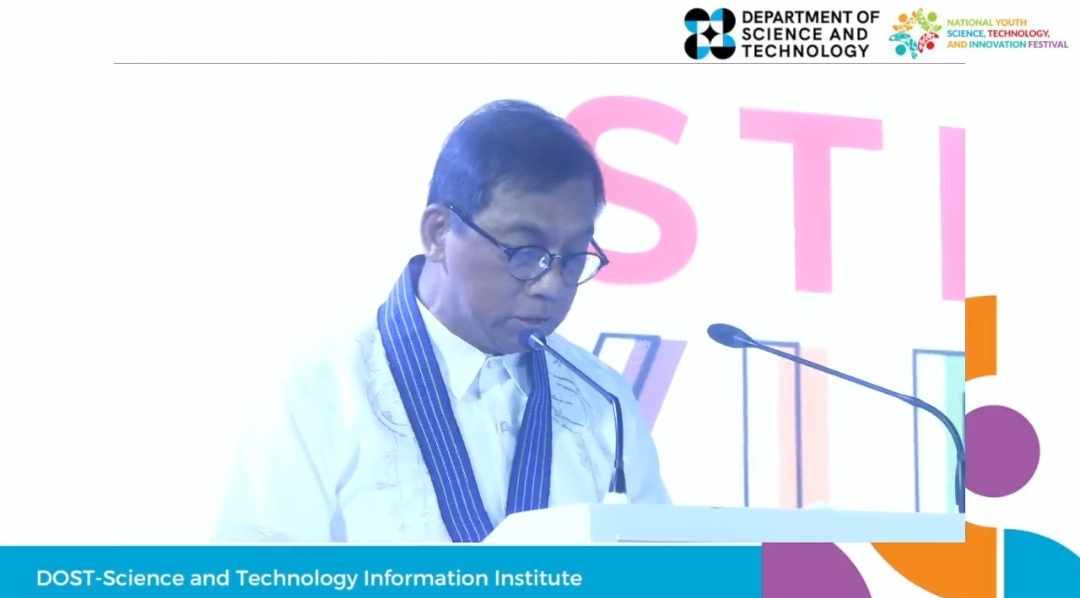
"Our aspiration is that NYSTIF becomes a beacon of hope that our pool of young scientists and researchers will increase," DOST Secretary Dr. Renato Solidum Jr. said as he officially opened the three-day youth-centered festival, which will run from Oct. 25 to 28.
In his welcome address at the Philippine International Convention Center (PICC) in Pasay City, Solidum described the NYSTIF as “a conscious effort of the DOST to push STEM education and careers to a higher plane.”
The secretary has been encouraging youths to consider careers in science and technology.
READ: https://mb.com.ph/2023/10/2/dost-urges-public-to-consider-careers-in-science-and-technology
He noted that the initiative will help the youth recognize the wide-ranging applications of science and opportunities within the field, given the world’s rapid digital evolution and advancements in artificial intelligence.
Additionally, Solidum emphasized the importance of science, technology, and innovation in driving economic development.
“If we are to survive and thrive in this new world, we need to have a strong STEM community of young and highly competent scientists, engineers, researchers, and mathematicians that will transform the Philippine economy into a competitive, innovative, and relevant one,” he said.
'Practical applications of science'

In an interview, Solidum emphasized the festival's importance as it focuses on the practical applications of science, technology, and innovation, distinguishing it from traditional science competitions that mainly involve quizzes and theoretical knowledge.
He also pointed out that while the DOST has already been engaged in hosting multiple contests for the agency, the idea of bringing all these contests together, including preliminary rounds from various regions and places to a central location for the final competition is a very effective strategy for promoting science and technology.
"I see a parallelism in both initiatives and involving students in this kind of activity will demonstrate that it can be a fun and educational environment," he added.
Moreover, Solidum stressed the uniqueness of the competitions in the event, as "it aims to show youth that it's not just about determining who is the most intelligent but also about the practical application of science and how innovative we can be in solving pressing problems.”
One of the project participants is from DOST-PCHRD, Louise Nicole Dizon, who was involved in a project on drug resistance surveillance and the development of molecular diagnostics for drug resistance detection at the University of the Philippines Manila (UP-Manila).
She said that through this project, determining and characterizing human immunodeficiency virus (HIV) drug resistance in the Philippines, treatment failure and development of further drug resistance will be prevented by detecting the resistance early.
Dizon emphasized the significance of the event as it offers an opportunity “to raise awareness among young people about the importance of early HIV detection."