






 Philippines
National
Libanan gives thumbs up as BI taps body-worn cams in secondary inspections
Philippines
National
Libanan gives thumbs up as BI taps body-worn cams in secondary inspections
Libanan gives thumbs up as BI taps body-worn cams in secondary inspections


At A Glance
- House Minority Leader and 4Ps party-list Rep. Marcelino "Nonoy" Libanan, a former Bureau of Immigration (BI) chief hailed on Sunday, Oct. 22 the agency's decision to use body-worn video cameras for its secondary inspectors.
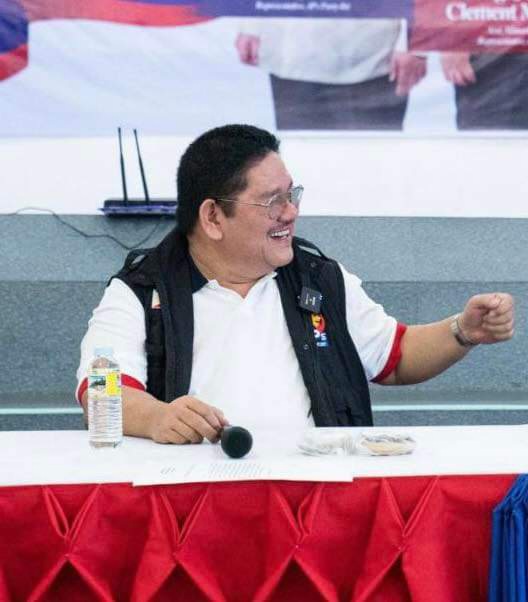 House Minority Leader and 4Ps party-list Rep. Marcelino “Nonoy” Libanan (Facebook)
A former Bureau of Immigration (BI) chief-turned-congressman hailed on Sunday, Oct. 22 the agency's decision to use body-worn video cameras for its secondary inspectors.
“The donning of body cameras will provide an accurate recording of events whenever an international traveler comes into contact with an immigration inspector. It will protect both the passenger and the officer,” said House Minority Leader and 4Ps party-list Rep. Marcelino “Nonoy” Libanan.
“It is a highly responsive move to take advantage of reform technology and foster absolute officer transparency and accountability in the performance of duties. In fact, it will also lessen the liability of inspectors,” he reckoned.
Libanan served as BI commissioner for three years during the Arroyo administration. He introduced the installation of closed-circuit television (CCTV) cameras in all airport immigration areas and counters in 2008.
“Secondary inspection” allows the BI to conduct additional research on an international traveler in order to verify information without causing delays for other arriving or departing passengers.
At a port of entry or exit, when an international traveler’s information cannot be readily verified (for example, due to lack of required documentation), the passenger is usually directed to an immigration interview area known as “secondary inspection".
The BI recently announced that it has earmarked P16 million to procure body cameras for its secondary inspectors.
In May, the House of Representatives approved on third and final reading a bill that would enable the BI to embark on a bold plan to modernize its systems and professionalize its staff.
House Bill (HB) No. 8203, or the proposed BI Modernization Act, allows the bureau to retain in a trust fund “no more than P1.2 billion” of its annual income from fees, fines, and penalties.
The money would then be used to fund the BI’s information technology (IT) projects, among other modernization plans, and to build up the capabilities of immigration officers.
Under the bill, the salary grades assigned to junior immigration officers would also be bumped up by two notches to allow the BI to attract highly qualified staff.
“We are counting on the full automation and digitization of the BI’s processes and services to improve travel experience and reinforce border security,” Libanan said.
Libanan originally introduced the BI Modernization bBll in 2004, when he was representative of the lone district of Eastern Samar in Congress. He refiled the bill last year upon his election as 4Ps Party-list representative.