







Telco vows to stop online sexual abuse of children


Telco giant PLDT Inc. and Smart Communications Corp. expressed its commitment to eradicating online sexual abuse and exploitation of children (OSAEC) that is rampant in the local digital sphere.
In a press conference with the Council for the Welfare of Children (CWC), PLDT and Smart First Vice President (FVP) and Corporate Communications Head Cathy Yang said OSAEC is one of the issues the telco company is trying to address in line with its mandate to ensure children's protection.
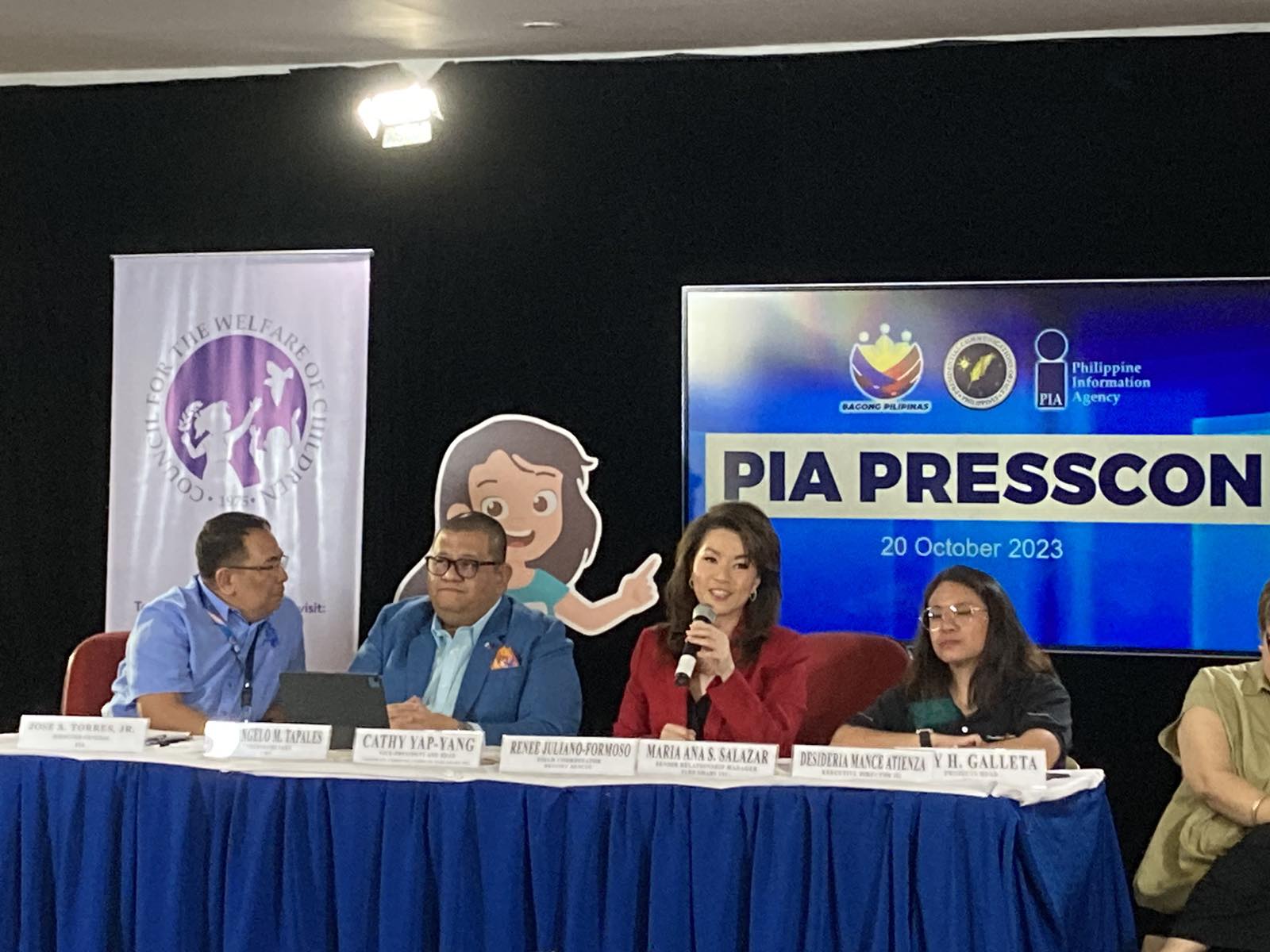
Yang said prevalence of OSAEC in the current digital age is alarming, given the rise of artificial intelligence (AI)-generated OSAEC, pertaining to the collection of children and teenagers' pictures in the internet to create child sexual abuse and exploitation materials (CSAEM).
According to data from the "Scale of Harm" study conducted by the International Justice Mission (IJM), wherein PLDT Group was chosen as its private sector partner, around 500,000 Filipino children were trafficked in 2022 to produce new CSEM, and nearly 250,000 adult Filipinos trafficked children to produce CSEM.
The median age of the abused children was 11 years-old, with victims as young as one year-old, and abuse being inflicted on children ages two months to four years-old.
Yang emphasized the importance of the "whole of nation approach" followed by PLDT in curbing OSAEC that focuses on the utilization of technology, strengthening advocacy, engaging with communities, and intervening in policy-making.
"We are preparing by making sure our child protection platform is robust and with partnerships that are as robust like the CWC, creating a community-based reporting system. Always a step ahead of the bad actors," she said.
"It's both our job as consumers to keep ourselves safe as adults and keep our children safer through the technology that we have and the policies that we're trying to execute," added Yang.
According to PLDT's data gathered from January to September 2023, the company has managed to block access to 13.3 billion malicious domains, 1.5 million access attempts to view OSAEC links and contents, 51 million SMShing messages, and prevented nine billion cyber attacks and data breaches.
It has also blocked 256,000 mobile numbers involved in Phishing, SMShing, and Vshing activities; 5.1 million updated blocked domains, and 855,000 blocked OSAEC domains.
As per data collated from PLDT from May 2021 to April 2023, the company has fulfilled four out of seven recommendations in IJM's inaugural study.
These include community-based reporting through the Makabata Helpline 1383 initiative to be launched on Oct. 21 with CWC; community-based efforts through partnerships with SaferKidsPH and Kids for Kids PH on children protection; enforcement of anti-OSAEC law tech provisions like PLDT's Child Safeguarding Policy; and the expedited detection, reporting, and blocking of suspicious transactions with the help of online payments company Maya.
PLDT has established partnerships with Google to further its digital literacy advocacy, and gathers lists from global internet watchdogs like the Internet Watch Foundation (IWF) to ensure OSAEC websites and online platforms are identified and blocked.
Yang also mentioned the company's objective of establishing a "Global Chain of Trust (GCOT)" that gathers all internet service providers (ISPs) in the Southeast Asian region to combat OSAEC, calling it a "space to watch."