







Our future lies in our teachers


FINDING ANSWERS
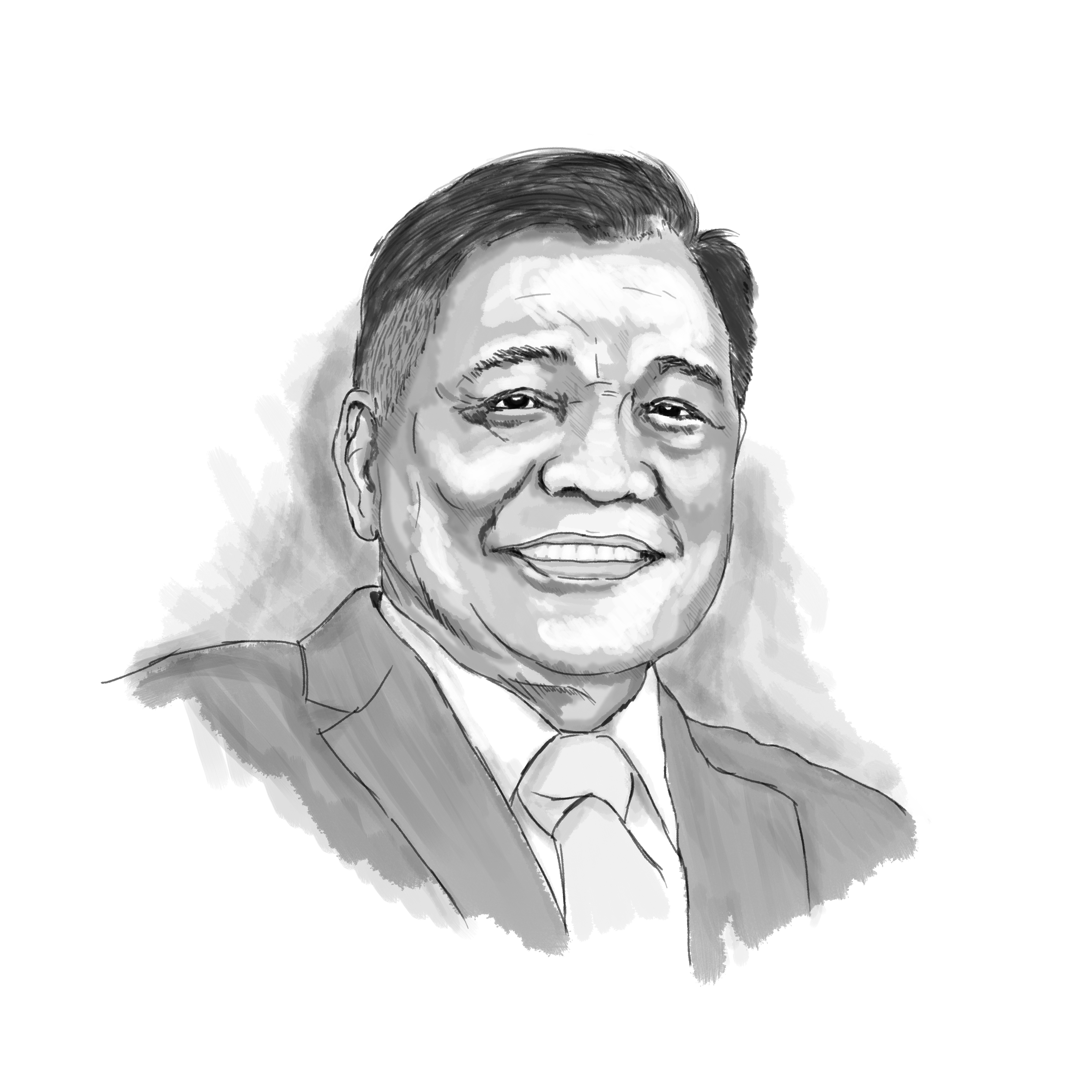
Before the commemoration of National Teachers’ Month in the Philippines culminates this Thursday, Oct. 5, when World Teachers’ Day is observed across the globe, let me pay tribute to the special men and women who nurture young minds and develop a productive citizenry.
Presidential Proclamation No. 242 of 2011 declared Sept. 5 to Oct. 5 of every year as the period for celebrating our teachers “to revitalize the image of teaching as a vocation by increasing public awareness on the value of teachers in Philippine society and national development.”
Teachers are valuable indeed. Their profession is among the noblest and most fulfilling. I’m proud to say that my late father belonged to this very honorable profession. So are some of my siblings. I was also a teacher, part-time, at the Pamantasan ng Lungsod ng Maynila where law was my specialty.
The vital role of teachers in nation-building is undeniable. Teachers in public and private schools help shape the intellectual prowess of students, particularly those in pre-school and grade school levels where young minds are taught not just how to read and write, but even how to think.
In the life of a very young student, the role of teachers is critical. If after Grade 3, a student is still unable to comprehend lessons, the inability could last a lifetime, experts say. Thus, the teacher’s persistent efforts to develop and strengthen the student’s mental faculties are crucial.
That teachers ultimately shape our nation’s destiny is undeniable. The influence they have over kids is strengthened as teachers open up a whole new world beyond home. In such enduring influence lies the foundation for character building and values formation of the Filipino youth.
Countless tales abound on the sacrifices and heroic efforts of many teachers in public schools situated in very poor communities – of how they, despite being financially challenged themselves, share their food or shell out their own money to help students who attend classes hungry, and how these teachers really go out of their way to ensure pupils don’t go astray but keep coming back to school.
Amid the heroism of our teachers, however, are some grim realities that cannot be denied. These are the perennial issues over poor quality of education, the low proficiency of some teachers on what they’re supposed to teach, and the dismal results of Licensure Examination for Teachers (LET).
In a 2022 World Bank (WB) report, the Philippines’ rate of the so-called learning poverty, which the WB said “means being unable to read and understand a short, age-appropriate text by age 10” was pegged at an astonishing 91 percent of Filipino children.
In the latest WB report titled “Fixing the Foundation: Teachers and Basic Education in East Asia and Pacific” released last month, it was revealed that the Philippines is among eight countries where the so-called learning poverty still “exceeded two-thirds.” The other countries are Cambodia, Kiribati, Laos, Myanmar, Papua New Guinea, Tonga and Tuvalu. The “learning poverty” rate of more than 67 percent is staggering, in contrast to just “three to four percent in Japan, Singapore, and the Republic of Korea.”
“Failure to equip students with foundational skills jeopardizes their ability to acquire more advanced skills that will help them succeed in the labor market and escape poverty,” a WB statement pointed out. “Since learning is cumulative, many of these children will never be able to develop the more advanced skills needed for innovative manufacturing and sophisticated services, the productivity-boosting economic activities that could lift countries from middle-income to high-income status.”
The World Bank cited the need to strengthen teachers’ capabilities through training.
“While data suggest that a significant percentage of the region’s teachers are trained each year, new surveys in Cambodia, Fiji, Lao PDR, Mongolia, Philippines, Thailand, Timor-Leste, Tonga, and Vietnam indicate training programs do not employ practices linked to improved student learning. For example, among the countries surveyed, there was a focus on subject content in only 14 percent of programs, compared to 81 percent of programs associated with improvements in student learning globally,” the WB said.
As for LET, only 40.76 percent of those who took this year’s LET for elementary education have passed, while rate of passers for high school education LET was pegged at 46.94 percent.
A study by the Philippine Business for Education (PBED) revealed that since 2009, the average passing rate of teachers was way below government’s 53 percent target passing rate, and “behind the average passing rate of those who took up medicine, the sciences, maritime, engineering, accountancy and agriculture.”
Clearly, the performance of teacher education institutions (TEIs) needs improvement. Poor quality of TEIs logically leads to poor quality of teachers, leading to poor quality of education, which partly explains our country’s rate of learning poverty.
To improve the quality of teachers, PBED said there must be a more stringent admission requirement for those who want to study teaching: Only those in the top 20 percent of a graduating high school class should be admitted to the teachers’ course. I think such requirement would go a long way to ensure the prestige and nobility of the teaching profession where heroes abound despite all the challenges. ([email protected])