






 Philippines
National
Cumulative impact assessment a must in Manila Bay reclamation project talks
Philippines
National
Cumulative impact assessment a must in Manila Bay reclamation project talks
Cumulative impact assessment a must in Manila Bay reclamation project talks


At A Glance
- Malacañang, through the Department of Environment and National Resources (DENR), reiterated on Monday, Oct. 16 the importance of finishing the cumulative impact assessment of the Manila Bay reclamation projects.
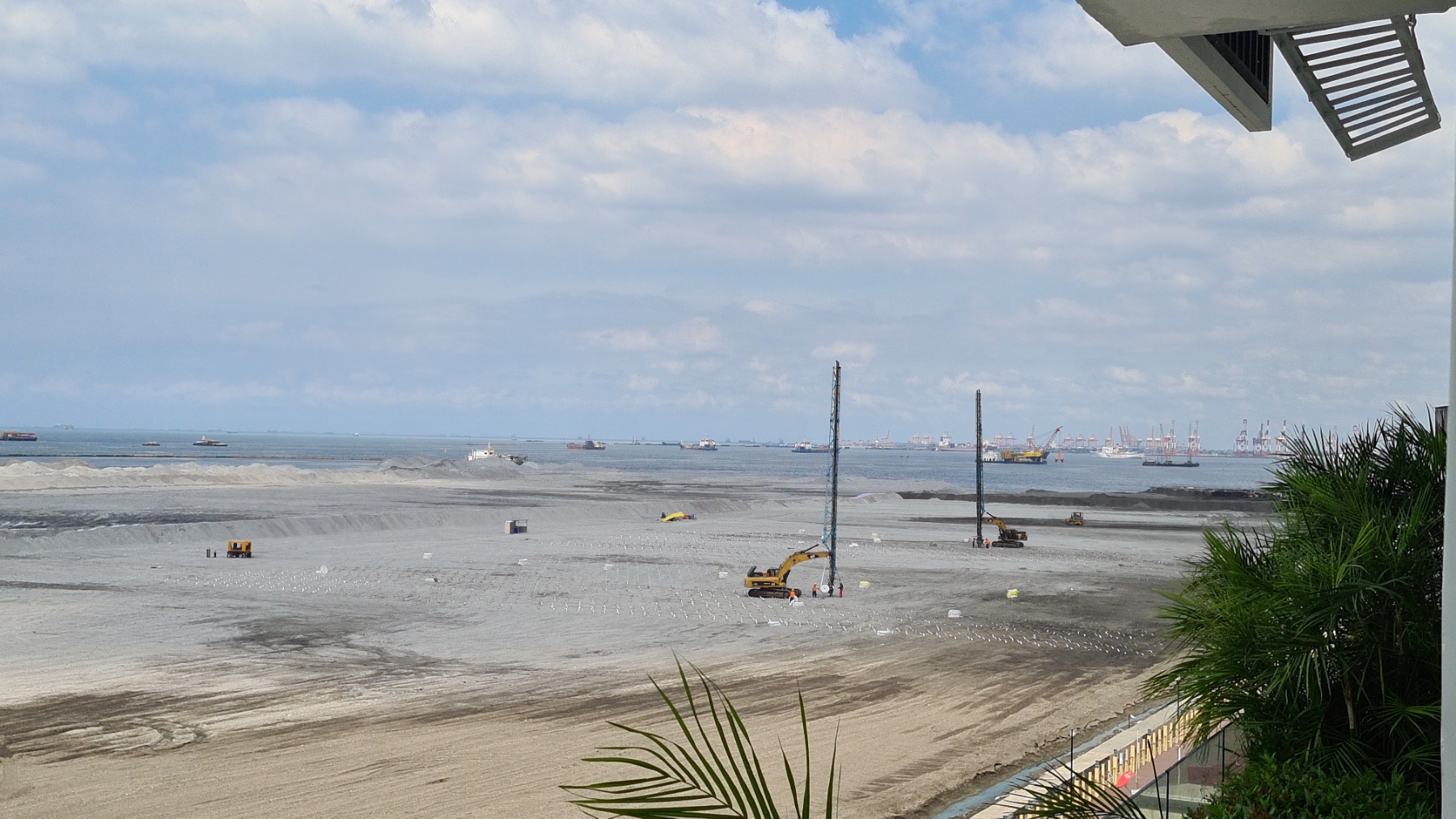 Manila Bay reclamation (Ellson Quismorio/ MANILA BULLETIN)
Malacañang, through the Department of Environment and National Resources (DENR), reiterated on Monday, Oct. 16 the importance of finishing the cumulative impact assessment of the Manila Bay reclamation projects.
This, after the Committee on Ways and Means discussed the financial impact of the persisting suspension of the 22 reclamation projects. No less than President Marcos ordered their suspension.
"The cumulative impact assessment will give us four scenarios and will provide inputs to the true cost of the mitigation of environment impacts given different scenarios," the Presidential Communications Office (PCO) said, quoting a previous statement from the DENR.
On Monday afternoon, the DENR under Secretary Maria Antonia Yulo-Loyzaga confirmed to the Manila Bulletin that the cumulative impact assessment was 'ongoing" and that it would "take some time" before it could be completed.
The PCO pointed to the 2008 Supreme Court (SC) Mandamus ruling, which directed 13 government agencies led by the DENR to clean up, rehabilitate and preserve Manila Bay.
"Economic costs are not the only consideration. The rule of law and the intergenerational responsibility for sustainable and climate resilient development are the concern of this administration," PCO again quoted the DENR.
The scope of the cumulative impact assessment will include regional environmental and urban planning analysis.
"This will allow us to envision the strategic redevelopment and development and value optimization of land," the DENR earlier said.
On Monday morning, Albay 2nd district Rep. Joey Salceda claimed during a ways and means committee hearing that the Philippines stands to lose P432 billion in the next five years if the reclamation projects remain suspended.
Salceda chairs the House panel, which on Monday heard the side of the Philippine
Reclamation Authority (PRA).
"Malaki na ang nalulugi sa gobyerno dahil sa suspension. Ang estimate po namin within five years, kasi karamihan diyan one-time transaction hindi ba? Umaabot po ng P432 billion at iyung lugi, lalong-lalo na ang mga nakapagsimula na," he said.
(The government is losing a lot of money because of the suspension. Our estimate is that within five years, since most of those are just one-time deals, right? We will lose up to P432 billion, especially for those that have already started.)
The economist-congressman went as far to say that, if done properly, the Manila Bay reclamation projects "can pay for the entire debt of the country".
Salceda said during the briefing that reclamation has been a “standard practice” among the largest cities in the world. He cited Tokyo bay in Japan, Singapore, and Hong Kong as places where major reclamations have taken place.
At any rate, Salceda said that his panel won't immediately recommend the lifting of the suspension of the reclamation projects; instead, he said he will hear first the side of the DENR in a scheduled hearing next week.