ADVERTISEMENT

WHO flies Gaza health supplies to Egypt border

Published Oct 14, 2023 10:12 am
33YA42L-Preview.jpg
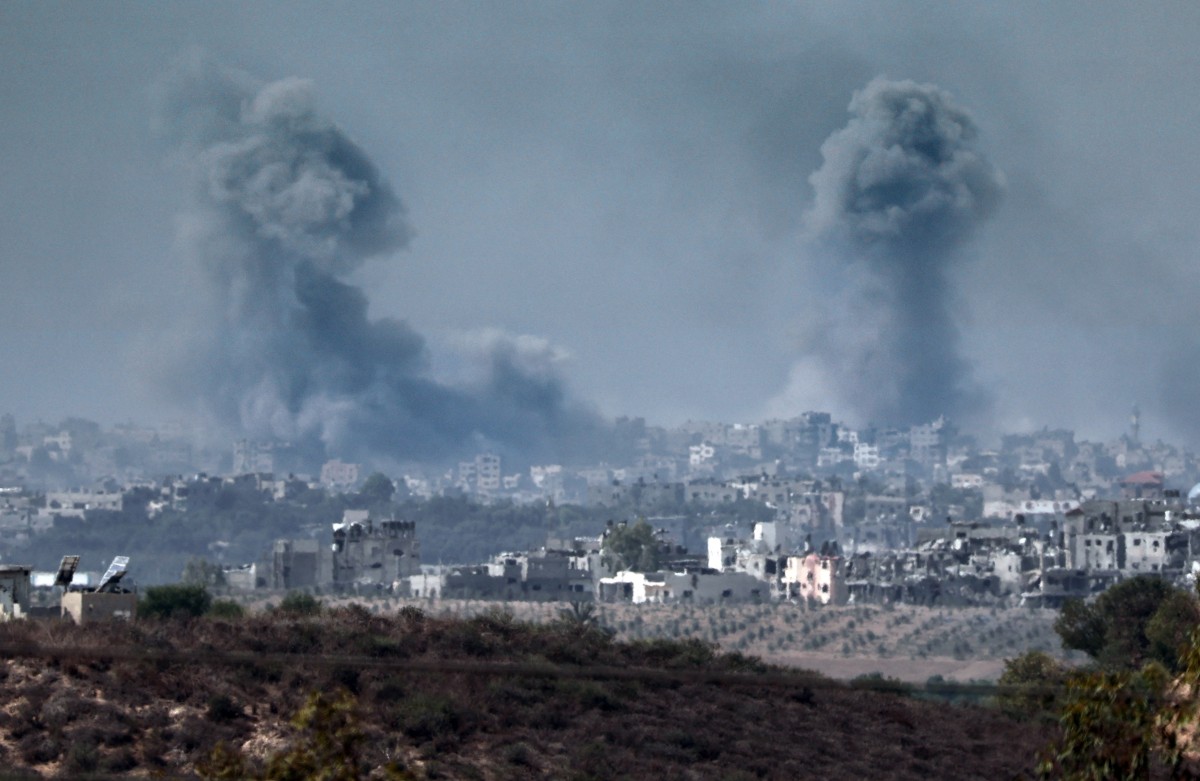
A picture taken from the Israeli city of Sderot shows black dust and smoke ascending in the Palestinian Gaza Strip, on October 14, 2023, amid the ongoing battles between Israel and the Palestinian Islamist group Hamas. Hamas launched a large-scale attack on Israel on October 7 which killed 1,300 people, sparking a retaliatory bombing campaign that has killed at least 1,900 in the Gaza Strip ahead of a potential Israeli ground invasion of the territory. (Photo by Thomas COEX / AFP)


GENEVA, Switzerland– The World Health Organization said Saturday enough basic health supplies to serve 300,000 people in the Gaza Strip have been flown to an Egyptian airport near the Palestinian enclave.

The supplies were ready to go in once humanitarian access could be established through the Rafah crossing from Egypt into the southern Gaza Strip, WHO said.

A plane carrying 78 cubic metres of health supplies from the UN health agency's logistics hub in Dubai has landed in El Arish airport "to serve the needs of 300,000 people," including pregnant women.

"Every hour these supplies remain on the Egyptian side of the border, more girls and boys, women, and men, especially those vulnerable or disabled, will die while supplies that can save them are less than 20 kilometres (12 miles) away," a statement said.

The Rafah border crossing between Egypt and Gaza is the only passage in and out of the coastal enclave not controlled by Israel.

It has been closed since Tuesday after three Israeli strikes in less than 24 hours, which damaged the terminal on the Palestinian side.

The WHO supplies include enough medicines to treat 1,200 wounded patients and 1,500 patients suffering from heart diseases, hypertension, diabetes, and respiratory problems.

There are also enough trauma pouches to treat 235 wounded people, which enable injured people to be stabilised and receive immediate, life-saving care anywhere it is needed.

The WHO called for an immediate opening of a humanitarian crossing through Rafah to deliver food, fuel, water and other essential survival items.

"The critically injured, the sick, and the vulnerable cannot wait," it said.

The first shipment of humanitarian aid arrived in El Arish on Thursday from Jordan, Egyptian state-affiliated media reported.

The United Arab Emirates' state news agency WAM said the UAE had sent a plane filled with medical aid to El Arish on Friday.

Meanwhile three Turkish planes filled with humanitarian aid landed Saturday at El Arish.


Related Tags

WORLDNEWS
ADVERTISEMENT
.most-popular .layout-ratio{ padding-bottom: 79.13%; } @media (min-width: 768px) and (max-width: 1024px) { .widget-title { font-size: 15px !important; } }

{{ articles_filter_1561_widget.title }}

.most-popular .layout-ratio{ padding-bottom: 79.13%; } @media (min-width: 768px) and (max-width: 1024px) { .widget-title { font-size: 15px !important; } }

{{ articles_filter_1562_widget.title }}

.most-popular .layout-ratio{ padding-bottom: 79.13%; } @media (min-width: 768px) and (max-width: 1024px) { .widget-title { font-size: 15px !important; } }

{{ articles_filter_1563_widget.title }}

{{ articles_filter_1564_widget.title }}

.mb-article-details { position: relative; } .mb-article-details .article-body-preview, .mb-article-details .article-body-summary{ font-size: 17px; line-height: 30px; font-family: "Libre Caslon Text", serif; color: #000; } .mb-article-details .article-body-preview iframe , .mb-article-details .article-body-summary iframe{ width: 100%; margin: auto; } .read-more-background { background: linear-gradient(180deg, color(display-p3 1.000 1.000 1.000 / 0) 13.75%, color(display-p3 1.000 1.000 1.000 / 0.8) 30.79%, color(display-p3 1.000 1.000 1.000) 72.5%); position: absolute; height: 200px; width: 100%; bottom: 0; display: flex; justify-content: center; align-items: center; padding: 0; } .read-more-background a{ color: #000; } .read-more-btn { padding: 17px 45px; font-family: Inter; font-weight: 700; font-size: 18px; line-height: 16px; text-align: center; vertical-align: middle; border: 1px solid black; background-color: white; } .hidden { display: none; }
function initializeAllSwipers() { // Get all hidden inputs with cms_article_id document.querySelectorAll('[id^="cms_article_id_"]').forEach(function (input) { const cmsArticleId = input.value; const articleSelector = '#article-' + cmsArticleId + ' .body_images'; const swiperElement = document.querySelector(articleSelector); if (swiperElement && !swiperElement.classList.contains('swiper-initialized')) { new Swiper(articleSelector, { loop: true, pagination: false, navigation: { nextEl: '#article-' + cmsArticleId + ' .swiper-button-next', prevEl: '#article-' + cmsArticleId + ' .swiper-button-prev', }, }); } }); } setTimeout(initializeAllSwipers, 3000); const intersectionObserver = new IntersectionObserver( (entries) => { entries.forEach((entry) => { if (entry.isIntersecting) { const newUrl = entry.target.getAttribute("data-url"); if (newUrl) { history.pushState(null, null, newUrl); let article = entry.target; // Extract metadata const author = article.querySelector('.author-section').textContent.replace('By', '').trim(); const section = article.querySelector('.section-info ').textContent.replace(' ', ' '); const title = article.querySelector('.article-title h1').textContent; // Parse URL for Chartbeat path format const parsedUrl = new URL(newUrl, window.location.origin); const cleanUrl = parsedUrl.host + parsedUrl.pathname; // Update Chartbeat configuration if (typeof window._sf_async_config !== 'undefined') { window._sf_async_config.path = cleanUrl; window._sf_async_config.sections = section; window._sf_async_config.authors = author; } // Track virtual page view with Chartbeat if (typeof pSUPERFLY !== 'undefined' && typeof pSUPERFLY.virtualPage === 'function') { try { pSUPERFLY.virtualPage({ path: cleanUrl, title: title, sections: section, authors: author }); } catch (error) { console.error('ping error', error); } } // Optional: Update document title if (title && title !== document.title) { document.title = title; } } } }); }, { threshold: 0.1 } ); function showArticleBody(button) { const article = button.closest("article"); const summary = article.querySelector(".article-body-summary"); const body = article.querySelector(".article-body-preview"); const readMoreSection = article.querySelector(".read-more-background"); // Hide summary and read-more section summary.style.display = "none"; readMoreSection.style.display = "none"; // Show the full article body body.classList.remove("hidden"); } document.addEventListener("DOMContentLoaded", () => { let loadCount = 0; // Track how many times articles are loaded const offset = [1, 2, 3, 4, 5, 6, 7, 8, 9, 10]; // Offset values const currentUrl = window.location.pathname.substring(1); let isLoading = false; // Prevent multiple calls if (!currentUrl) { console.log("Current URL is invalid."); return; } const sentinel = document.getElementById("load-more-sentinel"); if (!sentinel) { console.log("Sentinel element not found."); return; } function isSentinelVisible() { const rect = sentinel.getBoundingClientRect(); return ( rect.top < window.innerHeight && rect.bottom >= 0 ); } function onScroll() { if (isLoading) return; if (isSentinelVisible()) { if (loadCount >= offset.length) { console.log("Maximum load attempts reached."); window.removeEventListener("scroll", onScroll); return; } isLoading = true; const currentOffset = offset[loadCount]; window.loadMoreItems().then(() => { let article = document.querySelector('#widget_1690 > div:nth-last-of-type(2) article'); intersectionObserver.observe(article) loadCount++; }).catch(error => { console.error("Error loading more items:", error); }).finally(() => { isLoading = false; }); } } window.addEventListener("scroll", onScroll); });

Sign up by email to receive news.