ADVERTISEMENT

Dreaming of becoming a saint?

Published Oct 14, 2023 04:05 pm

THROUGH UNTRUE

What do you think?

You would probably answer, “no!” Many of us believe sanctity is reserved for those beyond the realm of the living. When someone tells you, “You’re so holy..,” it is often followed by “Sana kunin ka na ni Lord.” 


One time I told a young man that God was calling him to be a saint, he smirked and replied, “That's not for me. I’m not a Mother Teresa or a Lorenzo Ruiz.” Like many people, he associates holiness with intense suffering, a brutal tearing apart of the self, or risking what is certain for something merely promised. Even St. Augustine initially refused to make such a bargain, so he pleaded to God, saying, “Lord, make me holy, but not now!”


Holiness poses a daunting prospect because we fear giving up the pleasurable things we enjoy. C.S. Lewis observed, “I thought holiness was difficult to achieve because of something I could not do. I realized it was because of something I cannot stop doing.” It took him a lifetime to recognize that the fleeting pleasures he could not give uponly led him to a bottomless pit. 


Perhaps the most profound reason why few aspire to be saints is the belief that we are inherently flawed and prone to sin. We surrender to our baser instincts and justify it by saying, “I’m only human, and I live only once, so why not make the most of it?” Technology and consumerism reinforce this thinking by providing immediate and tangible gratification of our every desire.


One advertisement poses the question: “Ikaw, para kanino ka gumigising?” We have become lapdogs of the gurus of consumerism who tap into our emotions and desires. Under the guise of selling products, they muddle our understanding of truth, goodness, and contentment, luring us into a state of moral relativism. Torn between what we know to be true and what our overstimulated desire tells us, we ask, “Why should it be bad when it feels so good?”


    Holiness is an elusive goal, but pursuing it is not impossible. God would not implant this desire for holiness in our hearts if there were no way for us to achieve it. When Joan of Arc faced her executioner, she assuaged her fear through prayers and self-affirmation: “It is for this that I was born.” Believing that becoming saints is our destiny is a powerful motivation to become one.


What happens when we continually refuse to heed God’s invitation to holiness? Recall the lesson from today’s Gospel reading about the parable of the invited guests who refuse to attend the wedding of the landowner’s son (Matthew 22:1-10). The invitation is not something the guests can casually accept or reject because the consequences of their decision are life-changing. The refusal of the invited guests is a tragedy played out in our world every day.
The parable also reminds us that our failure to be holy stems not from our inability to try, but from relying solely on our own efforts. Holiness is not a goal we achieve by ourselves. In the parable, the invited guests were expected to wear wedding clothes provided by the king himself. This shows that the holiness God desires from us is not of our own making. Such holiness is like filthy rags in God's sight (Isaiah 64:6).


The invitation to be holy is valid only within our lifetime. We are not on earth forever, and our choices are not infinite. The parable warns us that if we continue to resist, deny, and ignore God’s call to holiness, the dream that God implanted in our hearts can turn into an endless nightmare.

Related Tags

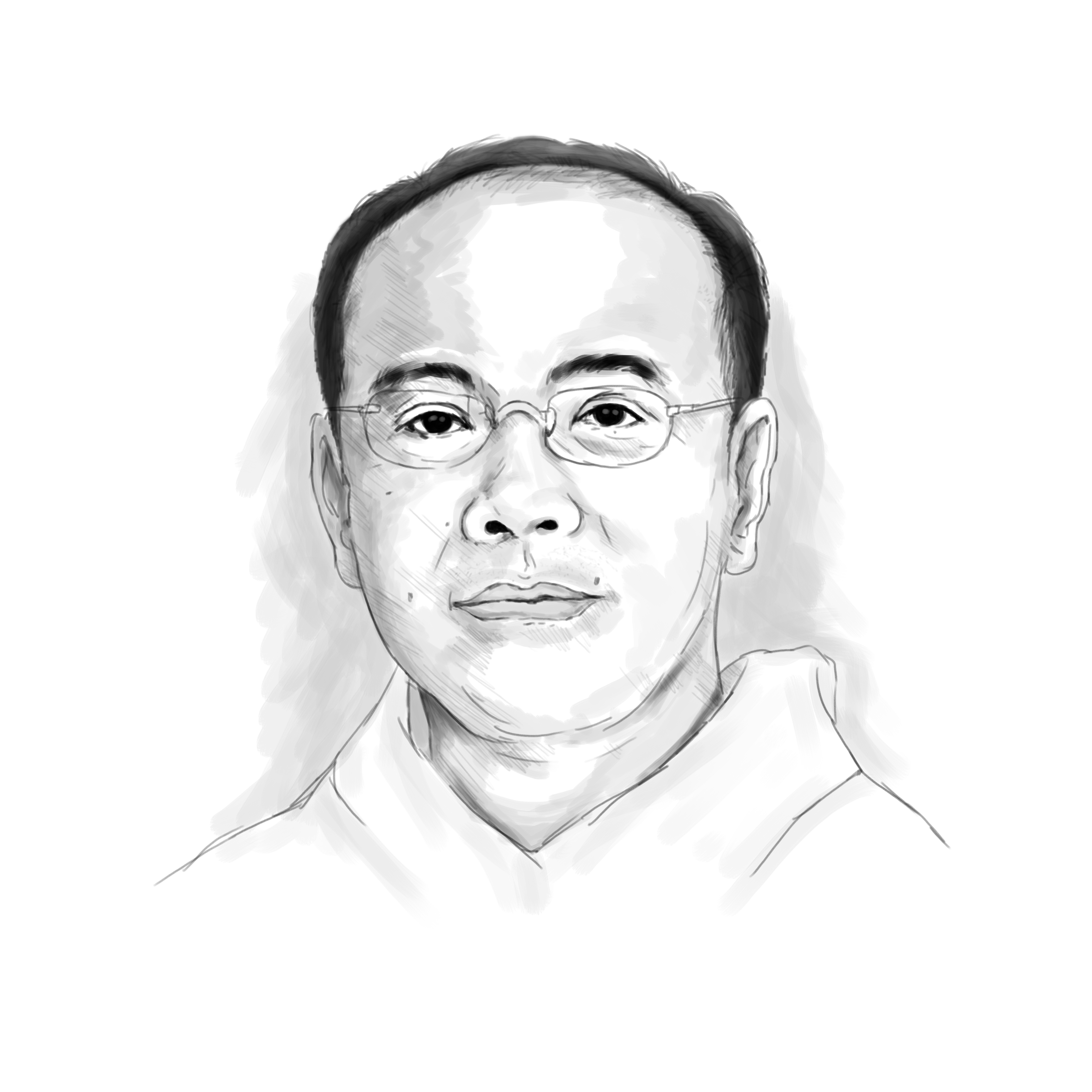
Fr. Rolando V. dela Rosa O.P. THROUGH UNTRUE
ADVERTISEMENT
.most-popular .layout-ratio{ padding-bottom: 79.13%; } @media (min-width: 768px) and (max-width: 1024px) { .widget-title { font-size: 15px !important; } }

{{ articles_filter_1561_widget.title }}

.most-popular .layout-ratio{ padding-bottom: 79.13%; } @media (min-width: 768px) and (max-width: 1024px) { .widget-title { font-size: 15px !important; } }

{{ articles_filter_1562_widget.title }}

.most-popular .layout-ratio{ padding-bottom: 79.13%; } @media (min-width: 768px) and (max-width: 1024px) { .widget-title { font-size: 15px !important; } }

{{ articles_filter_1563_widget.title }}

{{ articles_filter_1564_widget.title }}

.mb-article-details { position: relative; } .mb-article-details .article-body-preview, .mb-article-details .article-body-summary{ font-size: 17px; line-height: 30px; font-family: "Libre Caslon Text", serif; color: #000; } .mb-article-details .article-body-preview iframe , .mb-article-details .article-body-summary iframe{ width: 100%; margin: auto; } .read-more-background { background: linear-gradient(180deg, color(display-p3 1.000 1.000 1.000 / 0) 13.75%, color(display-p3 1.000 1.000 1.000 / 0.8) 30.79%, color(display-p3 1.000 1.000 1.000) 72.5%); position: absolute; height: 200px; width: 100%; bottom: 0; display: flex; justify-content: center; align-items: center; padding: 0; } .read-more-background a{ color: #000; } .read-more-btn { padding: 17px 45px; font-family: Inter; font-weight: 700; font-size: 18px; line-height: 16px; text-align: center; vertical-align: middle; border: 1px solid black; background-color: white; } .hidden { display: none; }
function initializeAllSwipers() { // Get all hidden inputs with cms_article_id document.querySelectorAll('[id^="cms_article_id_"]').forEach(function (input) { const cmsArticleId = input.value; const articleSelector = '#article-' + cmsArticleId + ' .body_images'; const swiperElement = document.querySelector(articleSelector); if (swiperElement && !swiperElement.classList.contains('swiper-initialized')) { new Swiper(articleSelector, { loop: true, pagination: false, navigation: { nextEl: '#article-' + cmsArticleId + ' .swiper-button-next', prevEl: '#article-' + cmsArticleId + ' .swiper-button-prev', }, }); } }); } setTimeout(initializeAllSwipers, 3000); const intersectionObserver = new IntersectionObserver( (entries) => { entries.forEach((entry) => { if (entry.isIntersecting) { const newUrl = entry.target.getAttribute("data-url"); if (newUrl) { history.pushState(null, null, newUrl); let article = entry.target; // Extract metadata const author = article.querySelector('.author-section').textContent.replace('By', '').trim(); const section = article.querySelector('.section-info ').textContent.replace(' ', ' '); const title = article.querySelector('.article-title h1').textContent; // Parse URL for Chartbeat path format const parsedUrl = new URL(newUrl, window.location.origin); const cleanUrl = parsedUrl.host + parsedUrl.pathname; // Update Chartbeat configuration if (typeof window._sf_async_config !== 'undefined') { window._sf_async_config.path = cleanUrl; window._sf_async_config.sections = section; window._sf_async_config.authors = author; } // Track virtual page view with Chartbeat if (typeof pSUPERFLY !== 'undefined' && typeof pSUPERFLY.virtualPage === 'function') { try { pSUPERFLY.virtualPage({ path: cleanUrl, title: title, sections: section, authors: author }); } catch (error) { console.error('ping error', error); } } // Optional: Update document title if (title && title !== document.title) { document.title = title; } } } }); }, { threshold: 0.1 } ); function showArticleBody(button) { const article = button.closest("article"); const summary = article.querySelector(".article-body-summary"); const body = article.querySelector(".article-body-preview"); const readMoreSection = article.querySelector(".read-more-background"); // Hide summary and read-more section summary.style.display = "none"; readMoreSection.style.display = "none"; // Show the full article body body.classList.remove("hidden"); } document.addEventListener("DOMContentLoaded", () => { let loadCount = 0; // Track how many times articles are loaded const offset = [1, 2, 3, 4, 5, 6, 7, 8, 9, 10]; // Offset values const currentUrl = window.location.pathname.substring(1); let isLoading = false; // Prevent multiple calls if (!currentUrl) { console.log("Current URL is invalid."); return; } const sentinel = document.getElementById("load-more-sentinel"); if (!sentinel) { console.log("Sentinel element not found."); return; } function isSentinelVisible() { const rect = sentinel.getBoundingClientRect(); return ( rect.top < window.innerHeight && rect.bottom >= 0 ); } function onScroll() { if (isLoading) return; if (isSentinelVisible()) { if (loadCount >= offset.length) { console.log("Maximum load attempts reached."); window.removeEventListener("scroll", onScroll); return; } isLoading = true; const currentOffset = offset[loadCount]; window.loadMoreItems().then(() => { let article = document.querySelector('#widget_1690 > div:nth-last-of-type(2) article'); intersectionObserver.observe(article) loadCount++; }).catch(error => { console.error("Error loading more items:", error); }).finally(() => { isLoading = false; }); } } window.addEventListener("scroll", onScroll); });

Sign up by email to receive news.