

ADVERTISEMENT

IOC suspends Russian Olympic Committee over Ukraine move

Published Oct 13, 2023 03:43 am

At A Glance

  • The International Olympic Committee on Thursday, Oct. 12, suspended Russia's national Olympic body with "immediate effect" for violating the territorial integrity of Ukraine's membership by recognizing illegally annexed territories.
MUMBAI (AFP) -- The International Olympic Committee on Thursday, Oct. 12, suspended Russia's national Olympic body with "immediate effect" for violating the territorial integrity of Ukraine's membership by recognizing illegally annexed territories.

MARK ADAMS.webp
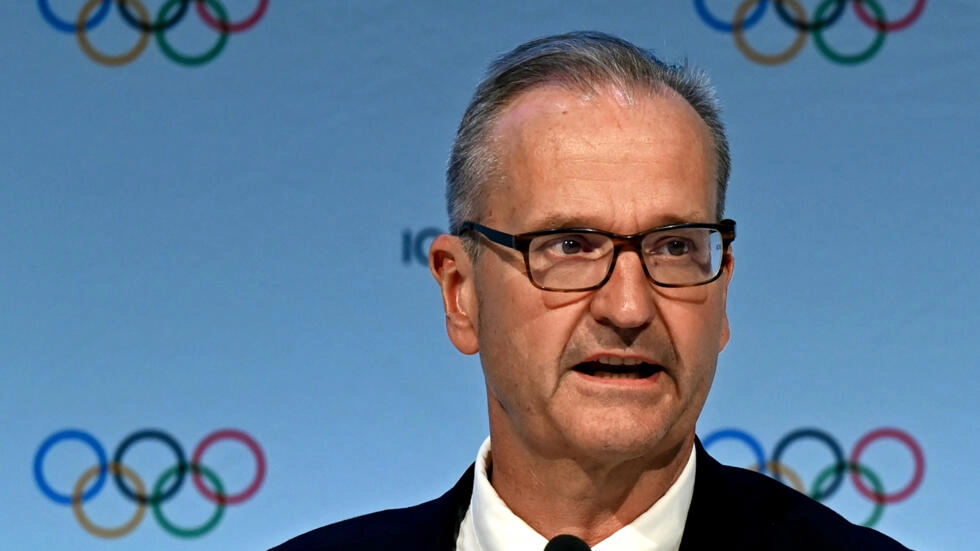
International Olympic Committee (IOC) spokesman Mark Adams (AFP)

The move comes after the Russian Olympic Committee recognized regional organizations from four Ukrainian territories annexed since the invasion began in 2022.

"The Russian Olympic Committee is no longer entitled to operate as a National Olympic Committee, as defined in the Olympic Charter, and cannot receive any funding from the Olympic movement," IOC spokesman Mark Adams said after the opening day of an executive board meeting in Mumbai.

The Russian Olympic Committee responded by calling the suspension "yet another counterproductive, politically motivated decision."

The point was echoed by Russia's Sports Minister Oleg Matytsin on social media.

"By making such decisions, the IOC demonstrates total dependence on the political and business environment, losing its authority and independence," Matytsin said.

Adams said the suspension had followed the "unilateral decision" taken by the Russian Olympic Committee on October 5 to include, as its members, the four regional sports organizations which are under the authority of Ukraine's NOC, namely Donetsk, Kherson, Luhansk and Zaporizhzhia.

That move, he added, "violates the territorial integrity of the NOC of Ukraine, as recognized by the International Olympic Committee in accordance with the Olympic Charter."

Ukrianian president Volodymyr Zelensky welcomed the decision.

"If someone in Russia thinks they can use sports and the Olympic movement as a weapon, that will definitely not work," he said on his evening address. "Thank you to everyone who defends the principles of Olympism."

Matytsin said the four annexed territories  "are regions of the Russian Federation, and their athletes have equal opportunities to participate in competitions in Russia and as part of the Russian national team."

Adams stressed that nothing in Thursday's announcement had changed the IOC's position on Russian athletes wishing to compete under a neutral flag at next year's Paris Olympics.

He said the IOC still reserved the right to decide about the participation of individual neutral athletes with a Russian passport at the Paris Summer Games and 2026 Winter Games in Milan "at the appropriate time", in accordance with a policy adopted in March.

Matytsin said this was not satisfactory.

"There are still no clear justified criteria for the admission of Russian and Belarusian athletes to the Olympic Games, and in different sports international federations set their own rules of the game and ignore the IOC recommendations," he said.

"This only confirms that in its current form, the International Olympic Committee no longer represents and protects the interests of world sport and athletes to the necessary extent, and is losing its weight and competence as an international regulator."

The announcement on Thursday had no bearing on the Olympic status of Belarus, which has faced sporting sanctions for its support of the invasion of Ukraine.

In March, the IOC lifted an outright ban on Russian and Belarusian athletes, allowing them to compete as neutral athletes provided they did not support the Ukraine conflict and had no ties to the military.

Russian Olympic Committee president Stanislav Pozdnyakov labelled those conditions "a farce".

Adams made clear that Thursday's decision was based solely on Russia's recognition of the annexed territories.

"It was a breach of the Olympic Charter."

Russia launched an invasion of neighboring Ukraine in February 2022.

The sports world has been divided in its response to the conflict.

Athletes from Russia and Belarus have been banned from track and field competition by World Athletics "for the foreseeable future" since Moscow's invasion but other sports have dropped or loosened bans.

Highlighting the volatility of the situation, European football governing body UEFA this week reversed direction and dropped plans announced last month to readmit Russian Under-17 teams into the youth European Championship.

Related Tags

International Olympic Committee (IOC)
ADVERTISEMENT
.most-popular .layout-ratio{ padding-bottom: 79.13%; } @media (min-width: 768px) and (max-width: 1024px) { .widget-title { font-size: 15px !important; } }

{{ articles_filter_1561_widget.title }}

.most-popular .layout-ratio{ padding-bottom: 79.13%; } @media (min-width: 768px) and (max-width: 1024px) { .widget-title { font-size: 15px !important; } }

{{ articles_filter_1562_widget.title }}

.most-popular .layout-ratio{ padding-bottom: 79.13%; } @media (min-width: 768px) and (max-width: 1024px) { .widget-title { font-size: 15px !important; } }

{{ articles_filter_1563_widget.title }}

{{ articles_filter_1564_widget.title }}

.mb-article-details { position: relative; } .mb-article-details .article-body-preview, .mb-article-details .article-body-summary{ font-size: 17px; line-height: 30px; font-family: "Libre Caslon Text", serif; color: #000; } .mb-article-details .article-body-preview iframe , .mb-article-details .article-body-summary iframe{ width: 100%; margin: auto; } .read-more-background { background: linear-gradient(180deg, color(display-p3 1.000 1.000 1.000 / 0) 13.75%, color(display-p3 1.000 1.000 1.000 / 0.8) 30.79%, color(display-p3 1.000 1.000 1.000) 72.5%); position: absolute; height: 200px; width: 100%; bottom: 0; display: flex; justify-content: center; align-items: center; padding: 0; } .read-more-background a{ color: #000; } .read-more-btn { padding: 17px 45px; font-family: Inter; font-weight: 700; font-size: 18px; line-height: 16px; text-align: center; vertical-align: middle; border: 1px solid black; background-color: white; } .hidden { display: none; }
function initializeAllSwipers() { // Get all hidden inputs with cms_article_id document.querySelectorAll('[id^="cms_article_id_"]').forEach(function (input) { const cmsArticleId = input.value; const articleSelector = '#article-' + cmsArticleId + ' .body_images'; const swiperElement = document.querySelector(articleSelector); if (swiperElement && !swiperElement.classList.contains('swiper-initialized')) { new Swiper(articleSelector, { loop: true, pagination: false, navigation: { nextEl: '#article-' + cmsArticleId + ' .swiper-button-next', prevEl: '#article-' + cmsArticleId + ' .swiper-button-prev', }, }); } }); } setTimeout(initializeAllSwipers, 3000); const intersectionObserver = new IntersectionObserver( (entries) => { entries.forEach((entry) => { if (entry.isIntersecting) { const newUrl = entry.target.getAttribute("data-url"); if (newUrl) { history.pushState(null, null, newUrl); let article = entry.target; // Extract metadata const author = article.querySelector('.author-section').textContent.replace('By', '').trim(); const section = article.querySelector('.section-info ').textContent.replace(' ', ' '); const title = article.querySelector('.article-title h1').textContent; // Parse URL for Chartbeat path format const parsedUrl = new URL(newUrl, window.location.origin); const cleanUrl = parsedUrl.host + parsedUrl.pathname; // Update Chartbeat configuration if (typeof window._sf_async_config !== 'undefined') { window._sf_async_config.path = cleanUrl; window._sf_async_config.sections = section; window._sf_async_config.authors = author; } // Track virtual page view with Chartbeat if (typeof pSUPERFLY !== 'undefined' && typeof pSUPERFLY.virtualPage === 'function') { try { pSUPERFLY.virtualPage({ path: cleanUrl, title: title, sections: section, authors: author }); } catch (error) { console.error('ping error', error); } } // Optional: Update document title if (title && title !== document.title) { document.title = title; } } } }); }, { threshold: 0.1 } ); function showArticleBody(button) { const article = button.closest("article"); const summary = article.querySelector(".article-body-summary"); const body = article.querySelector(".article-body-preview"); const readMoreSection = article.querySelector(".read-more-background"); // Hide summary and read-more section summary.style.display = "none"; readMoreSection.style.display = "none"; // Show the full article body body.classList.remove("hidden"); } document.addEventListener("DOMContentLoaded", () => { let loadCount = 0; // Track how many times articles are loaded const offset = [1, 2, 3, 4, 5, 6, 7, 8, 9, 10]; // Offset values const currentUrl = window.location.pathname.substring(1); let isLoading = false; // Prevent multiple calls if (!currentUrl) { console.log("Current URL is invalid."); return; } const sentinel = document.getElementById("load-more-sentinel"); if (!sentinel) { console.log("Sentinel element not found."); return; } function isSentinelVisible() { const rect = sentinel.getBoundingClientRect(); return ( rect.top < window.innerHeight && rect.bottom >= 0 ); } function onScroll() { if (isLoading) return; if (isSentinelVisible()) { if (loadCount >= offset.length) { console.log("Maximum load attempts reached."); window.removeEventListener("scroll", onScroll); return; } isLoading = true; const currentOffset = offset[loadCount]; window.loadMoreItems().then(() => { let article = document.querySelector('#widget_1690 > div:nth-last-of-type(2) article'); intersectionObserver.observe(article) loadCount++; }).catch(error => { console.error("Error loading more items:", error); }).finally(() => { isLoading = false; }); } } window.addEventListener("scroll", onScroll); });

Sign up by email to receive news.