

ADVERTISEMENT

Lighting the way for Filipinos

How many families are finding their way out of the dark

Published Oct 11, 2023 02:03 pm

At A Glance

  • Let there be light. — Genesis 1:3
2.jpg
IT’S LIT Families from Antipolo, Rizal receive rechargeable solar LED lanterns to help light their homes

It’s not unknown that Filipinos in different parts of the country still have no access to electricity.
Children have a hard time studying due to the lack of electricity, parents squeeze in chores during the day to utilize daylight, and families move around with more difficulty in the dark during the night. These remain a daily reality for families across the Philippines and continue to be a dilemma for many households.


For Panasonic, finding solutions to lived realities such as electricity inaccessibility is a challenge that needs to be taken on. In 2013, it launched the BG-BL03 Solar LED Lantern, a solar-powered rechargeable lantern that doubles as a charger for households that live without electricity daily.
 

Since its release, the lantern has become a major part of the brand’s efforts to better the lives of Filipinos. “The lantern was primarily developed by our headquarters in Japan as a means to provide awareness on the possible use of renewable energy,” says Panasonic human resources manager Mike Borja. “With the small lanterns and solar panels, a lot of homes will improve and will get better.”
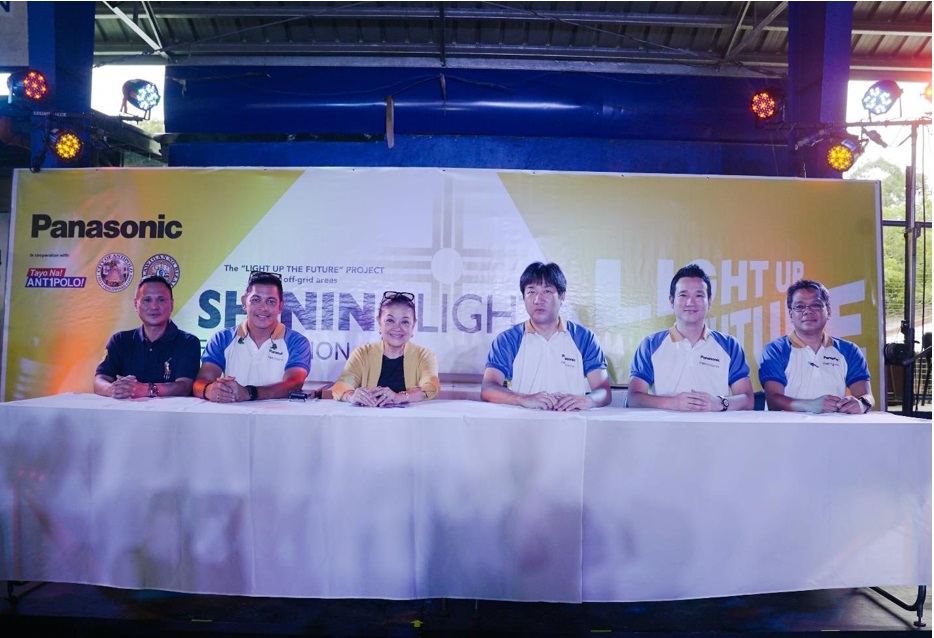
1.jpg
PARTNERSHIP FOR THE FUTURE From left: Antipolo Vice Governor Reynaldo San Juan Jr.,
Panasonic brand ambassador Gary Valenciano, Shining Light Foundation Inc. president and
chairman of the board Angeli Pangilinan-Valenciano, Panasonic president Kazuya Higami,
Panasonic executive director for finance and admin Atsushi Kozuma, and Panasonic director
Angelo Tamayo


This 2023, the brand is partnering with Shining Light Foundation to supply 150 families in Antipolo, Rizal with these lanterns. This partnership further highlights how carefully developed technologies can create opportunities, foster remarkable moments, and help improve people’s lives. It also marks five years since the successful completion of the company’s 100 Thousand Solar Lanterns Project, which brought the same lanterns to various communities across 30 countries. It also serves as an exciting continuation of this ambitious project to bring sustainable light to more Filipino families.


With the addition of the lantern to Filipino households, children can now study better, and families can move around more easily and live more comfortably in well-lit homes with electricity within their reach.

Related Tags

Aaron Cabeza Shining Light Foundation Panasonic
ADVERTISEMENT
.most-popular .layout-ratio{ padding-bottom: 79.13%; } @media (min-width: 768px) and (max-width: 1024px) { .widget-title { font-size: 15px !important; } }

{{ articles_filter_1561_widget.title }}

.most-popular .layout-ratio{ padding-bottom: 79.13%; } @media (min-width: 768px) and (max-width: 1024px) { .widget-title { font-size: 15px !important; } }

{{ articles_filter_1562_widget.title }}

.most-popular .layout-ratio{ padding-bottom: 79.13%; } @media (min-width: 768px) and (max-width: 1024px) { .widget-title { font-size: 15px !important; } }

{{ articles_filter_1563_widget.title }}

{{ articles_filter_1564_widget.title }}

.mb-article-details { position: relative; } .mb-article-details .article-body-preview, .mb-article-details .article-body-summary{ font-size: 17px; line-height: 30px; font-family: "Libre Caslon Text", serif; color: #000; } .mb-article-details .article-body-preview iframe , .mb-article-details .article-body-summary iframe{ width: 100%; margin: auto; } .read-more-background { background: linear-gradient(180deg, color(display-p3 1.000 1.000 1.000 / 0) 13.75%, color(display-p3 1.000 1.000 1.000 / 0.8) 30.79%, color(display-p3 1.000 1.000 1.000) 72.5%); position: absolute; height: 200px; width: 100%; bottom: 0; display: flex; justify-content: center; align-items: center; padding: 0; } .read-more-background a{ color: #000; } .read-more-btn { padding: 17px 45px; font-family: Inter; font-weight: 700; font-size: 18px; line-height: 16px; text-align: center; vertical-align: middle; border: 1px solid black; background-color: white; } .hidden { display: none; }
function initializeAllSwipers() { // Get all hidden inputs with cms_article_id document.querySelectorAll('[id^="cms_article_id_"]').forEach(function (input) { const cmsArticleId = input.value; const articleSelector = '#article-' + cmsArticleId + ' .body_images'; const swiperElement = document.querySelector(articleSelector); if (swiperElement && !swiperElement.classList.contains('swiper-initialized')) { new Swiper(articleSelector, { loop: true, pagination: false, navigation: { nextEl: '#article-' + cmsArticleId + ' .swiper-button-next', prevEl: '#article-' + cmsArticleId + ' .swiper-button-prev', }, }); } }); } setTimeout(initializeAllSwipers, 3000); const intersectionObserver = new IntersectionObserver( (entries) => { entries.forEach((entry) => { if (entry.isIntersecting) { const newUrl = entry.target.getAttribute("data-url"); if (newUrl) { history.pushState(null, null, newUrl); let article = entry.target; // Extract metadata const author = article.querySelector('.author-section').textContent.replace('By', '').trim(); const section = article.querySelector('.section-info ').textContent.replace(' ', ' '); const title = article.querySelector('.article-title h1').textContent; // Parse URL for Chartbeat path format const parsedUrl = new URL(newUrl, window.location.origin); const cleanUrl = parsedUrl.host + parsedUrl.pathname; // Update Chartbeat configuration if (typeof window._sf_async_config !== 'undefined') { window._sf_async_config.path = cleanUrl; window._sf_async_config.sections = section; window._sf_async_config.authors = author; } // Track virtual page view with Chartbeat if (typeof pSUPERFLY !== 'undefined' && typeof pSUPERFLY.virtualPage === 'function') { try { pSUPERFLY.virtualPage({ path: cleanUrl, title: title, sections: section, authors: author }); } catch (error) { console.error('ping error', error); } } // Optional: Update document title if (title && title !== document.title) { document.title = title; } } } }); }, { threshold: 0.1 } ); function showArticleBody(button) { const article = button.closest("article"); const summary = article.querySelector(".article-body-summary"); const body = article.querySelector(".article-body-preview"); const readMoreSection = article.querySelector(".read-more-background"); // Hide summary and read-more section summary.style.display = "none"; readMoreSection.style.display = "none"; // Show the full article body body.classList.remove("hidden"); } document.addEventListener("DOMContentLoaded", () => { let loadCount = 0; // Track how many times articles are loaded const offset = [1, 2, 3, 4, 5, 6, 7, 8, 9, 10]; // Offset values const currentUrl = window.location.pathname.substring(1); let isLoading = false; // Prevent multiple calls if (!currentUrl) { console.log("Current URL is invalid."); return; } const sentinel = document.getElementById("load-more-sentinel"); if (!sentinel) { console.log("Sentinel element not found."); return; } function isSentinelVisible() { const rect = sentinel.getBoundingClientRect(); return ( rect.top < window.innerHeight && rect.bottom >= 0 ); } function onScroll() { if (isLoading) return; if (isSentinelVisible()) { if (loadCount >= offset.length) { console.log("Maximum load attempts reached."); window.removeEventListener("scroll", onScroll); return; } isLoading = true; const currentOffset = offset[loadCount]; window.loadMoreItems().then(() => { let article = document.querySelector('#widget_1690 > div:nth-last-of-type(2) article'); intersectionObserver.observe(article) loadCount++; }).catch(error => { console.error("Error loading more items:", error); }).finally(() => { isLoading = false; }); } } window.addEventListener("scroll", onScroll); });

Sign up by email to receive news.