

ADVERTISEMENT

2 new Begonia species discovered in Sierra Madre Mountain Range

Published Sep 10, 2023 06:31 am

At A Glance

  • These two species have been documented on multiple occasions and were assumed to be described species until further examination by PTI researchers, which led to the conclusion that these species are new to science.
  •  The researchers noted that the discovery emphasizes the importance of protected areas in the Philippines as a refuge of the country's remaining wildlife, thus safeguarding species and habitats.
  •  
  •  
  •  

Two new Begonia species have been discovered in the province of Aurora.
These are the Begonia masilig, found growing on the cliffs beside a river with fast-flowing water, hence the name “masilig”—the Tagalog-Baler word for rapids; and Begonia akaw, “akaw” being the Tagalog-Baler word used to convey surprise, an allusion to its surprising discovery.
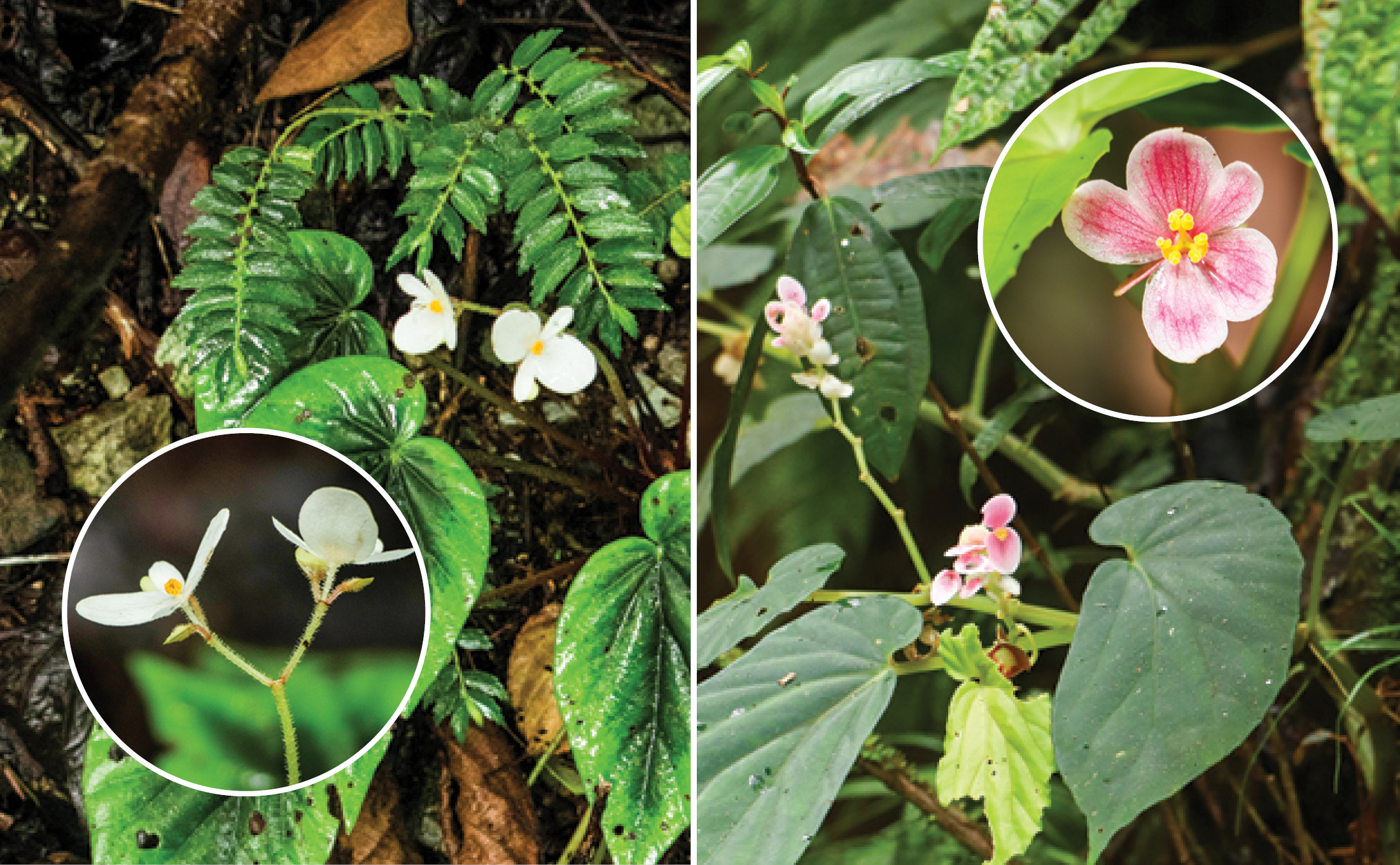
begonias.jpg
Photos show, at left, the Begonia masilig, and the Begonia akaw.

These two species have been documented on multiple occasions and were assumed to be described species until further examination by PTI researchers, which led to the conclusion that these species are new to science.
Both Begonia species are endemic to Aurora Memorial National Park in Luzon, located at the Sierra Madre Mountain Range. The discovery was made by researchers from the Philippine Taxonomic Initiative, and published in Phytotaxa, a botany-focused scientific journal.
The discovery of Begonia masilig and Begonia akaw is significant because it highlights the rich biodiversity of the Philippines.
 The researchers noted that the discovery emphasizes the importance of protected areas in the Philippines as a refuge of the country's remaining wildlife, thus safeguarding species and habitats.
Each species is a product of millions of years of evolution and contributes to a complex chain of relationships within its habitat and a loss of one species can disrupt the whole habitat.
The Sierra Madre Mountain Range acts as a formidable shield against tropical cyclones from the Pacific Ocean toward eastern Luzon.
Storms passing this range are slowed down, extending the period of rainfall dispersion. The reduced pace of passing storms affords meteorologists and disaster risk reduction organizations the opportunity to detect and alert regions requiring evacuation.
Additionally, this storm-moderating influence, as well as the abundant water reserves that comes from the lush forests of the range, contributes significantly to the economic prosperity of the covered provinces, particularly in terms of agricultural development and stable water supply, giving the country a practical reason and an ethical responsibility in protecting these species along with their habitats.
This discovery adds to the more than 160 species currently known in the country, making Begonia the 4th largest plant genus in the Philippines and accounting for seven percent of the world's total Begonia species.
A thorough review and comparison of all known Philippine Begonia species was carried out as part of this research, and the findings were submitted to the peer-reviewed journal. (Raab Bustamante)

ADVERTISEMENT
.most-popular .layout-ratio{ padding-bottom: 79.13%; } @media (min-width: 768px) and (max-width: 1024px) { .widget-title { font-size: 15px !important; } }

{{ articles_filter_1561_widget.title }}

.most-popular .layout-ratio{ padding-bottom: 79.13%; } @media (min-width: 768px) and (max-width: 1024px) { .widget-title { font-size: 15px !important; } }

{{ articles_filter_1562_widget.title }}

.most-popular .layout-ratio{ padding-bottom: 79.13%; } @media (min-width: 768px) and (max-width: 1024px) { .widget-title { font-size: 15px !important; } }

{{ articles_filter_1563_widget.title }}

{{ articles_filter_1564_widget.title }}

.mb-article-details { position: relative; } .mb-article-details .article-body-preview, .mb-article-details .article-body-summary{ font-size: 17px; line-height: 30px; font-family: "Libre Caslon Text", serif; color: #000; } .mb-article-details .article-body-preview iframe , .mb-article-details .article-body-summary iframe{ width: 100%; margin: auto; } .read-more-background { background: linear-gradient(180deg, color(display-p3 1.000 1.000 1.000 / 0) 13.75%, color(display-p3 1.000 1.000 1.000 / 0.8) 30.79%, color(display-p3 1.000 1.000 1.000) 72.5%); position: absolute; height: 200px; width: 100%; bottom: 0; display: flex; justify-content: center; align-items: center; padding: 0; } .read-more-background a{ color: #000; } .read-more-btn { padding: 17px 45px; font-family: Inter; font-weight: 700; font-size: 18px; line-height: 16px; text-align: center; vertical-align: middle; border: 1px solid black; background-color: white; } .hidden { display: none; }
function initializeAllSwipers() { // Get all hidden inputs with cms_article_id document.querySelectorAll('[id^="cms_article_id_"]').forEach(function (input) { const cmsArticleId = input.value; const articleSelector = '#article-' + cmsArticleId + ' .body_images'; const swiperElement = document.querySelector(articleSelector); if (swiperElement && !swiperElement.classList.contains('swiper-initialized')) { new Swiper(articleSelector, { loop: true, pagination: false, navigation: { nextEl: '#article-' + cmsArticleId + ' .swiper-button-next', prevEl: '#article-' + cmsArticleId + ' .swiper-button-prev', }, }); } }); } setTimeout(initializeAllSwipers, 3000); const intersectionObserver = new IntersectionObserver( (entries) => { entries.forEach((entry) => { if (entry.isIntersecting) { const newUrl = entry.target.getAttribute("data-url"); if (newUrl) { history.pushState(null, null, newUrl); let article = entry.target; // Extract metadata const author = article.querySelector('.author-section').textContent.replace('By', '').trim(); const section = article.querySelector('.section-info ').textContent.replace(' ', ' '); const title = article.querySelector('.article-title h1').textContent; // Parse URL for Chartbeat path format const parsedUrl = new URL(newUrl, window.location.origin); const cleanUrl = parsedUrl.host + parsedUrl.pathname; // Update Chartbeat configuration if (typeof window._sf_async_config !== 'undefined') { window._sf_async_config.path = cleanUrl; window._sf_async_config.sections = section; window._sf_async_config.authors = author; } // Track virtual page view with Chartbeat if (typeof pSUPERFLY !== 'undefined' && typeof pSUPERFLY.virtualPage === 'function') { try { pSUPERFLY.virtualPage({ path: cleanUrl, title: title, sections: section, authors: author }); } catch (error) { console.error('ping error', error); } } // Optional: Update document title if (title && title !== document.title) { document.title = title; } } } }); }, { threshold: 0.1 } ); function showArticleBody(button) { const article = button.closest("article"); const summary = article.querySelector(".article-body-summary"); const body = article.querySelector(".article-body-preview"); const readMoreSection = article.querySelector(".read-more-background"); // Hide summary and read-more section summary.style.display = "none"; readMoreSection.style.display = "none"; // Show the full article body body.classList.remove("hidden"); } document.addEventListener("DOMContentLoaded", () => { let loadCount = 0; // Track how many times articles are loaded const offset = [1, 2, 3, 4, 5, 6, 7, 8, 9, 10]; // Offset values const currentUrl = window.location.pathname.substring(1); let isLoading = false; // Prevent multiple calls if (!currentUrl) { console.log("Current URL is invalid."); return; } const sentinel = document.getElementById("load-more-sentinel"); if (!sentinel) { console.log("Sentinel element not found."); return; } function isSentinelVisible() { const rect = sentinel.getBoundingClientRect(); return ( rect.top < window.innerHeight && rect.bottom >= 0 ); } function onScroll() { if (isLoading) return; if (isSentinelVisible()) { if (loadCount >= offset.length) { console.log("Maximum load attempts reached."); window.removeEventListener("scroll", onScroll); return; } isLoading = true; const currentOffset = offset[loadCount]; window.loadMoreItems().then(() => { let article = document.querySelector('#widget_1690 > div:nth-last-of-type(2) article'); intersectionObserver.observe(article) loadCount++; }).catch(error => { console.error("Error loading more items:", error); }).finally(() => { isLoading = false; }); } } window.addEventListener("scroll", onScroll); });

Sign up by email to receive news.