







WHO monitoring PH COVID-19 cases


The World Health Organization (WHO) said on Wednesday that it is "carefully monitoring" the country's current coronavirus disease (COVID-19) situation as it observed that cases are "slightly going up" as the government eased the community quarantine measures in several areas.
WHO Regional Director for the Western Pacific Dr. Takeshi Kasai urged countries in the region, where the Philippines is located, to stay vigilant and keep preparing for further surges of the virus.
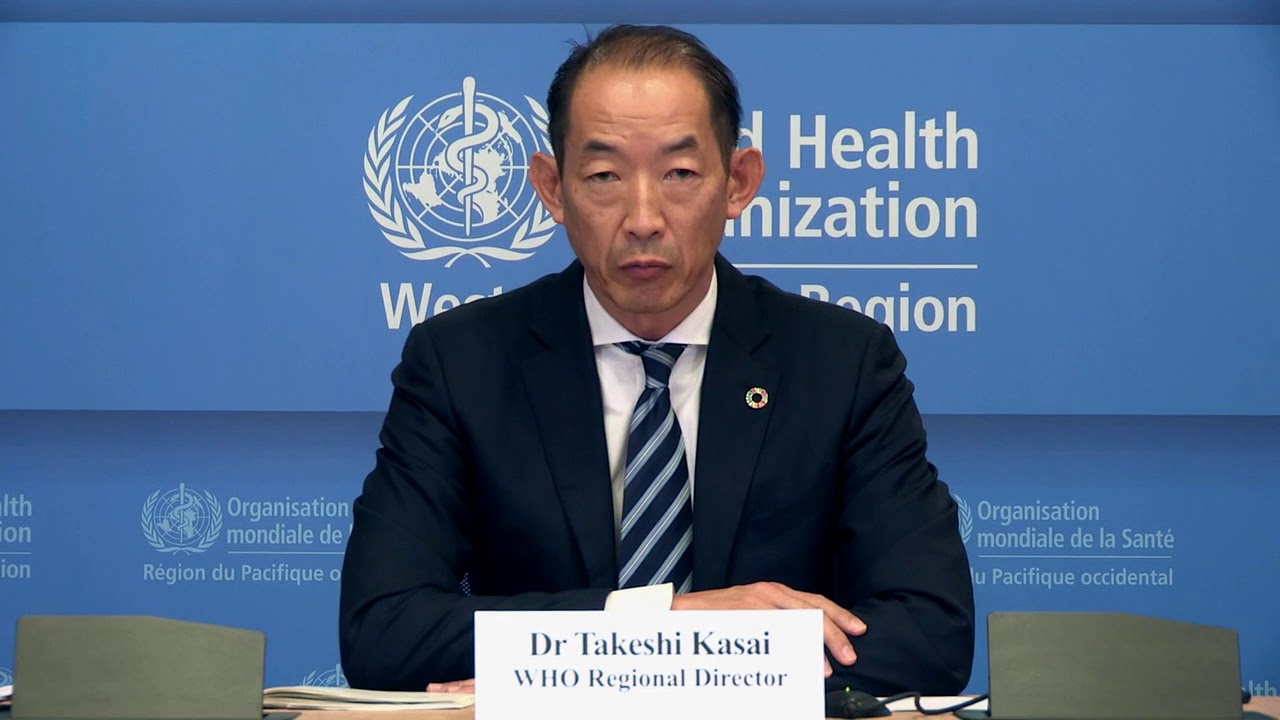
(WHO / MANILA BULLETIN)
“I wanted to really commend the people of the Philippines who have been doing their part to comply with this lockdown. But I’m also aware how hard it has been and people need to go back to their work. Unfortunately, the present data shows that there are ongoing infections,” said Kasai during the World Economic Forum on Wednesday, July 1.
“And after gradually easing lockdown, we’re also carefully monitoring the data and then we’re seeing it, maybe an early signal or it may not be, for example, the number of hospital occupancy is starting to slightly go up. I think it’s going to be a very important few weeks from now on,” said Kasai.
Department of Health (DOH) Undersecretary Maria Rosario Vergeire said that there is always that possibility of increase in the number of cases “because of the easing of restrictions.” She reminded the public to follow the minimum health standards.
Currently, the critical care utilization rate of the country is at 37 percent, she said.
“Almost 37 percent lang ang nagagamit. We still have 63 percent that we have as reserve na pwede pang maka-accommodate ng pasyente if and when dumami ang kaso ,” Vergeire told reporters on Thursday.
“Pero pag tiningnan natin sa disaggregated or more granular na mga critical care utilization ng bawat areas sa bansa, makikita naman natin talaga na meron mga areas dito sa ating bansa na nagrereach na ng critical level and best example would be Cebu (City) [But when we look at the disaggregated or more granularity of critical care utilization in every area of the country, we can really see that there are areas here in our country that already reached the critical level and the best example would be Cebu (City),” she added.
Three recommendations
Kasai encouraged the Philippine government to continue to strengthen its healthcare system capacity.
“ identifying the case early and isolate and treat, from there to do contact tracing of the close contact and quarantine to stop the transmission. It’s not easy but it’s so important,” he said.
Kasai said the Philippine government should continue to encourage its people to maintain their health behavior such as practicing physical distancing, washing of hands, coughing etiquette, staying home, and wearing face masks.
“This virus transmits from human to human to survive, so every individual has power to change the course. These actions do not only protect yourself but also your family, colleagues, friends, the vulnerable, including the healthcare workers in the community,” he said.
Kasai urged the government to continue to improve its surveillance system.
“Identify where actual infections are occurring and communicate that to the people so that the people can make informed decisions,” he said.
“WHO takes this seriously and my staff working around the clock, not just in the capital in Manila but also in the frontline, hand in hand with the government,” he added.
‘No room for complacency’
Kasai emphasized that the impact of the pandemic has been huge for families, societies, and economies.
“There is really no room for complacency. There is still plenty of space for the virus to spread in this region (Western Pacific). In this interconnected world, as long as the virus is circulating somewhere, no country is safe,” said Kasai.
Kasai said that governments should find a balance between controlling the number of COVID-19 cases and reviving their respective economies.
“As far as the virus is circulating somewhere around the world in this interconnected world, no country is free from the risk of infections. Therefore, we really have to find a way to live with this virus and we call that as the 'new normal,'" he said.
“This new normal is not about either controlling infectious diseases or bringing the society or the economy back. We have to bring it all together,” he said.