ADVERTISEMENT

Okada Foundation, Inc. expands nutrition program to new beneficiaries in Pasay and Malabon

Published Feb 17, 2025 03:35 pm
IMG_7288.jpeg
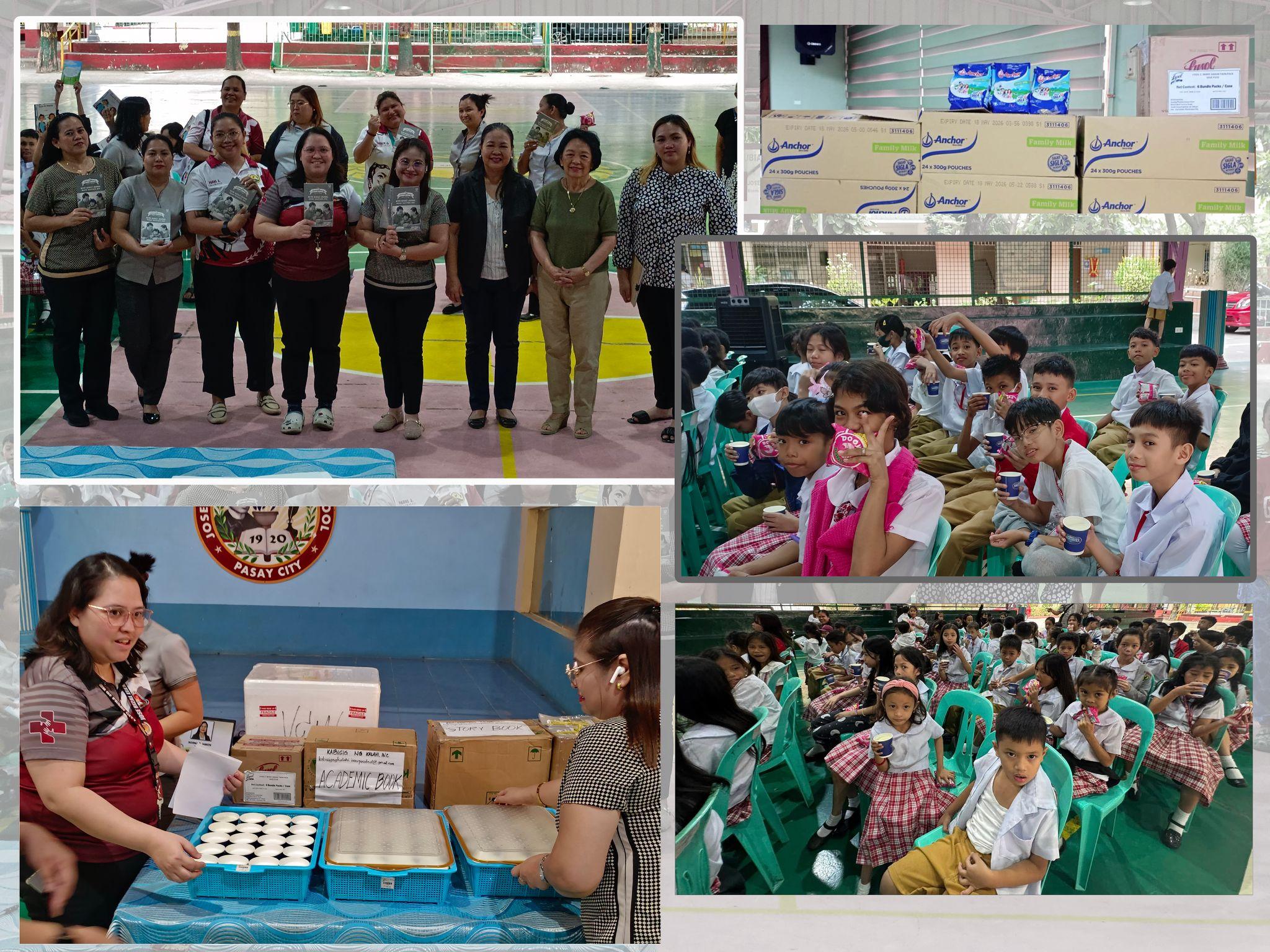
In Pasay City’s Jose Rizal Elementary School and Malabon City’s Tonsuya Integrated School, more than 130 young learners became Okada Foundation, Inc.’s newest beneficiaries for its Complementary Nutrition Program.

The Okada Foundation, Inc. (OFI), in collaboration with Kabisigng Kalahi (KnK), continued the expansion of its Complementary Nutrition Program (CNP) to include two additional schools, namely Jose Rizal Elementary School in Pasay City and Tonsuya Integrated School in Malabon City.

This adds 133 new beneficiaries to OFI’s nutrition program, reinforcing the foundation’s commitment to addressing malnutrition, and providing child development.

At Jose Rizal Elementary School, 73 new students were added to the  program, which was launched with the participation of school faculty and the Parents-Teachers Association (PTA). In addition to the nutrition program, KnK also donated storybooks, academic books, notebooks, and healthy recipe books.

Tonsuya Integrated School, in partnership with St. James Academy, introduced the program to 60 students, aged 5 to 7. The formal launch took place at St. James Academy, where a Memorandum of Agreement (MOA) was signed by school administrators, parents, and representatives from OFI and KnK.

OFI President James Lorenzana underscored the critical role of proper nutrition in the cognitive and physical development of children. “Access to adequate nourishment is fundamental to a child's ability to perform academically and develop essential skills,” he emphasized.

“Through the Complementary Nutrition Program, OFI aims to contribute to the broader goal of improving health outcomes and educational performance among Filipino students, particularly those in vulnerable communities,” Lorenza added.

KnK Founder Vicky Wieneke likewise highlighted the importance of collaboration in implementing sustainable nutrition programs. She stated that ensuring the well-being of children requires a “coordinated effort among educational institutions, private sector partners, and local communities.”

The Complementary Nutrition Program seeks to provide nutritious meals and milk to children identified as nutritionally at-risk. It also advocates for healthy dietary habits and long-term nutrition. The program includes a structured monitoring system to assess the progress of beneficiaries and ensure effective implementation.

“By expanding the initiative to Jose Rizal Elementary School and Tonsuya Integrated School, OFI and its partners continue to strengthen efforts in combating childhood malnutrition and supporting educational development,” Lorenzana concluded.

Related Tags

metro news
ADVERTISEMENT
.most-popular .layout-ratio{ padding-bottom: 79.13%; } @media (min-width: 768px) and (max-width: 1024px) { .widget-title { font-size: 15px !important; } }

{{ articles_filter_1561_widget.title }}

.most-popular .layout-ratio{ padding-bottom: 79.13%; } @media (min-width: 768px) and (max-width: 1024px) { .widget-title { font-size: 15px !important; } }

{{ articles_filter_1562_widget.title }}

.most-popular .layout-ratio{ padding-bottom: 79.13%; } @media (min-width: 768px) and (max-width: 1024px) { .widget-title { font-size: 15px !important; } }

{{ articles_filter_1563_widget.title }}

{{ articles_filter_1564_widget.title }}

.mb-article-details { position: relative; } .mb-article-details .article-body-preview, .mb-article-details .article-body-summary{ font-size: 17px; line-height: 30px; font-family: "Libre Caslon Text", serif; color: #000; } .mb-article-details .article-body-preview iframe , .mb-article-details .article-body-summary iframe{ width: 100%; margin: auto; } .read-more-background { background: linear-gradient(180deg, color(display-p3 1.000 1.000 1.000 / 0) 13.75%, color(display-p3 1.000 1.000 1.000 / 0.8) 30.79%, color(display-p3 1.000 1.000 1.000) 72.5%); position: absolute; height: 200px; width: 100%; bottom: 0; display: flex; justify-content: center; align-items: center; padding: 0; } .read-more-background a{ color: #000; } .read-more-btn { padding: 17px 45px; font-family: Inter; font-weight: 700; font-size: 18px; line-height: 16px; text-align: center; vertical-align: middle; border: 1px solid black; background-color: white; } .hidden { display: none; }
function initializeAllSwipers() { // Get all hidden inputs with cms_article_id document.querySelectorAll('[id^="cms_article_id_"]').forEach(function (input) { const cmsArticleId = input.value; const articleSelector = '#article-' + cmsArticleId + ' .body_images'; const swiperElement = document.querySelector(articleSelector); if (swiperElement && !swiperElement.classList.contains('swiper-initialized')) { new Swiper(articleSelector, { loop: true, pagination: false, navigation: { nextEl: '#article-' + cmsArticleId + ' .swiper-button-next', prevEl: '#article-' + cmsArticleId + ' .swiper-button-prev', }, }); } }); } setTimeout(initializeAllSwipers, 3000); const intersectionObserver = new IntersectionObserver( (entries) => { entries.forEach((entry) => { if (entry.isIntersecting) { const newUrl = entry.target.getAttribute("data-url"); if (newUrl) { history.pushState(null, null, newUrl); let article = entry.target; // Extract metadata const author = article.querySelector('.author-section').textContent.replace('By', '').trim(); const section = article.querySelector('.section-info ').textContent.replace(' ', ' '); const title = article.querySelector('.article-title h1').textContent; // Parse URL for Chartbeat path format const parsedUrl = new URL(newUrl, window.location.origin); const cleanUrl = parsedUrl.host + parsedUrl.pathname; // Update Chartbeat configuration if (typeof window._sf_async_config !== 'undefined') { window._sf_async_config.path = cleanUrl; window._sf_async_config.sections = section; window._sf_async_config.authors = author; } // Track virtual page view with Chartbeat if (typeof pSUPERFLY !== 'undefined' && typeof pSUPERFLY.virtualPage === 'function') { try { pSUPERFLY.virtualPage({ path: cleanUrl, title: title, sections: section, authors: author }); } catch (error) { console.error('ping error', error); } } // Optional: Update document title if (title && title !== document.title) { document.title = title; } } } }); }, { threshold: 0.1 } ); function showArticleBody(button) { const article = button.closest("article"); const summary = article.querySelector(".article-body-summary"); const body = article.querySelector(".article-body-preview"); const readMoreSection = article.querySelector(".read-more-background"); // Hide summary and read-more section summary.style.display = "none"; readMoreSection.style.display = "none"; // Show the full article body body.classList.remove("hidden"); } document.addEventListener("DOMContentLoaded", () => { let loadCount = 0; // Track how many times articles are loaded const offset = [1, 2, 3, 4, 5, 6, 7, 8, 9, 10]; // Offset values const currentUrl = window.location.pathname.substring(1); let isLoading = false; // Prevent multiple calls if (!currentUrl) { console.log("Current URL is invalid."); return; } const sentinel = document.getElementById("load-more-sentinel"); if (!sentinel) { console.log("Sentinel element not found."); return; } function isSentinelVisible() { const rect = sentinel.getBoundingClientRect(); return ( rect.top < window.innerHeight && rect.bottom >= 0 ); } function onScroll() { if (isLoading) return; if (isSentinelVisible()) { if (loadCount >= offset.length) { console.log("Maximum load attempts reached."); window.removeEventListener("scroll", onScroll); return; } isLoading = true; const currentOffset = offset[loadCount]; window.loadMoreItems().then(() => { let article = document.querySelector('#widget_1690 > div:nth-last-of-type(2) article'); intersectionObserver.observe(article) loadCount++; }).catch(error => { console.error("Error loading more items:", error); }).finally(() => { isLoading = false; }); } } window.addEventListener("scroll", onScroll); });

Sign up by email to receive news.