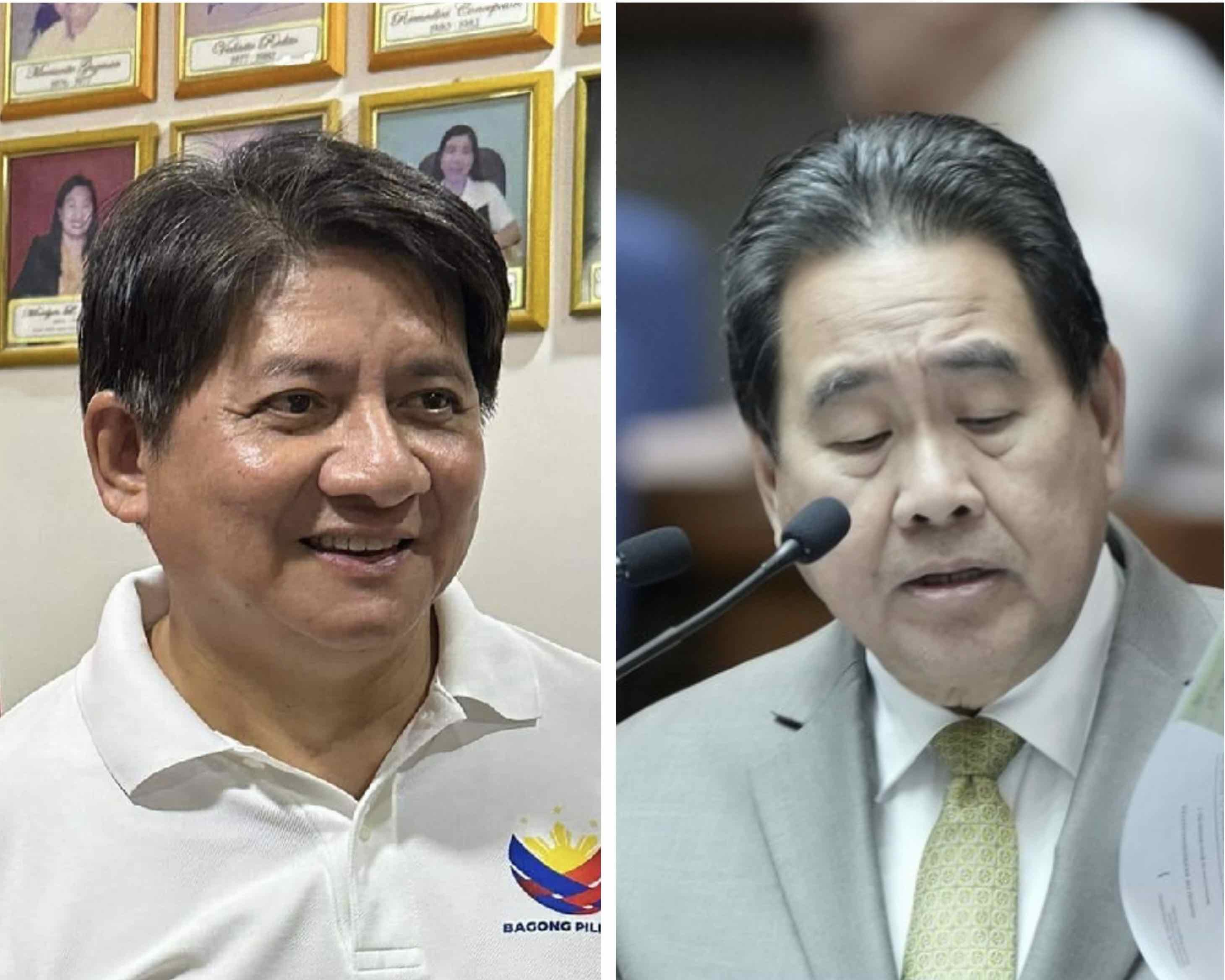
Bank subpoena alarming – Enrile
MANILA, Philippines — Senate President Juan Ponce Enrile warned Thursday that the House prosecution panel is treading on dangerous ground when it asked the Senate, sitting as an impeachment court, to order banks to submit the supposed bank accounts of impeached Chief Justice Renato C. Corona and his wife, Cristina.
“Yung bank records, bank accounts, dapat sabihin kung anong bank accounts yun. Hindi puwedeng i-subpoena ang mga records ng lahat ng bangko sa Pilipinas na hindi naming alam na mayroon bank account yung respondents. Delikado yun.
Dangerous yun sa mga taong-bayan,” Enrile said. (“The prosecution must state the bank account number. It is not right for the Senate to subpoena the records of all banks in the Philippines without us knowing the bank account numbers of the respondents.
That’s dangerous for the people.”) “To be fair, they (prosecution) have to specify (the bank account number),” Enrile said. Bank account holders in the Philippines are protected by the Bank Secrecy Act.
However, the request for subpoena on bank accounts was withdrawn by the House prosecution panel after the impeachment court ruled to disallow the presentation of evidence on the alleged ill-gotten wealth of Corona, a stray complaint in the eight-article impeachment charge, that the defense panel had vigorously objected to.
But the prosecution panel, headed by Iloilo Rep. Niel C. Tupas Jr., reserved the “right of the prosecution to file the appropriate request for specific bank accounts of Renato C. Corona and Cristina R. Corona at the appropriate time.’’
Enrile also recalled that at one point, the Senate was asked to issue a subpoena requiring “this subdivision, these developers to bring all their records regarding their development projects.”
“Should the subpoena include engineering plans, architectural plans, including sanitation plan? Should these be brought to the Senate? There are no specifications,” he asked.
The prosecution had asked for these records to support its claim that the Chief Justice had amassed ill-gotten wealth, which consists of buying real estate properties disproportionate to the financial capabilities of the Corona family and of having big bank accounts.
Earlier last Wednesday, the prosecution filed before the Senate a motion requesting the issuance of subpoenas ad testificandum and subpoena duces tecum for the managers of the Bank of the Philippine Islands (BPI) and of the Rizal Commercial Banking Corporation (RCBC).
Also sought to be subpoenaed are the president or authorized representatives of the BPI/Family Savings Bank; Land Bank of the Philippines (LBP), and the Philippine National Bank (PNB).
These officers were supposed to bring the original or certified true copies of the account opening form and monthly bank statements of the Chief Justice and his wife.
But during the trial that day, the Senate ruled to disallow the presentation of evidence on the alleged ill-gotten wealth of Corona, a stray complaint in the eight-article impeachment charge, that the defense panel had vigorously objected to.
Article 2 of the impeachment complaint accused the Chief Justice of not publicly disclosing this statement of assets, liabilities, and net worth (SALN).
The defense panel said the disclosure by Enriqueta Vidal, Supreme Court clerk of court, that Corona indeed has filed this SALN with the Supreme Court from 2002 to 2010 blunted the prosecutor’s charge contained in Article 2.
It vehemently rejected the additional charge of the prosecution that Corona is suspected and accused of ill-gotten wealth which is supposedly part of Article 2.
“It is clear that the presentation of the requested bank documents and the testimony of the persons identified in the request is prohibited and cannot be allowed,” Jose M. Roy III and Dennis P. Manalo, defense lawyers, said in their opposition to the prosecution panel’s request for subpoenas to bank officials.
Meanwhile, before Bureau of Internal Revenue Commission Kim Jacinto Henares continued with her testimony Thursday, Sen. Miriam Defensor Santiago blew her top again after private prosecutor Arthur Lim tried to argue with her.
Santiago was asking Lim if the prosecution believes Corona was guilty under the Anti-Graft and Corrupt Practices Act.
But instead of answering her, Lim tried to explain that the allegation of the complaint determine the jurisdiction over the case.
When Lim continued with his defiant stance, Santiago threatened to disqualify him from the impeachment proceedings.
When Henares took the witness stand, she revealed upon questioning by Lim that Corona’s eldest daughter, Carla Corona Castillo, bought for P18-million property in posh La Vista subdivision in Quezon City from her parents although she does not have a declared source of income, except for the years 2008 and 2009.
Carla’s gross income, based on her Income Tax Return (ITR) for 2009, was only P8,476 and paid P423.80 in taxes.
As this developed, Enrile strongly cautioned the prosecution and defense panels and their spokespersons in the impeachment trial not to discuss publicly the merits of documents submitted to the court but have not yet been offered as evidence.
Enrile issued the directive after Sen. Joker Arroyo asked the court to enjoin the parties from releasing documents marked but not yet submitted as evidence.


Comments
Please login or register to post comments.