ADVERTISEMENT

Rescuers search for dozens buried by an Indonesian landslide that killed at least 23 people

Published Jul 9, 2024 09:14 am
10rescuers.jpg
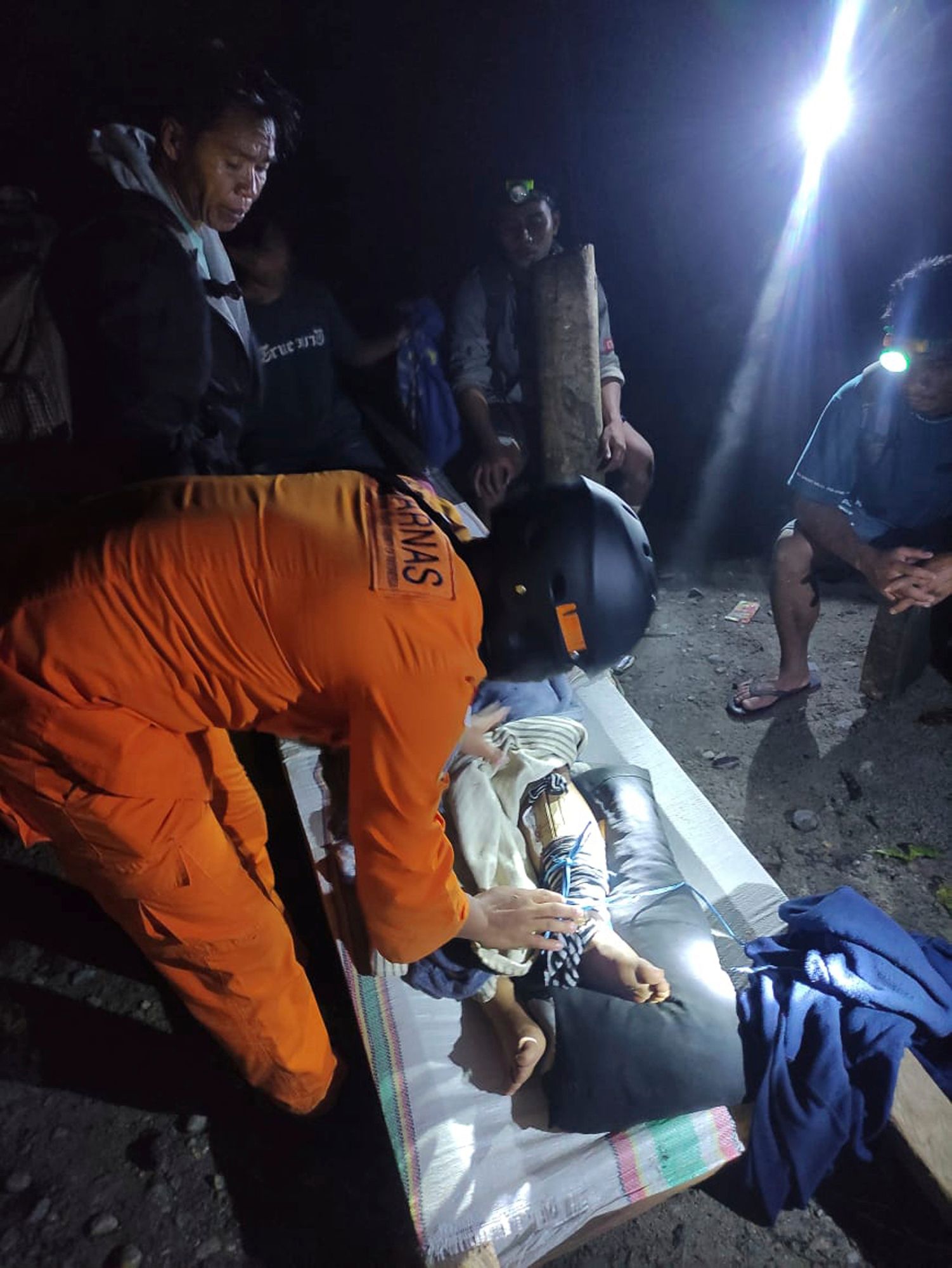
In this photo released by the Indonesian National Search and Rescue Agency (BASARNAS), an injured victim of a landslide is attended to in Suwawa on Sulawesi Island, Indonesia, early Monday, July 8, 2024. The landslide triggered by torrential rains crashed onto an unauthorized gold mining operation on Indonesia's Sulawesi island, killing a number of miners, officials said Monday. (BASARNAS via AP)


JAKARTA, Indonesia (AP) — Rescue workers dug through tons of mud and rubble on Tuesday as they searched for dozens of missing people after a landslide hit an unauthorized gold mining area on Indonesia's Sulawesi island, killing at least 23 people.


More than 100 villagers were digging for grains of gold on Sunday in the remote and hilly village of Bone Bolango when tons of mud plunged down the surrounding hills and buried their makeshift camps, said Heriyanto, head of the provincial Search and Rescue Office.


Rescuers recovered more bodies on Tuesday in the devastated hamlet where the gold mine is located.


"Improved weather allowed us to recover more bodies," said Heriyanto, who goes by a single name like many Indonesians.


According to his office, 66 villagers managed to escape from the landslide, 23 were pulled out alive by rescuers, including 18 with injuries, and 23 bodies were recovered, including three women and a 4-year-old boy. About 35 others were missing, it said.


National Disaster Management Agency spokesperson Abdul Muhari said torrential rains that have pounded the mountainous district since Saturday triggered the landslide and broke an embankment, causing floods up to the roofs of houses in five villages in Bone Bolango, which is part of a mountainous district in Gorontalo province. Nearly 300 houses were affected and more than 1,000 people fled for safety.


Authorities deployed more than 200 rescuers, including police and military personnel, with heavy equipment to search for the dead and missing in a rescue operation that has been hampered by heavy rains, unstable soil, and rugged, forested terrain, said Afifuddin Ilahude, a local rescue official.


"With many missing and some remote areas still unreachable, the death toll is likely to rise," Ilahude said, adding that sniffer dogs were being mobilized in the search.


Videos released by the National Search and Rescue Agency show rescue personnel using farm tools and their bare hands to pull a mud-caked body from the thick mud and placing it in a black bag to take away for burial.


Monsoon rains cause frequent landslides and flash floods in Indonesia, an archipelago nation of more than 17,000 islands where millions of people live in mountainous areas or near floodplains.


Informal mining operations are common in Indonesia, providing a tenuous livelihood to thousands who labor in conditions with a high risk of serious injury or death. Landslides, flooding and collapses of tunnels are just some of the hazards facing miners. Much of gold ore processing involves highly toxic mercury and cyanide and workers frequently use little or no protection.


The country's last major mining-related accident occurred in April 2022, when a landslide crashed onto an illegal traditional gold mine in North Sumatra's Mandailing Natal district, killing 12 women who were looking for gold.


In February 2019, a makeshift wooden structure in an illegal gold mine in North Sulawesi province collapsed due to shifting soil and the large number of mining holes. More than 40 people were buried and died.

ADVERTISEMENT
.most-popular .layout-ratio{ padding-bottom: 79.13%; } @media (min-width: 768px) and (max-width: 1024px) { .widget-title { font-size: 15px !important; } }

{{ articles_filter_1561_widget.title }}

.most-popular .layout-ratio{ padding-bottom: 79.13%; } @media (min-width: 768px) and (max-width: 1024px) { .widget-title { font-size: 15px !important; } }

{{ articles_filter_1562_widget.title }}

.most-popular .layout-ratio{ padding-bottom: 79.13%; } @media (min-width: 768px) and (max-width: 1024px) { .widget-title { font-size: 15px !important; } }

{{ articles_filter_1563_widget.title }}

{{ articles_filter_1564_widget.title }}

.mb-article-details { position: relative; } .mb-article-details .article-body-preview, .mb-article-details .article-body-summary{ font-size: 17px; line-height: 30px; font-family: "Libre Caslon Text", serif; color: #000; } .mb-article-details .article-body-preview iframe , .mb-article-details .article-body-summary iframe{ width: 100%; margin: auto; } .read-more-background { background: linear-gradient(180deg, color(display-p3 1.000 1.000 1.000 / 0) 13.75%, color(display-p3 1.000 1.000 1.000 / 0.8) 30.79%, color(display-p3 1.000 1.000 1.000) 72.5%); position: absolute; height: 200px; width: 100%; bottom: 0; display: flex; justify-content: center; align-items: center; padding: 0; } .read-more-background a{ color: #000; } .read-more-btn { padding: 17px 45px; font-family: Inter; font-weight: 700; font-size: 18px; line-height: 16px; text-align: center; vertical-align: middle; border: 1px solid black; background-color: white; } .hidden { display: none; }
function initializeAllSwipers() { // Get all hidden inputs with cms_article_id document.querySelectorAll('[id^="cms_article_id_"]').forEach(function (input) { const cmsArticleId = input.value; const articleSelector = '#article-' + cmsArticleId + ' .body_images'; const swiperElement = document.querySelector(articleSelector); if (swiperElement && !swiperElement.classList.contains('swiper-initialized')) { new Swiper(articleSelector, { loop: true, pagination: false, navigation: { nextEl: '#article-' + cmsArticleId + ' .swiper-button-next', prevEl: '#article-' + cmsArticleId + ' .swiper-button-prev', }, }); } }); } setTimeout(initializeAllSwipers, 3000); const intersectionObserver = new IntersectionObserver( (entries) => { entries.forEach((entry) => { if (entry.isIntersecting) { const newUrl = entry.target.getAttribute("data-url"); if (newUrl) { history.pushState(null, null, newUrl); let article = entry.target; // Extract metadata const author = article.querySelector('.author-section').textContent.replace('By', '').trim(); const section = article.querySelector('.section-info ').textContent.replace(' ', ' '); const title = article.querySelector('.article-title h1').textContent; // Parse URL for Chartbeat path format const parsedUrl = new URL(newUrl, window.location.origin); const cleanUrl = parsedUrl.host + parsedUrl.pathname; // Update Chartbeat configuration if (typeof window._sf_async_config !== 'undefined') { window._sf_async_config.path = cleanUrl; window._sf_async_config.sections = section; window._sf_async_config.authors = author; } // Track virtual page view with Chartbeat if (typeof pSUPERFLY !== 'undefined' && typeof pSUPERFLY.virtualPage === 'function') { try { pSUPERFLY.virtualPage({ path: cleanUrl, title: title, sections: section, authors: author }); } catch (error) { console.error('ping error', error); } } // Optional: Update document title if (title && title !== document.title) { document.title = title; } } } }); }, { threshold: 0.1 } ); function showArticleBody(button) { const article = button.closest("article"); const summary = article.querySelector(".article-body-summary"); const body = article.querySelector(".article-body-preview"); const readMoreSection = article.querySelector(".read-more-background"); // Hide summary and read-more section summary.style.display = "none"; readMoreSection.style.display = "none"; // Show the full article body body.classList.remove("hidden"); } document.addEventListener("DOMContentLoaded", () => { let loadCount = 0; // Track how many times articles are loaded const offset = [1, 2, 3, 4, 5, 6, 7, 8, 9, 10]; // Offset values const currentUrl = window.location.pathname.substring(1); let isLoading = false; // Prevent multiple calls if (!currentUrl) { console.log("Current URL is invalid."); return; } const sentinel = document.getElementById("load-more-sentinel"); if (!sentinel) { console.log("Sentinel element not found."); return; } function isSentinelVisible() { const rect = sentinel.getBoundingClientRect(); return ( rect.top < window.innerHeight && rect.bottom >= 0 ); } function onScroll() { if (isLoading) return; if (isSentinelVisible()) { if (loadCount >= offset.length) { console.log("Maximum load attempts reached."); window.removeEventListener("scroll", onScroll); return; } isLoading = true; const currentOffset = offset[loadCount]; window.loadMoreItems().then(() => { let article = document.querySelector('#widget_1690 > div:nth-last-of-type(2) article'); intersectionObserver.observe(article) loadCount++; }).catch(error => { console.error("Error loading more items:", error); }).finally(() => { isLoading = false; }); } } window.addEventListener("scroll", onScroll); });

Sign up by email to receive news.