ADVERTISEMENT

PCCI fights proposed ₱240 airport fee over tourism risks

Published Jun 3, 2026 06:25 pm
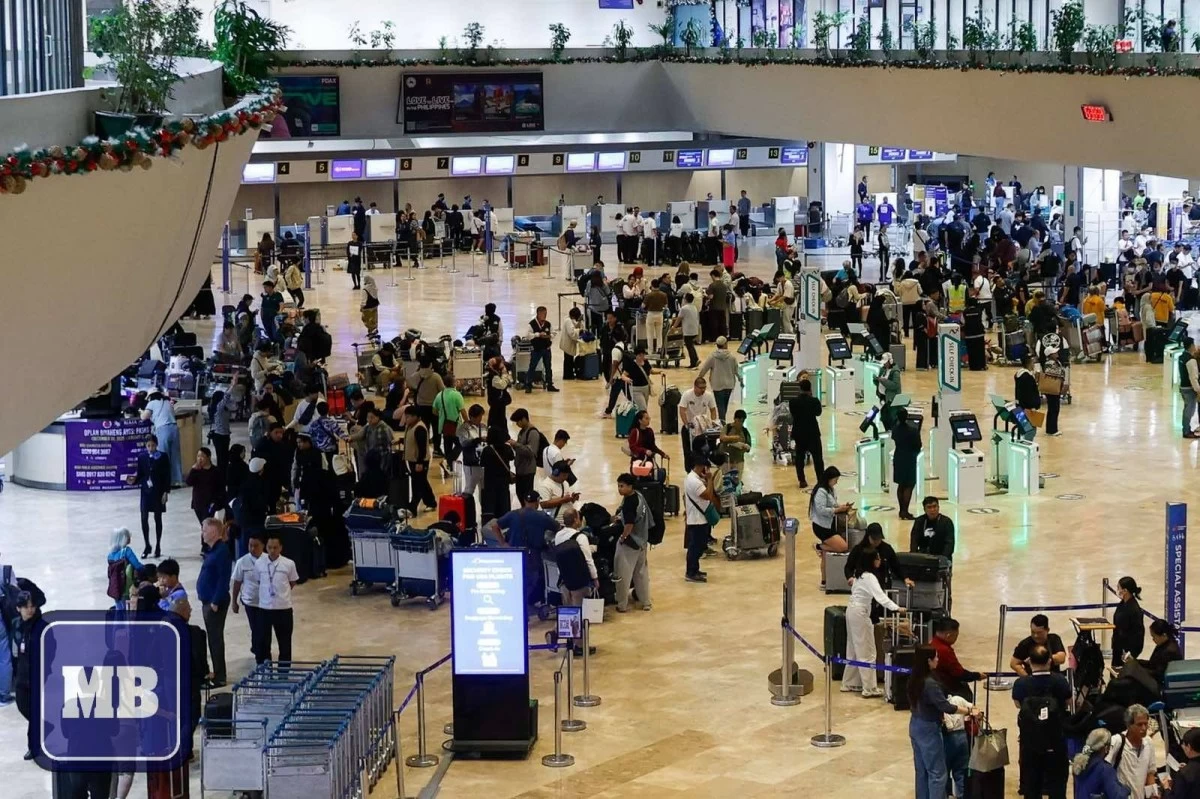
Passengers flock to NAIA Terminal 1 in Pasay City on Sunday, Dec. 21, as they travel abroad to celebrate Christmas and New Year, with airport authorities expecting increased passenger traffic during the peak holiday season. (Photo by John Louie Abrina I MB)
The country’s largest business organization said the Bureau of Immigration (BI) should leverage its existing revenue streams to fund the modernization of border control systems nationwide instead of the proposed ₱240 immigration fee.
In a statement, the Philippine Chamber of Commerce and Industry (PCCI) said the additional fee should be reassessed given its impact on businesses and travelers entering and leaving the country.
“We recognize the importance of modernizing our immigration systems to ensure safe and efficient travel,” said PCCI President Ferdinand Ferrer. “At the same time, we encourage government agencies to weigh the economic realities faced by businesses and consumers, including the energy crisis and inflationary pressures.”
The fee is part of the proposed ₱10.74-billion Civil Aviation and Immigration Security Services (CAISS), a public-private partnership (PPP) project spearheaded by the BI.
The CAISS aims to upgrade the country’s border control and management capabilities across 11 airports, one seaport, and six mobile border crossing stations.
This will be implemented under a Build-Train-Maintain-Transfer (BTMT) scheme, with the private partner funding the project at no cost to the government.
Based on the project briefer, the project contractor would be able to recover its investment through a user fee of $4, or around ₱240, per international traveler, which would be included in airfares.
Alongside its yearly budget allocations, the PCCI pointed out that the BI is already generating revenues from existing programs such as visa processing, alien registration, and emigration clearance fees.
The business group said “these existing sources [should] be maximized before introducing new charges.”
If implemented, the PCCI said the Philippines would be the only Southeast Asian country to impose such a dedicated immigration modernization fee on all international travelers.
“In neighboring countries, immigration modernization is treated as a public service, funded through government appropriations, visa fees, or partnerships, not through new levies on passengers,” it said.
The proposed ₱240 immigration fee, according to the group, would only deter travelers at a time when the economy is hoping to receive a much-needed boost from the tourism sector.
“Modernization is vital for national security and competitiveness but immigration services are a public service, and reforms should be funded in ways that do not discourage travel or dampen recovery,” said Ferrer.
“We look forward to working with the Bureau of Immigration and other agencies to identify sustainable solutions that balance security needs with economic growth,” he added. (Dexter Barro II)

Related Tags

Philippine Chamber of Commerce and Industry (PCCI) immigration fee
ADVERTISEMENT
.most-popular .layout-ratio{ padding-bottom: 79.13%; } @media (min-width: 768px) and (max-width: 1024px) { .widget-title { font-size: 15px !important; } }

{{ articles_filter_1561_widget.title }}

.most-popular .layout-ratio{ padding-bottom: 79.13%; } @media (min-width: 768px) and (max-width: 1024px) { .widget-title { font-size: 15px !important; } }

{{ articles_filter_1562_widget.title }}

.most-popular .layout-ratio{ padding-bottom: 79.13%; } @media (min-width: 768px) and (max-width: 1024px) { .widget-title { font-size: 15px !important; } }

{{ articles_filter_1563_widget.title }}

{{ articles_filter_1564_widget.title }}

.mb-article-details { position: relative; } .mb-article-details .article-body-preview, .mb-article-details .article-body-summary{ font-size: 17px; line-height: 30px; font-family: "Libre Caslon Text", serif; color: #000; } .mb-article-details .article-body-preview iframe , .mb-article-details .article-body-summary iframe{ width: 100%; margin: auto; } .read-more-background { background: linear-gradient(180deg, color(display-p3 1.000 1.000 1.000 / 0) 13.75%, color(display-p3 1.000 1.000 1.000 / 0.8) 30.79%, color(display-p3 1.000 1.000 1.000) 72.5%); position: absolute; height: 200px; width: 100%; bottom: 0; display: flex; justify-content: center; align-items: center; padding: 0; } .read-more-background a{ color: #000; } .read-more-btn { padding: 17px 45px; font-family: Inter; font-weight: 700; font-size: 18px; line-height: 16px; text-align: center; vertical-align: middle; border: 1px solid black; background-color: white; } .hidden { display: none; }
function initializeAllSwipers() { // Get all hidden inputs with cms_article_id document.querySelectorAll('[id^="cms_article_id_"]').forEach(function (input) { const cmsArticleId = input.value; const articleSelector = '#article-' + cmsArticleId + ' .body_images'; const swiperElement = document.querySelector(articleSelector); if (swiperElement && !swiperElement.classList.contains('swiper-initialized')) { new Swiper(articleSelector, { loop: true, pagination: false, navigation: { nextEl: '#article-' + cmsArticleId + ' .swiper-button-next', prevEl: '#article-' + cmsArticleId + ' .swiper-button-prev', }, }); } }); } setTimeout(initializeAllSwipers, 3000); const intersectionObserver = new IntersectionObserver( (entries) => { entries.forEach((entry) => { if (entry.isIntersecting) { const newUrl = entry.target.getAttribute("data-url"); if (newUrl) { history.pushState(null, null, newUrl); let article = entry.target; // Extract metadata const author = article.querySelector('.author-section').textContent.replace('By', '').trim(); const section = article.querySelector('.section-info ').textContent.replace(' ', ' '); const title = article.querySelector('.article-title h1').textContent; // Parse URL for Chartbeat path format const parsedUrl = new URL(newUrl, window.location.origin); const cleanUrl = parsedUrl.host + parsedUrl.pathname; // Update Chartbeat configuration if (typeof window._sf_async_config !== 'undefined') { window._sf_async_config.path = cleanUrl; window._sf_async_config.sections = section; window._sf_async_config.authors = author; } // Track virtual page view with Chartbeat if (typeof pSUPERFLY !== 'undefined' && typeof pSUPERFLY.virtualPage === 'function') { try { pSUPERFLY.virtualPage({ path: cleanUrl, title: title, sections: section, authors: author }); } catch (error) { console.error('ping error', error); } } // Optional: Update document title if (title && title !== document.title) { document.title = title; } } } }); }, { threshold: 0.1 } ); function showArticleBody(button) { const article = button.closest("article"); const summary = article.querySelector(".article-body-summary"); const body = article.querySelector(".article-body-preview"); const readMoreSection = article.querySelector(".read-more-background"); // Hide summary and read-more section summary.style.display = "none"; readMoreSection.style.display = "none"; // Show the full article body body.classList.remove("hidden"); } document.addEventListener("DOMContentLoaded", () => { let loadCount = 0; // Track how many times articles are loaded const offset = [1, 2, 3, 4, 5, 6, 7, 8, 9, 10]; // Offset values const currentUrl = window.location.pathname.substring(1); let isLoading = false; // Prevent multiple calls if (!currentUrl) { console.log("Current URL is invalid."); return; } const sentinel = document.getElementById("load-more-sentinel"); if (!sentinel) { console.log("Sentinel element not found."); return; } function isSentinelVisible() { const rect = sentinel.getBoundingClientRect(); return ( rect.top < window.innerHeight && rect.bottom >= 0 ); } function onScroll() { if (isLoading) return; if (isSentinelVisible()) { if (loadCount >= offset.length) { console.log("Maximum load attempts reached."); window.removeEventListener("scroll", onScroll); return; } isLoading = true; const currentOffset = offset[loadCount]; window.loadMoreItems().then(() => { let article = document.querySelector('#widget_1690 > div:nth-last-of-type(2) article'); intersectionObserver.observe(article) loadCount++; }).catch(error => { console.error("Error loading more items:", error); }).finally(() => { isLoading = false; }); } } window.addEventListener("scroll", onScroll); });

Sign up by email to receive news.