ADVERTISEMENT

Nuclear financing push complements, not threatens, LNG strategy—JERA exec

Published Nov 28, 2025 10:12 am  |  Updated Nov 28, 2025 06:31 pm
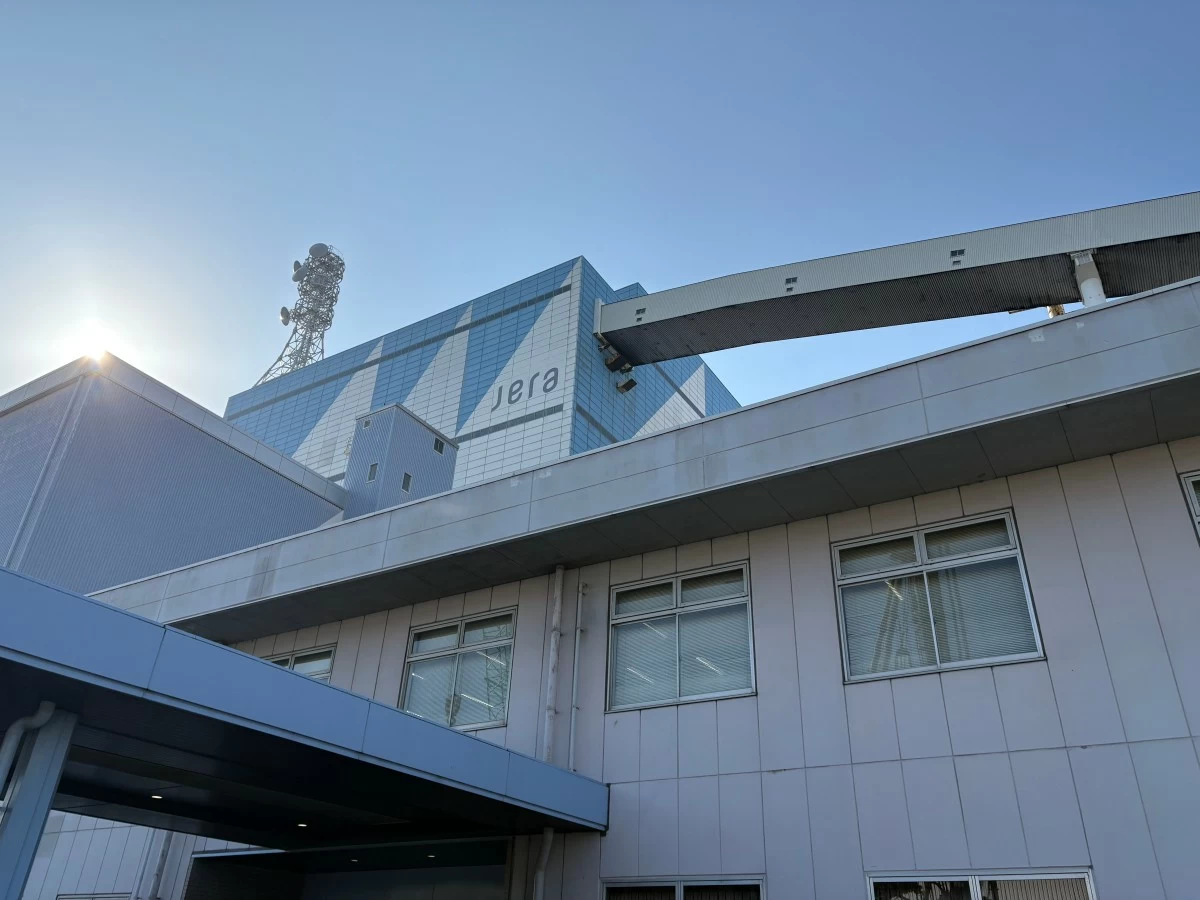
NAGOYA, Japan — Transition energy giant JERA Co. Inc. sees the growing openness of multilateral development banks (MDBs) to finance nuclear power as complementary—not a threat—to its liquefied natural gas (LNG) business, as both technologies can play distinct roles in helping developing countries like the Philippines manage the “energy trilemma” of security, affordability, and sustainability, according to a top official.
JERA Asia Pte. Ltd. Chief Executive Officer (CEO) Izumi Kai told visiting Filipino journalists on Thursday, Nov. 27, that while nuclear energy is not currently within the Japanese power firm’s portfolio, its role in Asia’s long-term energy mix is understandable, especially as nations look for stable, zero-emission baseload options amid ongoing pressure to reduce coal dependence.
“Nuclear is not JERA’s business so far, but nuclear is important in some countries,” Kai said.
Manila Bulletin sought Kai’s comment as the World Bank and the Asian Development Bank (ADB) have tweaked their policies to facilitate financing of nuclear projects. Just this week, the ADB announced a policy shift in which the Manila-based multilateral lender expressed openness to nuclear financing support under its updated energy framework.
For JERA, which entered the Philippine energy sector in 2021 through the acquisition of a 27-percent stake in Aboitiz Power Corp. (AboitizPower), the rising multilateral interest in nuclear does not undermine its LNG strategy in the country. At present, JERA and AboitizPower are jointly developing LNG projects and energy transition initiatives—such as ammonia fuel substitution in coal-fired power plants—that position natural gas as a key bridge fuel in the Philippines.
Kai said nuclear power’s appeal lies in its ability to replace coal as a reliable baseload technology without carbon emissions—an attribute increasingly prized in energy-hungry, climate-exposed emerging markets (EMs).
“Nuclear, as you know, is an alternative to coal as a baseload power generation facility and at zero CO2 [carbon dioxide] emissions,” Kai noted.
“Baseload supply with zero emission, that is very important,” he added.
He said it’s “really understandable” that nuclear is attractive for some countries facing difficulty in managing coal assets.
The Philippines, Kai noted, is among the countries reexamining nuclear options.
“Even the Philippine government [is] considering potential introduction of SNR, small nuclear reactors,” he said. “And some companies, like US [United States] companies, are already developing technologies. But still, in my understanding, [those] need to be evaluated further and even technologically become proven. Whether such technology can be introduced and safely operated in your country or other Asian countries is a different story,” he said.
Because of some challenges, Kai emphasized that nuclear development will take time, even with stronger financial backing from MDBs like the World Bank or the ADB.
“But, of course, that should be considered, because we should have options so that this energy trilemma can be managed,” he said.
Responding to Manila Bulletin’s query on the potential impact of nuclear financing on LNG—which JERA and AboitizPower are jointly advancing in the Philippines—Kai stressed that nuclear and gas play fundamentally different roles in the power system.
“Some countries use LNG or natural gas for baseload operation, but once we see more fluctuation of energy supply and demand, energy’s key role is also to manage fluctuating renewable output,” Kai said. “So therefore, it may not necessarily be fully conflicting with this nuclear introduction.”
This complementary, not competing, outlook aligns with JERA’s own transition pathway as it expands its LNG footprint while supporting decarbonization technologies in the Philippines, which it considers a “strategically important market” with AboitizPower as its key partner.
JERA remains bullish on LNG in the Philippines as about 60 to 65 percent of the country’ energy mix is still reliant on coal.
The company believes that LNG is well positioned to grow in the country, especially given the government’s push for the market to tilt to gas and LNG as well as renewables post-2030.
ADVERTISEMENT
.most-popular .layout-ratio{ padding-bottom: 79.13%; } @media (min-width: 768px) and (max-width: 1024px) { .widget-title { font-size: 15px !important; } }

{{ articles_filter_1561_widget.title }}

.most-popular .layout-ratio{ padding-bottom: 79.13%; } @media (min-width: 768px) and (max-width: 1024px) { .widget-title { font-size: 15px !important; } }

{{ articles_filter_1562_widget.title }}

.most-popular .layout-ratio{ padding-bottom: 79.13%; } @media (min-width: 768px) and (max-width: 1024px) { .widget-title { font-size: 15px !important; } }

{{ articles_filter_1563_widget.title }}

{{ articles_filter_1564_widget.title }}

.mb-article-details { position: relative; } .mb-article-details .article-body-preview, .mb-article-details .article-body-summary{ font-size: 17px; line-height: 30px; font-family: "Libre Caslon Text", serif; color: #000; } .mb-article-details .article-body-preview iframe , .mb-article-details .article-body-summary iframe{ width: 100%; margin: auto; } .read-more-background { background: linear-gradient(180deg, color(display-p3 1.000 1.000 1.000 / 0) 13.75%, color(display-p3 1.000 1.000 1.000 / 0.8) 30.79%, color(display-p3 1.000 1.000 1.000) 72.5%); position: absolute; height: 200px; width: 100%; bottom: 0; display: flex; justify-content: center; align-items: center; padding: 0; } .read-more-background a{ color: #000; } .read-more-btn { padding: 17px 45px; font-family: Inter; font-weight: 700; font-size: 18px; line-height: 16px; text-align: center; vertical-align: middle; border: 1px solid black; background-color: white; } .hidden { display: none; }
function initializeAllSwipers() { // Get all hidden inputs with cms_article_id document.querySelectorAll('[id^="cms_article_id_"]').forEach(function (input) { const cmsArticleId = input.value; const articleSelector = '#article-' + cmsArticleId + ' .body_images'; const swiperElement = document.querySelector(articleSelector); if (swiperElement && !swiperElement.classList.contains('swiper-initialized')) { new Swiper(articleSelector, { loop: true, pagination: false, navigation: { nextEl: '#article-' + cmsArticleId + ' .swiper-button-next', prevEl: '#article-' + cmsArticleId + ' .swiper-button-prev', }, }); } }); } setTimeout(initializeAllSwipers, 3000); const intersectionObserver = new IntersectionObserver( (entries) => { entries.forEach((entry) => { if (entry.isIntersecting) { const newUrl = entry.target.getAttribute("data-url"); if (newUrl) { history.pushState(null, null, newUrl); let article = entry.target; // Extract metadata const author = article.querySelector('.author-section').textContent.replace('By', '').trim(); const section = article.querySelector('.section-info ').textContent.replace(' ', ' '); const title = article.querySelector('.article-title h1').textContent; // Parse URL for Chartbeat path format const parsedUrl = new URL(newUrl, window.location.origin); const cleanUrl = parsedUrl.host + parsedUrl.pathname; // Update Chartbeat configuration if (typeof window._sf_async_config !== 'undefined') { window._sf_async_config.path = cleanUrl; window._sf_async_config.sections = section; window._sf_async_config.authors = author; } // Track virtual page view with Chartbeat if (typeof pSUPERFLY !== 'undefined' && typeof pSUPERFLY.virtualPage === 'function') { try { pSUPERFLY.virtualPage({ path: cleanUrl, title: title, sections: section, authors: author }); } catch (error) { console.error('ping error', error); } } // Optional: Update document title if (title && title !== document.title) { document.title = title; } } } }); }, { threshold: 0.1 } ); function showArticleBody(button) { const article = button.closest("article"); const summary = article.querySelector(".article-body-summary"); const body = article.querySelector(".article-body-preview"); const readMoreSection = article.querySelector(".read-more-background"); // Hide summary and read-more section summary.style.display = "none"; readMoreSection.style.display = "none"; // Show the full article body body.classList.remove("hidden"); } document.addEventListener("DOMContentLoaded", () => { let loadCount = 0; // Track how many times articles are loaded const offset = [1, 2, 3, 4, 5, 6, 7, 8, 9, 10]; // Offset values const currentUrl = window.location.pathname.substring(1); let isLoading = false; // Prevent multiple calls if (!currentUrl) { console.log("Current URL is invalid."); return; } const sentinel = document.getElementById("load-more-sentinel"); if (!sentinel) { console.log("Sentinel element not found."); return; } function isSentinelVisible() { const rect = sentinel.getBoundingClientRect(); return ( rect.top < window.innerHeight && rect.bottom >= 0 ); } function onScroll() { if (isLoading) return; if (isSentinelVisible()) { if (loadCount >= offset.length) { console.log("Maximum load attempts reached."); window.removeEventListener("scroll", onScroll); return; } isLoading = true; const currentOffset = offset[loadCount]; window.loadMoreItems().then(() => { let article = document.querySelector('#widget_1690 > div:nth-last-of-type(2) article'); intersectionObserver.observe(article) loadCount++; }).catch(error => { console.error("Error loading more items:", error); }).finally(() => { isLoading = false; }); } } window.addEventListener("scroll", onScroll); });

Sign up by email to receive news.