






Manila Bulletin
 Business
Trade & Industry
Joy~Nostalg to roll out 34.57-MWac solar projects until 2027
Business
Trade & Industry
Joy~Nostalg to roll out 34.57-MWac solar projects until 2027
Business
Trade & Industry
Joy~Nostalg to roll out 34.57-MWac solar projects until 2027
Joy~Nostalg to roll out 34.57-MWac solar projects until 2027
Published Nov 25, 2025 02:24 pm


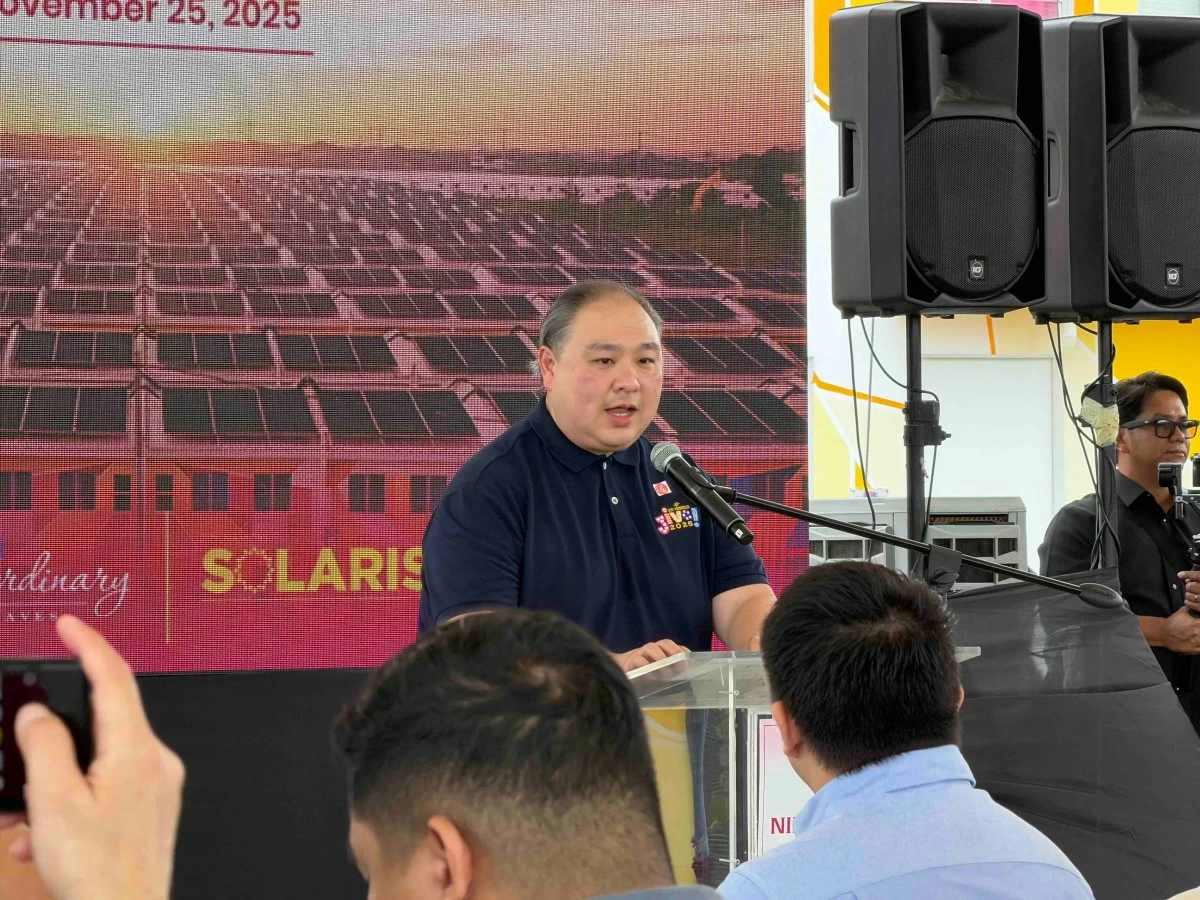
Joy~Nostalg Group is ramping up its solar developments across Luzon following the recent unveiling of a solar rooftop facility integrated into a socialized housing community.
During the inauguration of the 6.55-megawatt-peak (MWp) solar rooftop project in Naic, Cavite, Jacinto Ng Jr., group executive officer of Joy~Nostalg, shared that the pilot facility would allow more developers to look into maximizing areas to expand renewable energy (RE) systems such as solar power.
Following the commencement of NING*NING solar rooftop facility, the company is set to continue development of other projects in its 34.57-MW-alternating-current (MWac) pipeline. These developments, amounting to around ₱1.87 billion, have already been awarded under the fourth round of the Department of Energy’s (DOE) green energy auction (GEA-4).
By December 2026, Joy~Nostalg Solaris is set to complete the 15.74-MWac solar facility in Muzon-Labac, valued at ₱815 million. This will be the largest project among the four solar facilities, expected to power around 5,384 households.
It has also scheduled its six-MWac Bulacan solar project for completion by February 2027. The project, costing around ₱308 million, is expected to supply electricity to approximately 1,994 households.
The 7.8-MWac solar development in Pampanga province is targeted for completion by July 2027. With an estimated cost of ₱411 million, it is projected to energize about 15,564 households.
Joy~Nostalg’s recent inauguration of the NING*NING project marks the start of its pilot plan. According to the company, homeowners at Pasinaya Homes Prime Central in Cavite province have signed a usufruct agreement, legally allowing Joy~Nostalg Solaris to install solar panels on their rooftops for up to 50 years.
“Through authentic partnerships with government, industry, and most importantly, our Pasinaya homeowners, we have created a model that uplifts families and advances eight UN SDGs [the United Nations’ sustainable development goals],” Ng said.
Moreover, the pilot project is expected to generate 9,105 MW-hours (MWh) of clean energy annually, potentially reducing around 6,233 metric tons (MT) of carbon dioxide per year.