






Manila Bulletin
 Business
Trade & Industry
Tech boost, government backing sought to raise Philippines' standing in geothermal
Business
Trade & Industry
Tech boost, government backing sought to raise Philippines' standing in geothermal
Business
Trade & Industry
Tech boost, government backing sought to raise Philippines' standing in geothermal
Tech boost, government backing sought to raise Philippines' standing in geothermal
Published Oct 28, 2025 11:49 am
|
Updated Oct 28, 2025 03:07 pm


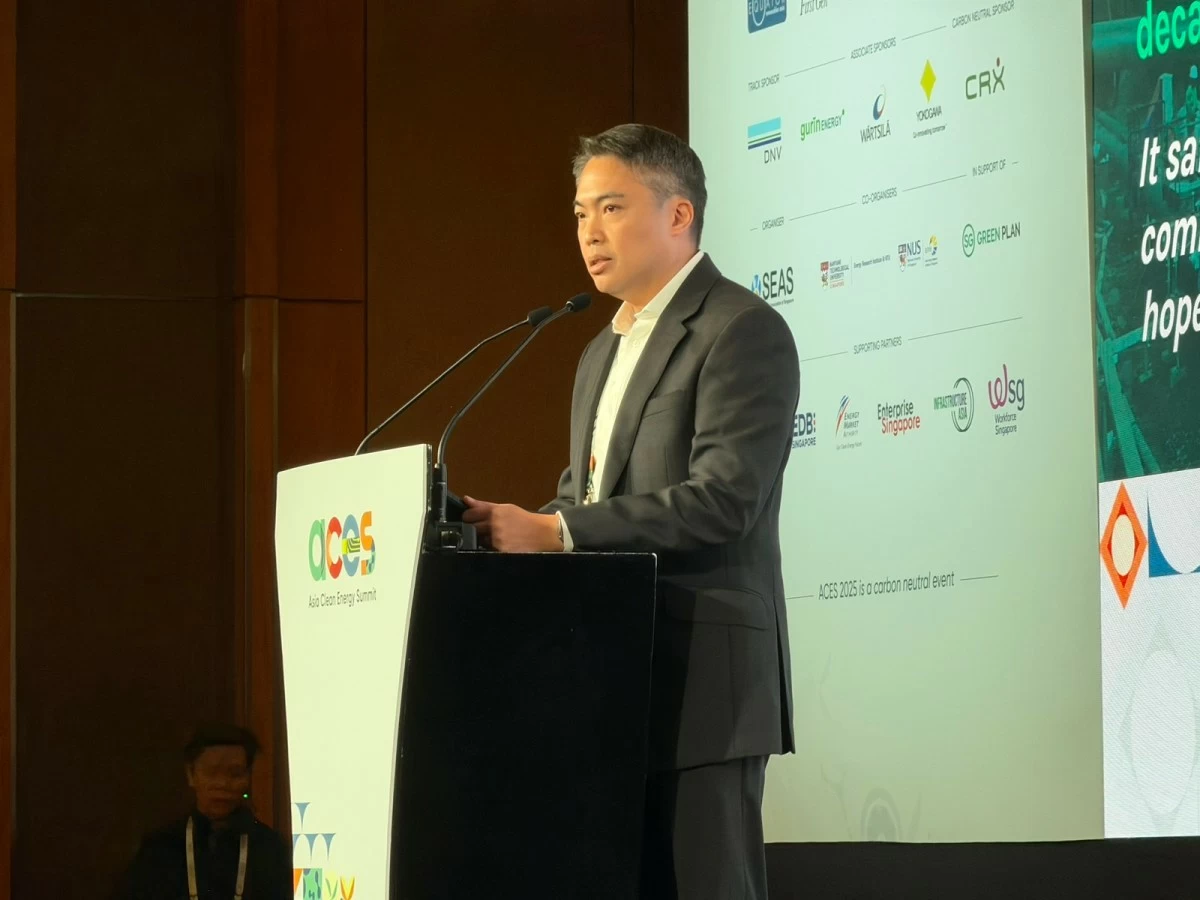
SINGAPORE — Despite its abundant geothermal resources, the Philippines continues to hold the third spot globally in geothermal capacity. To rise in ranking and maximize opportunities for 24/7 baseload power, Lopez-led First Gen Corp. (FGen) explained the need for better technologies and stronger government support.
On the sidelines of Asia Clean Energy Summit 2025, Jay Soriano, FGen vice president and head of strategy and planning, said that emerging geothermal technologies would help increase the country’s geothermal capacity, which is approximately 1,900 megawatts (MW). The United States (US) currently holds the top spot globally at 3,937 MW, while Indonesia ranks second at 2,653 MW.
“The traditional geothermal technology still makes sense, but to expand, to retain our leadership position, I think we need to start looking at other technologies that are still quite nascent. Technologies that have potential in the Philippines... Like low enthalpy, closed-loop cycles,” he told reporters in an ambush interview on Tuesday, Oct. 28.
Low-enthalpy technology serves as a renewable resource for direct heating and facility cooling or other thermal uses. It is commonly found at shallower depths than its counterparts. Meanwhile, closed-loop cycle is a system wherein heated fluid is used for power generation but does not come into contact with rocks or underground water.
“These are new, emerging geothermal technologies that can expand opportunities beyond the traditional high-enthalpy geothermal facilities and resources that we have today,” Soriano said.
He added that companies with advanced technologies, such as Ormat Technologies Inc. of Turkey, could help the Philippines adopt and integrate these innovations.
Because of growing interest in upgrading geothermal facilities, the FGen executive believes that better technologies will require a larger budget.
“If we start opening up to new technologies... I expect the number to be bigger,” he said.
This is where government aid will come in, as Soriano called for stronger support, such as ongoing efforts for the geothermal de-risking facility.
The program would allow private investors to cover 50 percent of drilling costs, which could either be turned into a loan or a grant. According to the Department of Energy (DOE), implementation is expected to begin next year, with rollout until 2031.
“If they can help us de-risk that upfront investment, then it will pave the way for more developments in the Philippines,” Soriano shared.
He said around 70 MW of geothermal projects are in the pipeline, with the Amacan geothermal exploration project in Mindanao expected to deliver this capacity once successful.
Moreover, he hopes that the government will hold another green energy auction (GEA) to welcome more geothermal projects while providing a more lenient development timeframe.
“Hopefully, there will be other rounds [of GEA] so Amacan and all of these greenfield and brownfield opportunities can take part in GEA... We won’t be able to join the bid if we’re still at the very early stages of development. Two to three years, that’s too short.”
For its part, the DOE remains hopeful that the Philippines can regain momentum and surpass its current third-place global ranking in geothermal capacity.
Energy Secretary Sharon Garin said the government is finalizing a deal with state-run Land Bank of the Philippines (Landbank) to help the Manila-based multilateral lender Asian Development Bank (ADB) release funds for the geothermal de-risking facility.
“The problem why we’re slipping to two or three in the world is because of the policies we have to adjust. We’ve already entered into an agreement, wrapping up the agreement with Landbank—that’s an ADB facility. Soon enough, we will have that. Those things, hopefully, would encourage more developers to embark on geothermal,” Garin told reporters in an interview.
The ADB earlier cited about $250 million allocated for the facility, with the first tranche amounting to $100 million set for rollout.