






Manila Bulletin
 Business
Trade & Industry
APECO launches five-year plan to build new pacific gateway port
Business
Trade & Industry
APECO launches five-year plan to build new pacific gateway port
Business
Trade & Industry
APECO launches five-year plan to build new pacific gateway port
APECO launches five-year plan to build new pacific gateway port
Published Oct 28, 2025 09:02 pm


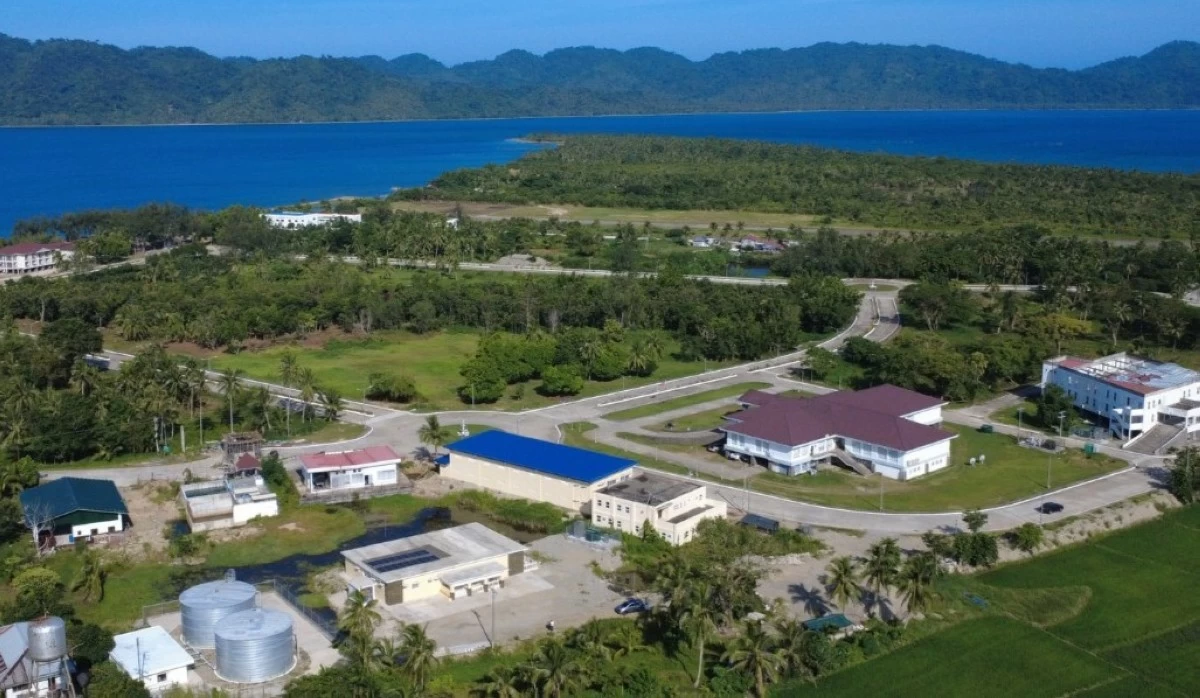
(APECO photo)
The Aurora Pacific Economic Zone and Freeport Authority (APECO) has initiated the first step of a massive five-year development plan to establish a port infrastructure aimed at positioning the Casiguran-based ecozone as a key gateway to the Pacific.
APECO said on Tuesday, Oct. 28 that it has signed a tripartite memorandum of agreement (MOA) for a new feasibility study to develop the Casiguran International New Port.
The investment promotion agency signed the agreement with South Korea-based Yooshin Engineering Corp. and home-grown Lordsbridge Resources Corp.
Under the MOA, Yooshin will lead the updating of the 2011 feasibility study by Korean Export-Import (KEXIM) Bank, focusing on the technical, financial, environmental, and social aspects of the port project.
Currently, the company is involved in the development of the 32.47-kilometer PGN Bridge project that would connect the islands of Panay, Guimaras, and Negros Islands, as well as the conceptual design and construction supervision of Cebu Inernatinoal Container Port.
APECO said this proven expertise in large-scale infrastructure projects makes Yooshin the ideal partner for the Casiguran International New Port development.
Meanwhile, Lordsbridge will serve as the developer and funding coordinator, tasked to engage with Korean and international financial institutions.
The updated study is envisioned to support the
project’s funding applications and development framework for Korean official development assistance (ODA) or private sector investment.
APECO, for its part, will provide policy, logistical, and data support.
Under the 2011 feasibility study of KEXIM Bank, it identified Bangas Point in Casiguran Bay as an optimal site for the project due to its deep waters and natural protection from typhoons.
This study estimated that it would cost $56 million to build the infrastructure, which equates to around $83 million when adjusted for inflation.
The port, as described in the original study, would feature multipurpose berths, passenger and fishery wharves, and supporting facilities.
Once operational, the facility was expected to handle over one million tons of cargo per year, serving as the logistics backbone of the APECO Freeport.
APECO said that the development of the project will proceed in phases, starting with the updated feasibility study between 2025 and 2026.
This will be followed by design and regulatory approvals between 2026 and 2027.
Construction of the port will begin in 2027, with completion earmarked for 2030.
APECO President and Chief Executive Officer (CEO) Gil Taway said the Casiguran International New Port aimed at transforming the Aurora town into a major logistics and trade hub.
As the only Philippine ecozone with direct access to the Pacific Ocean, the port project is seen to link APECO to Pacific shipping routes and the markets of Northeast Asia and Northern Pacific.
Also, APECO is in the early stages of the development of the proposed APECO International Airport, which will be a critical gateway for both cargo and passenger movement.
In September, Taway said the agency is seeking an investment partner for the project, particularly to fund the ₱150-million airstrip upgrade, ₱60 million three-storey traffic control tower, and ₱30-million passenger terminal and administration building.
Based on the project briefer, APECO is targeting commercial operations for up to 40-seater aircraft by next year as first phase of the airport project.
Without disclosing a timeline, the agency stated that the second phase will enable the airport to conduct night operations, the third phase will allow it to serve domestic jet aircraft, and the fourth phase will open it up for full international operations.