ADVERTISEMENT

Disaster governance beyond calamity response

Published Oct 3, 2025 12:05 am  |  Updated Oct 2, 2025 05:57 pm
In just two weeks, the Philippines has endured a relentless series of disasters: Super Typhoon Nando and Severe Tropical Storm Opong devastated parts of the country on Sept. 21 and Sept. 26, respectively; a 6.9-magnitude earthquake struck Cebu and surrounding islands on the night of Sept. 30; a minor phreatomagmatic eruption of Taal Volcano followed in the early hours of Oct. 1; and yet another typhoon threatens to enter the country this weekend.
The rapid succession of these disasters has triggered a full-scale government response. All 41 agencies under the National Disaster Risk Reduction and Management Council (NDRRMC) have been mobilized. And yet, the 2025 World Risk Index ranking the Philippines as the most disaster-prone country globally does not merely reflect our geography—it exposes governance system failures.
The Cebu earthquake alone has left at least 72 people dead and more than 140 injured, with fatalities expected to rise as search-and-rescue operations continue in hard-hit areas like Bogo City. Power outages have worsened conditions, with the National Grid Corporation of the Philippines placing the Visayas grid on yellow alert due to 27 power plants tripping and 11 transmission lines down. Roads to affected areas remain partially blocked by landslides and cracked portions of cement, slowing the delivery of aid.
While the government's response machinery is in motion—from rescue deployments to food distribution and medical support—the repeated damage we suffer with each disaster underscores a bigger issue. Our response invariably falls short of what the dire situations require.
Despite multiple laws and institutions dedicated to disaster risk management, we remain fundamentally reactive. Flood-prone provinces such as Cagayan, Pampanga, Agusan del Norte, Pangasinan, and Maguindanao suffer repeated inundation due to poor planning and outdated infrastructure. Even Metro Manila, sixth on the flood risk list, remains highly vulnerable due to overdevelopment and lack of enforcement.
The Philippines’ ranking calls into question not only the adequacy of disaster preparedness programs but also the larger governance ecosystem.
Weak urban planning, unchecked deforestation, and unregulated construction in danger zones persist. Flood control projects are chronically delayed, hampered by bureaucratic inefficiencies and political interference.
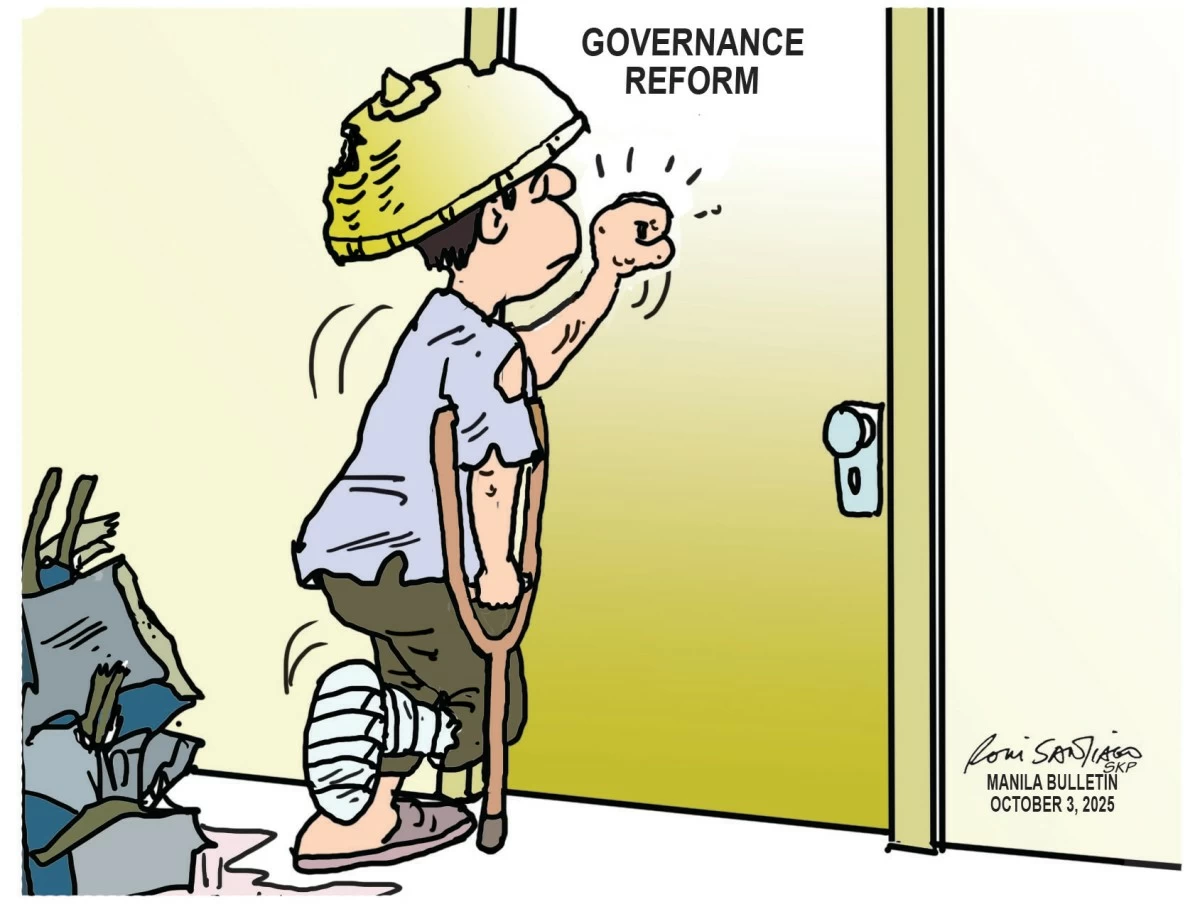
Governance reform is therefore imperative. Local governments, empowered by the Mandanas ruling to retain a larger share of national revenues, must be held accountable for using these resources to strengthen climate resilience. Infrastructure investments must be climate-proofed, not just politically driven. Development planning must integrate geohazard mapping and strictly enforce no-build zones.
Equally urgent is strengthening institutions like the NDRRMC and the Department of Environment and Natural Resources (DENR). Coordination across agencies should be strengthened so that fragmented responses will not waste scarce resources. Congressional oversight must go beyond post-disaster aid allocations and demand clear performance benchmarks for risk reduction.
The private sector and civil society also play critical roles. Insurance penetration remains low, leaving households and businesses vulnerable. Corporate social responsibility must be guided to evolve into sustained partnerships that build community resilience. Civil society organizations, with their presence at the grassroots, should be integrated into formal governance mechanisms rather than treated as afterthoughts.
Ultimately, the Philippines’ unenviable position at the top of the World Risk Index should be seen not as a perpetual curse of geography but as a governance challenge.
Japan, Indonesia, and Bangladesh face similar risks but have steadily improved resilience through consistent policy execution and community engagement. The Philippines can do the same — if leaders choose to confront entrenched inefficiencies and corruption with decisive reforms.
Disaster governance is not about calamity response alone. It is about ensuring that every school built, every road paved, every housing unit constructed contributes to resilience rather than risk. Unless this shift in governance mindset occurs, the Philippines will continue to top the wrong global list — at the cost of lives, livelihoods, and national development.
ADVERTISEMENT
.most-popular .layout-ratio{ padding-bottom: 79.13%; } @media (min-width: 768px) and (max-width: 1024px) { .widget-title { font-size: 15px !important; } }

{{ articles_filter_1561_widget.title }}

.most-popular .layout-ratio{ padding-bottom: 79.13%; } @media (min-width: 768px) and (max-width: 1024px) { .widget-title { font-size: 15px !important; } }

{{ articles_filter_1562_widget.title }}

.most-popular .layout-ratio{ padding-bottom: 79.13%; } @media (min-width: 768px) and (max-width: 1024px) { .widget-title { font-size: 15px !important; } }

{{ articles_filter_1563_widget.title }}

{{ articles_filter_1564_widget.title }}

.mb-article-details { position: relative; } .mb-article-details .article-body-preview, .mb-article-details .article-body-summary{ font-size: 17px; line-height: 30px; font-family: "Libre Caslon Text", serif; color: #000; } .mb-article-details .article-body-preview iframe , .mb-article-details .article-body-summary iframe{ width: 100%; margin: auto; } .read-more-background { background: linear-gradient(180deg, color(display-p3 1.000 1.000 1.000 / 0) 13.75%, color(display-p3 1.000 1.000 1.000 / 0.8) 30.79%, color(display-p3 1.000 1.000 1.000) 72.5%); position: absolute; height: 200px; width: 100%; bottom: 0; display: flex; justify-content: center; align-items: center; padding: 0; } .read-more-background a{ color: #000; } .read-more-btn { padding: 17px 45px; font-family: Inter; font-weight: 700; font-size: 18px; line-height: 16px; text-align: center; vertical-align: middle; border: 1px solid black; background-color: white; } .hidden { display: none; }
function initializeAllSwipers() { // Get all hidden inputs with cms_article_id document.querySelectorAll('[id^="cms_article_id_"]').forEach(function (input) { const cmsArticleId = input.value; const articleSelector = '#article-' + cmsArticleId + ' .body_images'; const swiperElement = document.querySelector(articleSelector); if (swiperElement && !swiperElement.classList.contains('swiper-initialized')) { new Swiper(articleSelector, { loop: true, pagination: false, navigation: { nextEl: '#article-' + cmsArticleId + ' .swiper-button-next', prevEl: '#article-' + cmsArticleId + ' .swiper-button-prev', }, }); } }); } setTimeout(initializeAllSwipers, 3000); const intersectionObserver = new IntersectionObserver( (entries) => { entries.forEach((entry) => { if (entry.isIntersecting) { const newUrl = entry.target.getAttribute("data-url"); if (newUrl) { history.pushState(null, null, newUrl); let article = entry.target; // Extract metadata const author = article.querySelector('.author-section').textContent.replace('By', '').trim(); const section = article.querySelector('.section-info ').textContent.replace(' ', ' '); const title = article.querySelector('.article-title h1').textContent; // Parse URL for Chartbeat path format const parsedUrl = new URL(newUrl, window.location.origin); const cleanUrl = parsedUrl.host + parsedUrl.pathname; // Update Chartbeat configuration if (typeof window._sf_async_config !== 'undefined') { window._sf_async_config.path = cleanUrl; window._sf_async_config.sections = section; window._sf_async_config.authors = author; } // Track virtual page view with Chartbeat if (typeof pSUPERFLY !== 'undefined' && typeof pSUPERFLY.virtualPage === 'function') { try { pSUPERFLY.virtualPage({ path: cleanUrl, title: title, sections: section, authors: author }); } catch (error) { console.error('ping error', error); } } // Optional: Update document title if (title && title !== document.title) { document.title = title; } } } }); }, { threshold: 0.1 } ); function showArticleBody(button) { const article = button.closest("article"); const summary = article.querySelector(".article-body-summary"); const body = article.querySelector(".article-body-preview"); const readMoreSection = article.querySelector(".read-more-background"); // Hide summary and read-more section summary.style.display = "none"; readMoreSection.style.display = "none"; // Show the full article body body.classList.remove("hidden"); } document.addEventListener("DOMContentLoaded", () => { let loadCount = 0; // Track how many times articles are loaded const offset = [1, 2, 3, 4, 5, 6, 7, 8, 9, 10]; // Offset values const currentUrl = window.location.pathname.substring(1); let isLoading = false; // Prevent multiple calls if (!currentUrl) { console.log("Current URL is invalid."); return; } const sentinel = document.getElementById("load-more-sentinel"); if (!sentinel) { console.log("Sentinel element not found."); return; } function isSentinelVisible() { const rect = sentinel.getBoundingClientRect(); return ( rect.top < window.innerHeight && rect.bottom >= 0 ); } function onScroll() { if (isLoading) return; if (isSentinelVisible()) { if (loadCount >= offset.length) { console.log("Maximum load attempts reached."); window.removeEventListener("scroll", onScroll); return; } isLoading = true; const currentOffset = offset[loadCount]; window.loadMoreItems().then(() => { let article = document.querySelector('#widget_1690 > div:nth-last-of-type(2) article'); intersectionObserver.observe(article) loadCount++; }).catch(error => { console.error("Error loading more items:", error); }).finally(() => { isLoading = false; }); } } window.addEventListener("scroll", onScroll); });

Sign up by email to receive news.