






Manila Bulletin
 Business
Trade & Industry
IFC eyes $10-million investment in Dali to expand hard-discount retailer's Philippine network
Business
Trade & Industry
IFC eyes $10-million investment in Dali to expand hard-discount retailer's Philippine network
Business
Trade & Industry
IFC eyes $10-million investment in Dali to expand hard-discount retailer's Philippine network
IFC eyes $10-million investment in Dali to expand hard-discount retailer's Philippine network
Published Sep 29, 2025 12:00 am
|
Updated Sep 27, 2025 02:55 pm


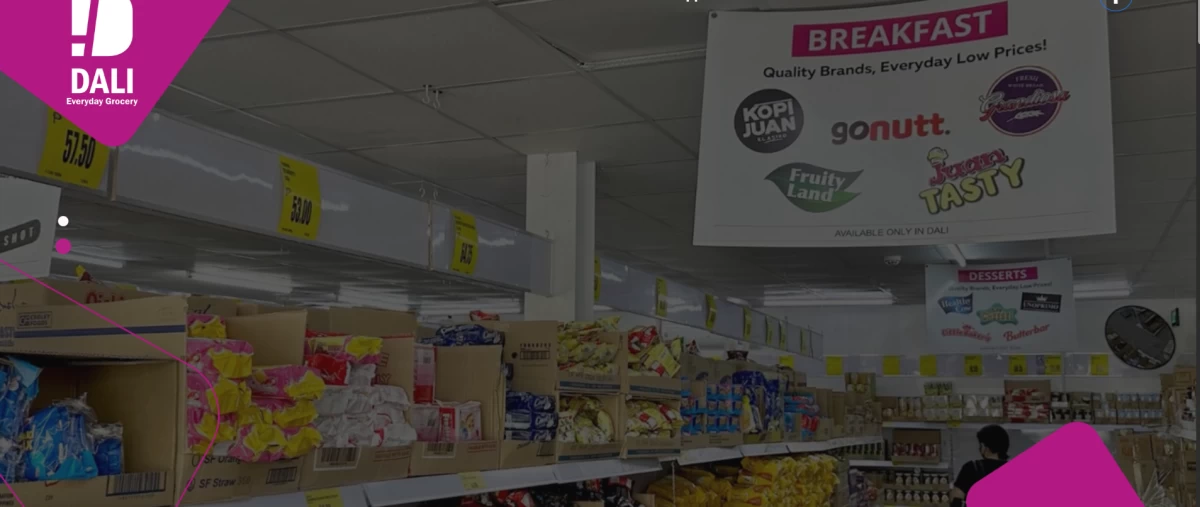
International Finance Corp. (IFC), the private-sector lending arm of the World Bank Group (WBG), will extend over $10 million in investment financing to Dali Discount AG (DALI) to expand its grocery network in the Philippines.
IFC disclosed on Sept. 22 that its Washington-based board is scheduled to approve on Oct. 22 quasi-equity financing of up to $10.07 million, or about ₱585 million, for Dali to enable the company to scale its business.
Established at the height of the Covid-19 pandemic in 2020, Dali has quickly established itself as a hard-discount retailer dedicated to making everyday essentials affordable for Filipino consumers, IFC noted, adding that the grocery chain follows a no-frills, small-format model with a limited but carefully curated assortment.
Dali focuses heavily on private-label products that address basic household needs. Its offerings include staple foods such as rice, cooking oil, sauces, snacks, and beverages, as well as personal care products like soap and toothpaste, and household essentials such as detergents and cleaning supplies.
In 2025, Dali has grown rapidly, now operating over 1,000 stores across Luzon, IFC noted. The hard-discount format itself traces its origins to Germany, where it pioneered a stripped-down supermarket concept that emphasizes low costs and limited selections without compromising quality.
At present, Dali’s ownership is shared between its management team and a pool of financial investors, including the Manila-based multilateral lender Asian Development Bank (ADB), German development bank Deutsche Investitions- und Entwicklungsgesellschaft (DEG), as well as private-equity investment firms Creador, Navegar, Pavilion Capital, and Venturi Partners.
IFC said its forthcoming investment in Dali would improve consumer access to affordable, quality household products; strengthen local suppliers through more robust supply chains; and generate wider economic benefits.
“The proposed investment aims to enhance market competitiveness by scaling up the hard-discount retail model, raising quality standards, and reinforcing supply chains,” IFC added.
The financing would also serve as an equity injection to support Dali’s growth, particularly in the Philippines where venture capital remains relatively limited, IFC said.
IFC noted that its involvement is expected to improve the company’s fundraising prospects and strengthen its capitalization structure, helping Dali pursue sustainable expansion.
In addition to financial support, IFC will provide non-financial contributions to strengthen the company’s long-term sustainability. These include standard setting, knowledge sharing, innovation, and capacity building, by improving Dali’s environmental and social practices to ensure that growth is not only profitable but also responsible, according to IFC.
Prior to its investment commitment, IFC assessed the company’s capacity to meet performance standards, such as procedures for screening private-label manufacturers and selecting future retail and distribution sites.
As part of due diligence, IFC conducted site visits in July to Dali’s headquarters, two distribution centers, and several stores in Cavite province.
Dali has committed to an environmental and social action plan, which is expected to be completed by Feb. 15 next year.
As of June this year, Dali employed a total of 7,500 people, including 15 expatriates. Part-time workers made up about 45 percent of the overall headcount, whose basic salary covers a 48-hour workweek and includes up to five hours of overtime, IFC said.
While Dali stores operate daily from 6:30 a.m. to 9:30 p.m., IFC noted that the company does not employ on-site security personnel; instead, each store is monitored through security cameras and alarm systems with remote supervision.
Also, Dali outsources warehouse security to third-party providers, with all warehouses located within industrial parks, according to IFC.
(Ricardo M. Austria)