ADVERTISEMENT

PCG suspects Chinese research vessel surveying Batanes

Published Apr 7, 2025 06:02 am
jay tarriela batanes.jpg
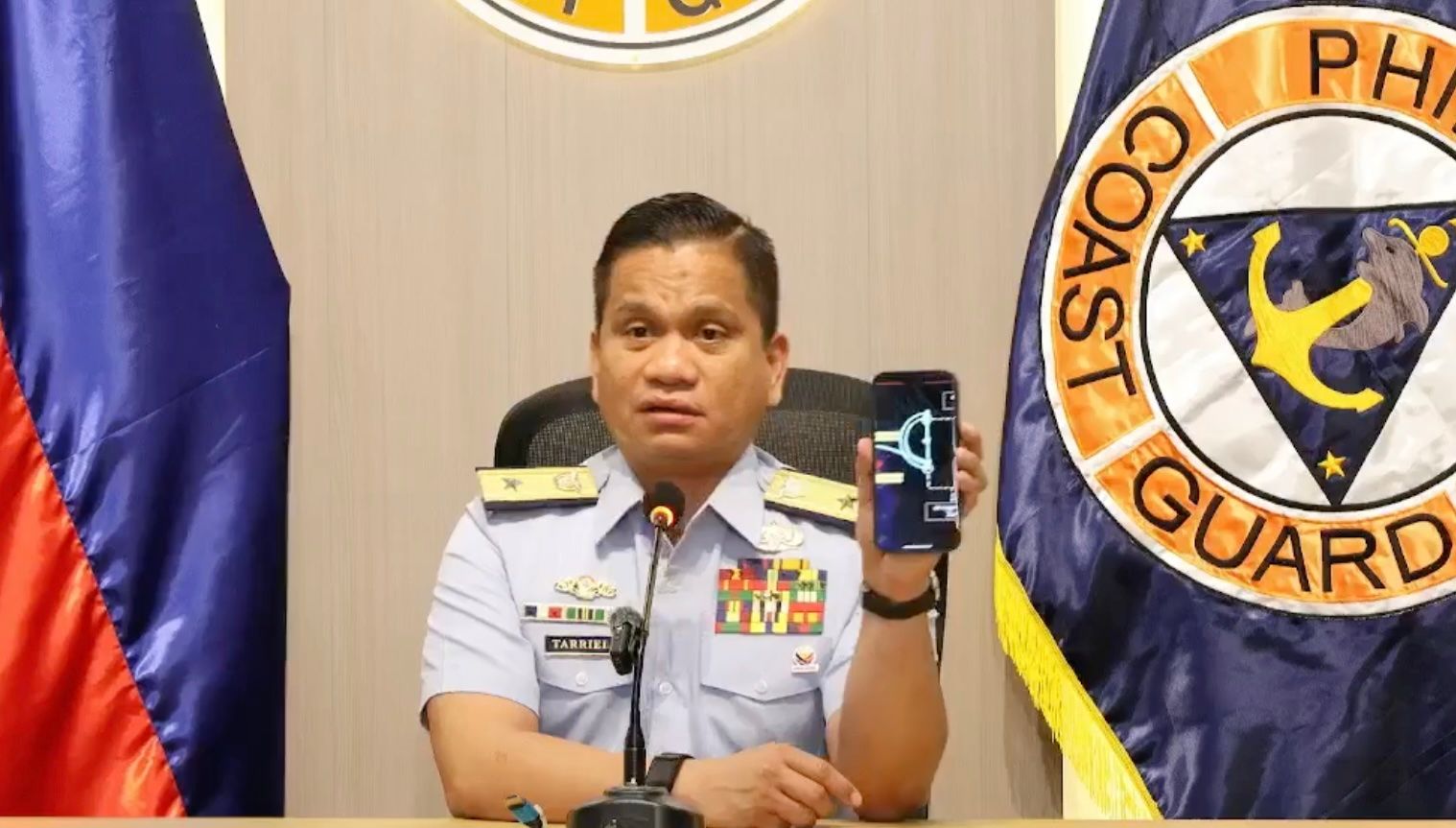
Philippine Coast Guard (PCG) Commodore Jay Tarriela shows the inverted "D" pattern taken by a Chinese research vessel while surveying the waters of Batanes during a press conference in Manila on April 7, 2025. The vessel entered the Philippines' exclusive economic zone on April 2 and has been staying since allegedly to conduct marine scientific research. (Courtesy of PCG)

The Philippine Coast Guard (PCG) revealed Monday, April 7, that it has been monitoring a Chinese research vessel off Batanes which it suspected of surveying the northern island close to Taiwan for five days already.

Commodore Jay Tarriela, PCG spokesperson for West Philippine Sea (WPS), said research vessel “Zhong Shan Da Xue” was spotted off Batanes’ waters using a dark vessel detection program from the Canadian government. It measures an overall length of 114 meters and a tonnage of 2,300 tons.

The research vessel departed Guangdong province on March 31 and entered the Philippines’ Exclusive Economic Zone (EEZ) up north around 9 p.m. on April 2.

As of 7 a.m. on April 7, the research vessel was located at approximately 103.86 nautical miles from Itbayat, Batanes.

“Since then, it stayed within our own Exclusive Economic Zone which is seemingly conducting maritime scientific research because of its consistent patterns of navigation,” Tarriela said, noting that the vessel has been taking an unusual route pattern formed like an inverted "D", which is "not continuous and expeditious."

“As far as we know, the Chinese government does not have any clearance or authority to conduct such marine scientific research within our own exclusive economic zone up north,” he added. 

Under the United Nations Convention on the Law of the Sea (UNCLOS) and Republic Act No. 12065 or the Philippine Archipelagic Sea Lanes Act, a foreign vessel that intends to conduct a scientific research in the Philippines’ maritime zones, including its EEZ and continental shelf, should first obtain a prior consent from the Philippine government, and the research should benefit the Filipino people.

PCG Commandant, Admiral Ronnie Gil Gavan ordered the deployment of a Coast Guard aircraft to challenge the research vessel and document its “unlawful” activity. A PCG vessel will also be mobilized to shadow the research vessel until it leaves the country’s waters.

“We need to make China realize that they still need to respect the sovereign rights of other countries and not allow them, and call them out to stop doing scientific research in somebody else's exclusive economic zone,” Tarriela said.

Last April 1, another Chinese research vessel, “Song Hang”, was also monitored inside the country’s archipelagic waters off Puerto Princesa City, Palawan. The vessel entered the country’s waters while on its way to Celebes Sea.

Tarriela said he didn’t want to speculate why the research vessel was surveying Batanes.

Last week, Armed Forces of the Philippines (AFP) chief General Romeo Brawner Jr. directed the Northern Luzon Command (Nolcom) to prepare in case China invades Taiwan.

“I don’t want to speculate much further but again, there are a lot of data that you can get in conducting a marine scientific research,” Tarriela said.

‘Dangerous maneuvers’

Meanwhile, another PCG ship, BRP Cabra, has been shadowing China Coast Guard vessel with bow number “3302” off the coast of Zambales.

Tarriela said BRP Cabra was subjected to “dangerous maneuvers” by CCG 3302 on April 6 while conducting maritime patrol at around 92 to 96 nautical miles off Capones Island in Zambales.

He said the 99-meter CCG vessel “engaged in reckless and dangerous maneuvers, displaying a blatant disregard for safety” as it “attempted [a] head-on collision” with the much smaller, 44-meter PCG vessel.

“It is only through the seamanship skills and professionalism of the crew of BRP Cabra that such collision was narrowly averted,” the commodore added.

Related Tags

chinese research vessel Taiwan strait Batanes Philippine Coast Guard (PCG)
ADVERTISEMENT
.most-popular .layout-ratio{ padding-bottom: 79.13%; } @media (min-width: 768px) and (max-width: 1024px) { .widget-title { font-size: 15px !important; } }

{{ articles_filter_1561_widget.title }}

.most-popular .layout-ratio{ padding-bottom: 79.13%; } @media (min-width: 768px) and (max-width: 1024px) { .widget-title { font-size: 15px !important; } }

{{ articles_filter_1562_widget.title }}

.most-popular .layout-ratio{ padding-bottom: 79.13%; } @media (min-width: 768px) and (max-width: 1024px) { .widget-title { font-size: 15px !important; } }

{{ articles_filter_1563_widget.title }}

{{ articles_filter_1564_widget.title }}

.mb-article-details { position: relative; } .mb-article-details .article-body-preview, .mb-article-details .article-body-summary{ font-size: 17px; line-height: 30px; font-family: "Libre Caslon Text", serif; color: #000; } .mb-article-details .article-body-preview iframe , .mb-article-details .article-body-summary iframe{ width: 100%; margin: auto; } .read-more-background { background: linear-gradient(180deg, color(display-p3 1.000 1.000 1.000 / 0) 13.75%, color(display-p3 1.000 1.000 1.000 / 0.8) 30.79%, color(display-p3 1.000 1.000 1.000) 72.5%); position: absolute; height: 200px; width: 100%; bottom: 0; display: flex; justify-content: center; align-items: center; padding: 0; } .read-more-background a{ color: #000; } .read-more-btn { padding: 17px 45px; font-family: Inter; font-weight: 700; font-size: 18px; line-height: 16px; text-align: center; vertical-align: middle; border: 1px solid black; background-color: white; } .hidden { display: none; }
function initializeAllSwipers() { // Get all hidden inputs with cms_article_id document.querySelectorAll('[id^="cms_article_id_"]').forEach(function (input) { const cmsArticleId = input.value; const articleSelector = '#article-' + cmsArticleId + ' .body_images'; const swiperElement = document.querySelector(articleSelector); if (swiperElement && !swiperElement.classList.contains('swiper-initialized')) { new Swiper(articleSelector, { loop: true, pagination: false, navigation: { nextEl: '#article-' + cmsArticleId + ' .swiper-button-next', prevEl: '#article-' + cmsArticleId + ' .swiper-button-prev', }, }); } }); } setTimeout(initializeAllSwipers, 3000); const intersectionObserver = new IntersectionObserver( (entries) => { entries.forEach((entry) => { if (entry.isIntersecting) { const newUrl = entry.target.getAttribute("data-url"); if (newUrl) { history.pushState(null, null, newUrl); let article = entry.target; // Extract metadata const author = article.querySelector('.author-section').textContent.replace('By', '').trim(); const section = article.querySelector('.section-info ').textContent.replace(' ', ' '); const title = article.querySelector('.article-title h1').textContent; // Parse URL for Chartbeat path format const parsedUrl = new URL(newUrl, window.location.origin); const cleanUrl = parsedUrl.host + parsedUrl.pathname; // Update Chartbeat configuration if (typeof window._sf_async_config !== 'undefined') { window._sf_async_config.path = cleanUrl; window._sf_async_config.sections = section; window._sf_async_config.authors = author; } // Track virtual page view with Chartbeat if (typeof pSUPERFLY !== 'undefined' && typeof pSUPERFLY.virtualPage === 'function') { try { pSUPERFLY.virtualPage({ path: cleanUrl, title: title, sections: section, authors: author }); } catch (error) { console.error('ping error', error); } } // Optional: Update document title if (title && title !== document.title) { document.title = title; } } } }); }, { threshold: 0.1 } ); function showArticleBody(button) { const article = button.closest("article"); const summary = article.querySelector(".article-body-summary"); const body = article.querySelector(".article-body-preview"); const readMoreSection = article.querySelector(".read-more-background"); // Hide summary and read-more section summary.style.display = "none"; readMoreSection.style.display = "none"; // Show the full article body body.classList.remove("hidden"); } document.addEventListener("DOMContentLoaded", () => { let loadCount = 0; // Track how many times articles are loaded const offset = [1, 2, 3, 4, 5, 6, 7, 8, 9, 10]; // Offset values const currentUrl = window.location.pathname.substring(1); let isLoading = false; // Prevent multiple calls if (!currentUrl) { console.log("Current URL is invalid."); return; } const sentinel = document.getElementById("load-more-sentinel"); if (!sentinel) { console.log("Sentinel element not found."); return; } function isSentinelVisible() { const rect = sentinel.getBoundingClientRect(); return ( rect.top < window.innerHeight && rect.bottom >= 0 ); } function onScroll() { if (isLoading) return; if (isSentinelVisible()) { if (loadCount >= offset.length) { console.log("Maximum load attempts reached."); window.removeEventListener("scroll", onScroll); return; } isLoading = true; const currentOffset = offset[loadCount]; window.loadMoreItems().then(() => { let article = document.querySelector('#widget_1690 > div:nth-last-of-type(2) article'); intersectionObserver.observe(article) loadCount++; }).catch(error => { console.error("Error loading more items:", error); }).finally(() => { isLoading = false; }); } } window.addEventListener("scroll", onScroll); });

Sign up by email to receive news.