

ADVERTISEMENT

Protect your smartphone data with these essential tips from DICT

Published Jul 12, 2024 05:37 am

One of the most beneficial advancements with the arrival of smartphones is data storage.

Instead of needing multiple envelopes for personal documents, now users can simply use a single handheld device to store all personal documents.
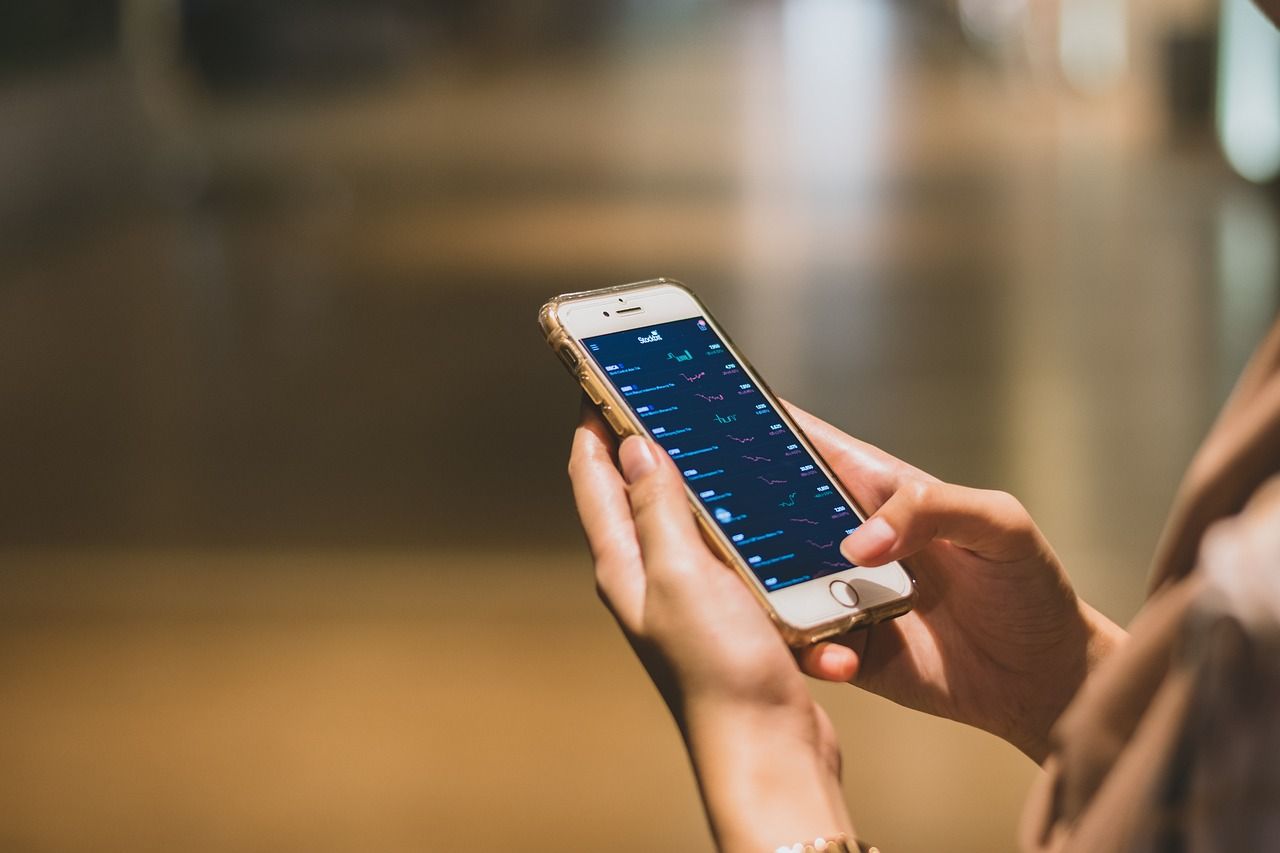
business-7304257_1280.jpg
Photo from Pixabay

However, with this convenience comes the risk that personal information can be easily stolen by criminals and used for unlawful activities such as phishing and other cybercrimes where individuals' identities can be exploited.

To safeguard data stored on smartphones and make them "theft-proof," the Department of Information and Communications Technology's Cybersecurity Bureau (DICT-Cybersecurity) has shared six tips for the public.

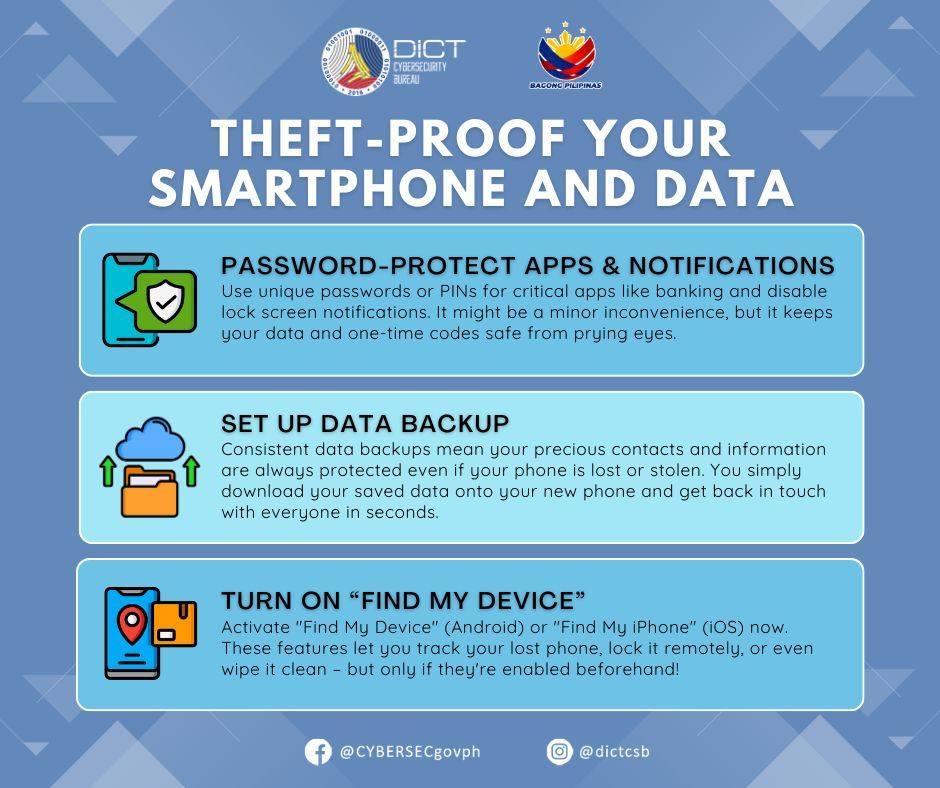
To enhance security, the public was advised to "password-protect their apps and notifications."

DICT recommended using "unique passwords or personal identification numbers (PINs)" for critical apps like banking, and also suggested disabling lock screen notifications.
450231141_892232376269052_514607996539844458_n.jpg
DICT-Cybersecurity

"It might be a minor inconvenience, but it keeps your data and one-time codes safe from prying eyes," DICT said.

The agency also emphasized the importance of setting up data backups and turning on the "Find My Device" feature.

Consistent backups protect your valuable contacts and information, ensuring they are accessible even if your phone is lost or stolen.

By activating "Find My Device" (Android) or "Find My iPhone" (iOS), you can track, lock, or wipe your lost phone remotely, adding an extra layer of security.

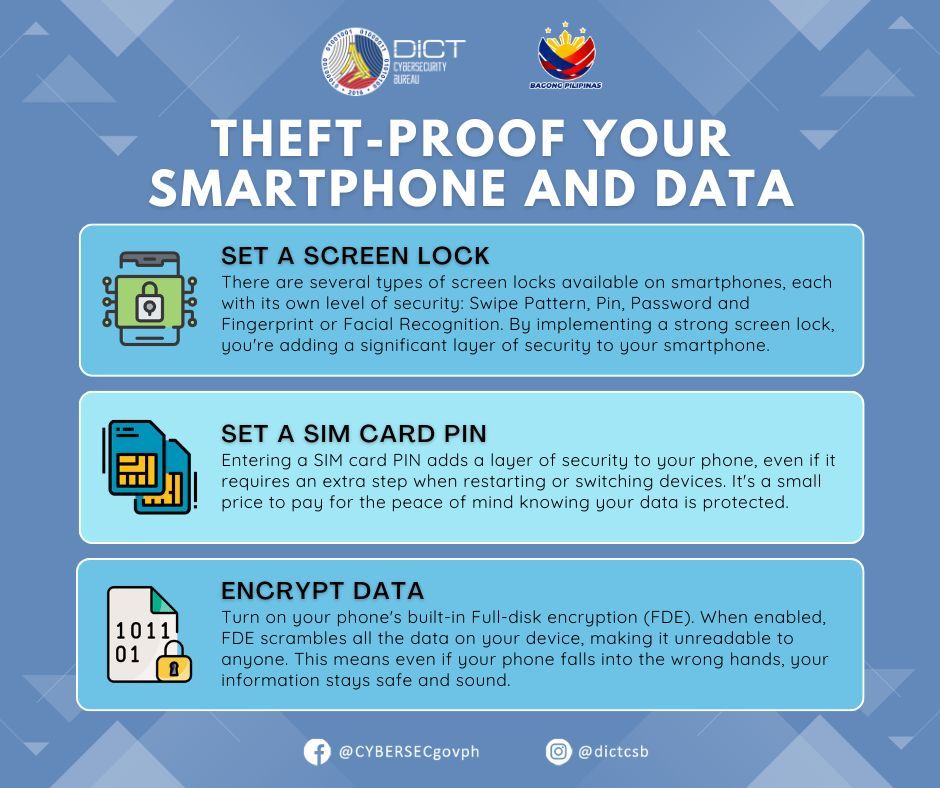
Moreover, the agency provided additional tips to enhance smartphone security: "set a screen lock," set a Subscriber Identity Module (SIM) card PIN," and "encrypt data."
450531898_892232362935720_8575172101553124421_n.jpg
DICT-Cybersecurity

With the introduction of the government project, eGov Super App, smartphones can now serve as proof of identification.

This app enables users to generate an electronic ID that can be used for various transactions with government branches.

READ:

https://mb.com.ph/2023/6/2/dict-kicks-off-2023-nat-l-ict-month-celebration-with-launch-of-e-gov-super-app

Related to this article, the DICT-Cybersecurity also released a set of recommendations that the public should follow if they have lost or had their phones stolen.

READ:

https://mb.com.ph/2024/7/10/what-to-do-if-your-phone-gets-lost-or-stolen

Related Tags

Cybersecurity Department of Information and Communications Technology (DICT)
ADVERTISEMENT
.most-popular .layout-ratio{ padding-bottom: 79.13%; } @media (min-width: 768px) and (max-width: 1024px) { .widget-title { font-size: 15px !important; } }

{{ articles_filter_1561_widget.title }}

.most-popular .layout-ratio{ padding-bottom: 79.13%; } @media (min-width: 768px) and (max-width: 1024px) { .widget-title { font-size: 15px !important; } }

{{ articles_filter_1562_widget.title }}

.most-popular .layout-ratio{ padding-bottom: 79.13%; } @media (min-width: 768px) and (max-width: 1024px) { .widget-title { font-size: 15px !important; } }

{{ articles_filter_1563_widget.title }}

{{ articles_filter_1564_widget.title }}

.mb-article-details { position: relative; } .mb-article-details .article-body-preview, .mb-article-details .article-body-summary{ font-size: 17px; line-height: 30px; font-family: "Libre Caslon Text", serif; color: #000; } .mb-article-details .article-body-preview iframe , .mb-article-details .article-body-summary iframe{ width: 100%; margin: auto; } .read-more-background { background: linear-gradient(180deg, color(display-p3 1.000 1.000 1.000 / 0) 13.75%, color(display-p3 1.000 1.000 1.000 / 0.8) 30.79%, color(display-p3 1.000 1.000 1.000) 72.5%); position: absolute; height: 200px; width: 100%; bottom: 0; display: flex; justify-content: center; align-items: center; padding: 0; } .read-more-background a{ color: #000; } .read-more-btn { padding: 17px 45px; font-family: Inter; font-weight: 700; font-size: 18px; line-height: 16px; text-align: center; vertical-align: middle; border: 1px solid black; background-color: white; } .hidden { display: none; }
function initializeAllSwipers() { // Get all hidden inputs with cms_article_id document.querySelectorAll('[id^="cms_article_id_"]').forEach(function (input) { const cmsArticleId = input.value; const articleSelector = '#article-' + cmsArticleId + ' .body_images'; const swiperElement = document.querySelector(articleSelector); if (swiperElement && !swiperElement.classList.contains('swiper-initialized')) { new Swiper(articleSelector, { loop: true, pagination: false, navigation: { nextEl: '#article-' + cmsArticleId + ' .swiper-button-next', prevEl: '#article-' + cmsArticleId + ' .swiper-button-prev', }, }); } }); } setTimeout(initializeAllSwipers, 3000); const intersectionObserver = new IntersectionObserver( (entries) => { entries.forEach((entry) => { if (entry.isIntersecting) { const newUrl = entry.target.getAttribute("data-url"); if (newUrl) { history.pushState(null, null, newUrl); let article = entry.target; // Extract metadata const author = article.querySelector('.author-section').textContent.replace('By', '').trim(); const section = article.querySelector('.section-info ').textContent.replace(' ', ' '); const title = article.querySelector('.article-title h1').textContent; // Parse URL for Chartbeat path format const parsedUrl = new URL(newUrl, window.location.origin); const cleanUrl = parsedUrl.host + parsedUrl.pathname; // Update Chartbeat configuration if (typeof window._sf_async_config !== 'undefined') { window._sf_async_config.path = cleanUrl; window._sf_async_config.sections = section; window._sf_async_config.authors = author; } // Track virtual page view with Chartbeat if (typeof pSUPERFLY !== 'undefined' && typeof pSUPERFLY.virtualPage === 'function') { try { pSUPERFLY.virtualPage({ path: cleanUrl, title: title, sections: section, authors: author }); } catch (error) { console.error('ping error', error); } } // Optional: Update document title if (title && title !== document.title) { document.title = title; } } } }); }, { threshold: 0.1 } ); function showArticleBody(button) { const article = button.closest("article"); const summary = article.querySelector(".article-body-summary"); const body = article.querySelector(".article-body-preview"); const readMoreSection = article.querySelector(".read-more-background"); // Hide summary and read-more section summary.style.display = "none"; readMoreSection.style.display = "none"; // Show the full article body body.classList.remove("hidden"); } document.addEventListener("DOMContentLoaded", () => { let loadCount = 0; // Track how many times articles are loaded const offset = [1, 2, 3, 4, 5, 6, 7, 8, 9, 10]; // Offset values const currentUrl = window.location.pathname.substring(1); let isLoading = false; // Prevent multiple calls if (!currentUrl) { console.log("Current URL is invalid."); return; } const sentinel = document.getElementById("load-more-sentinel"); if (!sentinel) { console.log("Sentinel element not found."); return; } function isSentinelVisible() { const rect = sentinel.getBoundingClientRect(); return ( rect.top < window.innerHeight && rect.bottom >= 0 ); } function onScroll() { if (isLoading) return; if (isSentinelVisible()) { if (loadCount >= offset.length) { console.log("Maximum load attempts reached."); window.removeEventListener("scroll", onScroll); return; } isLoading = true; const currentOffset = offset[loadCount]; window.loadMoreItems().then(() => { let article = document.querySelector('#widget_1690 > div:nth-last-of-type(2) article'); intersectionObserver.observe(article) loadCount++; }).catch(error => { console.error("Error loading more items:", error); }).finally(() => { isLoading = false; }); } } window.addEventListener("scroll", onScroll); });

Sign up by email to receive news.