ADVERTISEMENT

Lahar warning raised in Kanlaon Volcano amid heavy rains

Published Jun 5, 2024 04:27 pm
IMG_3867.jpeg
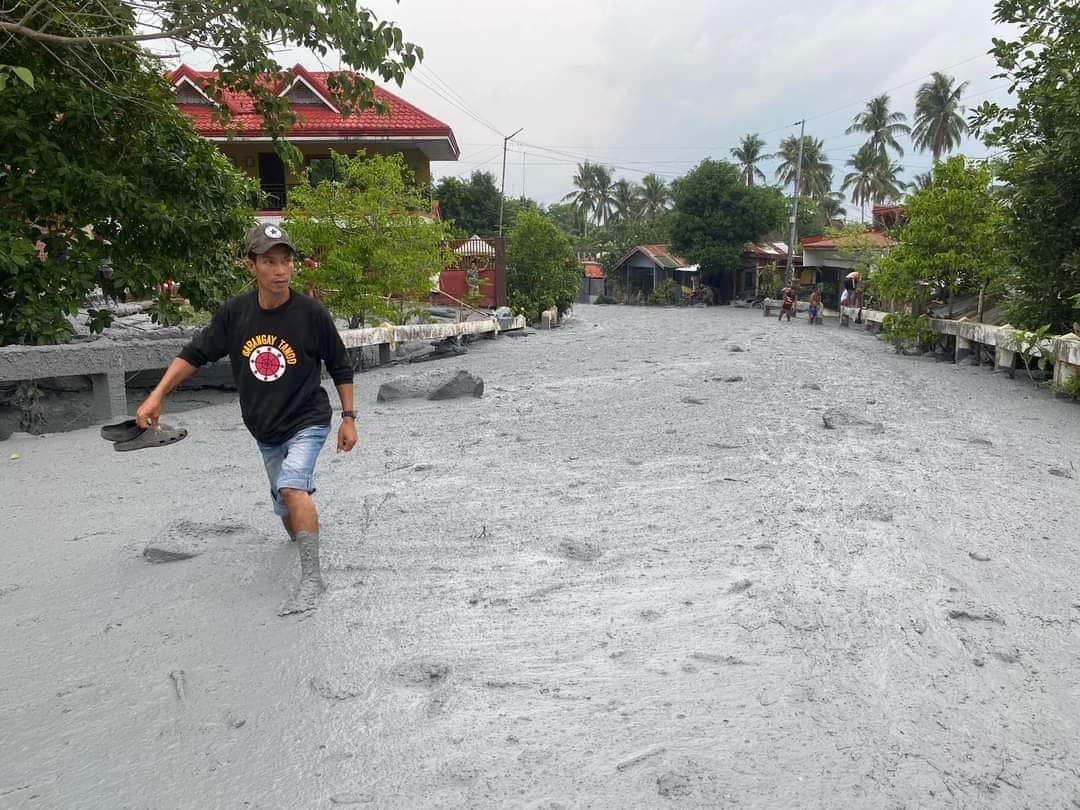
Roads in La Castellana, Negros Occidental are rendered impassable on June 5, 2024 as rains spawned widespread lahar flow in the aftermath of the eruption of Kanlaon Volcano. (Photos courtesy of Mt. Kanlaon Natural Park/via Tara Yap)

The Philippine Institute of Volcanology and Seismology (Phivolcs) issued a lahar advisory for Kanlaon Volcano at 11 p.m. on Wednesday, June 5, citing the ongoing threat of “lahars, muddy streamflows, or muddy run-off” downstream of the active volcano in Negros Island.

Citing the Philippine Atmospheric, Geophysical, and Astronomical Services Administration’s forecast for June 6 and 7, Phivolcs said heavy rainfall, with estimates of 100 and 200 millimeters (mm), is expected to affect Negros Island in the next two days.

It warned that the rains could lead to an increased volume of lahars, muddy streamflows, or muddy run-off in several downstream communities and rivers draining into the southern slopes of Kanlaon, the same areas affected by lahars on Wednesday afternoon.

Phivolcs said the lahars on Wednesday have deposited grey cohesive mud, plant debris, and gravel in at least four waterways: Tamburong Creek, flowing through Biak-na-bato and Calapnagan, La Castellana; Intiguiwan River in Guinpanaan and upstream Baji-Baji Falls in Cabacungan, La Castellana; Padudusan Falls, Masulog, Canlaon City; and the Binalbagan River, which drains the southern flank of Kanlaon Volcano.

It added that they were generally channel-confined, but flows along Tamburong Creek overflowed and deposited a few centimeters of sediment on a stretch of the main road in Biak-na-Bato, rendering it impassable to motorists.

“These lahars began approximately around 1 p.m. and lasted 25 minutes based on the seismic record. A total of 23.75 mm of rain over a two-hour period was also recorded by the All-Weather Station of the Manghumay, Mailum, Bago City Observation Station (VKMH) of the KVN. Higher rainfall volumes may have likely occurred around the summit area of the volcano,” Phivolcs said.

Due to the anticipated rainfall in the next two days, Phivolcs warned that lahars could threaten communities along the middle and lower slopes with inundation, burial, and washout.

It recommended increased vigilance and readiness among communities along rivers draining southern Kanlaon.

These communities and local government units are advised to continually monitor weather conditions and take preemptive response measures for their safety from potential lahars.

Related Tags

Kanlaon Volcano lahar advisory Phivolcs
ADVERTISEMENT
.most-popular .layout-ratio{ padding-bottom: 79.13%; } @media (min-width: 768px) and (max-width: 1024px) { .widget-title { font-size: 15px !important; } }

{{ articles_filter_1561_widget.title }}

.most-popular .layout-ratio{ padding-bottom: 79.13%; } @media (min-width: 768px) and (max-width: 1024px) { .widget-title { font-size: 15px !important; } }

{{ articles_filter_1562_widget.title }}

.most-popular .layout-ratio{ padding-bottom: 79.13%; } @media (min-width: 768px) and (max-width: 1024px) { .widget-title { font-size: 15px !important; } }

{{ articles_filter_1563_widget.title }}

{{ articles_filter_1564_widget.title }}

.mb-article-details { position: relative; } .mb-article-details .article-body-preview, .mb-article-details .article-body-summary{ font-size: 17px; line-height: 30px; font-family: "Libre Caslon Text", serif; color: #000; } .mb-article-details .article-body-preview iframe , .mb-article-details .article-body-summary iframe{ width: 100%; margin: auto; } .read-more-background { background: linear-gradient(180deg, color(display-p3 1.000 1.000 1.000 / 0) 13.75%, color(display-p3 1.000 1.000 1.000 / 0.8) 30.79%, color(display-p3 1.000 1.000 1.000) 72.5%); position: absolute; height: 200px; width: 100%; bottom: 0; display: flex; justify-content: center; align-items: center; padding: 0; } .read-more-background a{ color: #000; } .read-more-btn { padding: 17px 45px; font-family: Inter; font-weight: 700; font-size: 18px; line-height: 16px; text-align: center; vertical-align: middle; border: 1px solid black; background-color: white; } .hidden { display: none; }
function initializeAllSwipers() { // Get all hidden inputs with cms_article_id document.querySelectorAll('[id^="cms_article_id_"]').forEach(function (input) { const cmsArticleId = input.value; const articleSelector = '#article-' + cmsArticleId + ' .body_images'; const swiperElement = document.querySelector(articleSelector); if (swiperElement && !swiperElement.classList.contains('swiper-initialized')) { new Swiper(articleSelector, { loop: true, pagination: false, navigation: { nextEl: '#article-' + cmsArticleId + ' .swiper-button-next', prevEl: '#article-' + cmsArticleId + ' .swiper-button-prev', }, }); } }); } setTimeout(initializeAllSwipers, 3000); const intersectionObserver = new IntersectionObserver( (entries) => { entries.forEach((entry) => { if (entry.isIntersecting) { const newUrl = entry.target.getAttribute("data-url"); if (newUrl) { history.pushState(null, null, newUrl); let article = entry.target; // Extract metadata const author = article.querySelector('.author-section').textContent.replace('By', '').trim(); const section = article.querySelector('.section-info ').textContent.replace(' ', ' '); const title = article.querySelector('.article-title h1').textContent; // Parse URL for Chartbeat path format const parsedUrl = new URL(newUrl, window.location.origin); const cleanUrl = parsedUrl.host + parsedUrl.pathname; // Update Chartbeat configuration if (typeof window._sf_async_config !== 'undefined') { window._sf_async_config.path = cleanUrl; window._sf_async_config.sections = section; window._sf_async_config.authors = author; } // Track virtual page view with Chartbeat if (typeof pSUPERFLY !== 'undefined' && typeof pSUPERFLY.virtualPage === 'function') { try { pSUPERFLY.virtualPage({ path: cleanUrl, title: title, sections: section, authors: author }); } catch (error) { console.error('ping error', error); } } // Optional: Update document title if (title && title !== document.title) { document.title = title; } } } }); }, { threshold: 0.1 } ); function showArticleBody(button) { const article = button.closest("article"); const summary = article.querySelector(".article-body-summary"); const body = article.querySelector(".article-body-preview"); const readMoreSection = article.querySelector(".read-more-background"); // Hide summary and read-more section summary.style.display = "none"; readMoreSection.style.display = "none"; // Show the full article body body.classList.remove("hidden"); } document.addEventListener("DOMContentLoaded", () => { let loadCount = 0; // Track how many times articles are loaded const offset = [1, 2, 3, 4, 5, 6, 7, 8, 9, 10]; // Offset values const currentUrl = window.location.pathname.substring(1); let isLoading = false; // Prevent multiple calls if (!currentUrl) { console.log("Current URL is invalid."); return; } const sentinel = document.getElementById("load-more-sentinel"); if (!sentinel) { console.log("Sentinel element not found."); return; } function isSentinelVisible() { const rect = sentinel.getBoundingClientRect(); return ( rect.top < window.innerHeight && rect.bottom >= 0 ); } function onScroll() { if (isLoading) return; if (isSentinelVisible()) { if (loadCount >= offset.length) { console.log("Maximum load attempts reached."); window.removeEventListener("scroll", onScroll); return; } isLoading = true; const currentOffset = offset[loadCount]; window.loadMoreItems().then(() => { let article = document.querySelector('#widget_1690 > div:nth-last-of-type(2) article'); intersectionObserver.observe(article) loadCount++; }).catch(error => { console.error("Error loading more items:", error); }).finally(() => { isLoading = false; }); } } window.addEventListener("scroll", onScroll); });

Sign up by email to receive news.