ADVERTISEMENT

68K students, parents benefited from DSWD's reading tutorial program

Published Dec 12, 2023 07:39 am
IMG_3450.jpeg
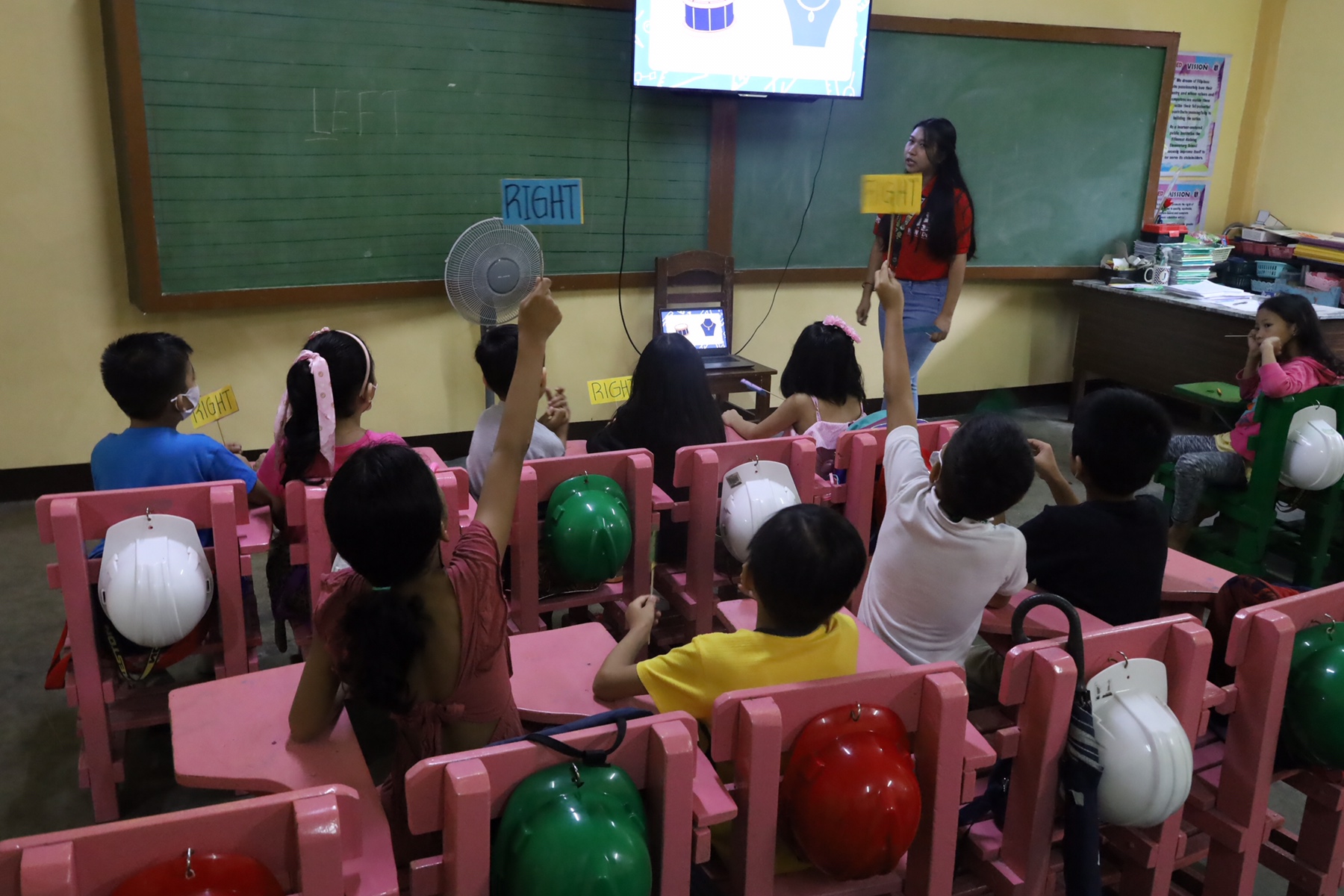
A student-tutor conducts a reading session for struggling and non-reader incoming Grade 2 students at the Filinvest Elementary School in Muntinlupa City on Oct. 21, 2023, as part of the implementation of the “Tara, Basa!” tutoring program of the Department of Social Welfare and Development (DSWD). (DSWD Photo)

At least 68,000 struggling and non-reader elementary learners, college students, and parents have benefitted from the pilot implementation of the “Tara, Basa!” tutoring program, said the Department of Social Welfare and Development (DSWD) on Tuesday, Dec. 12.

“After 20 reading and ‘nanay-tatay’ sessions, the DSWD, through the help of our trained college students, has assisted a total of 31,234 struggling and non-reader elementary learners and another 31,207 parents and guardians,” DSWD Assistant Secretary for Legislative Affairs Irene B. Dumlao said.

Based on the design of the DSWD's tutoring program, elementary students participated in reading sessions while their parents and guardians were trained to become "nanay-tatay" teachers.

Through the program, parents and guardians received cash assistance worth P235 per day for 20 days by assisting in preparing their children's needs for learning and reading sessions, assisting them in their after-reading session assignments, and attending parent effectiveness sessions, among other related activities.

Dumlao, who is also the agency's data privacy officer and co-spokesperson, said the agency has served 6,101 low-income 2nd to 4th year college students from select state universities and colleges (SUCs) as well as local government-run universities in Metro Manila.

These students received training to be tutors and youth development workers (YDWs).

The student-tutors lead reading sessions for struggling and non-reader elementary learners, while the YDWs conduct nanay-tatay sessions for parents and guardians of the grade school beneficiaries of the program.

In exchange for rendering tutoring and learning sessions, tutors and YDWs received cash-for-work (CFW) amounting to P610 per session.

The Tara, Basa! Tutoring Program will be expanded outside Metro Manila by 2024.

“With the remarkable results of the Comprehensive Rapid Literacy Assessment (CRLA) and Quick English Reading Assessment (QERA) conducted by the Department of Education (DepEd) that showed improvement in children’s reading abilities, the DSWD will bring the tutoring program in some cities and provinces outside Metro Manila,” Dumlao said.

Related Tags

DSWD
ADVERTISEMENT
.most-popular .layout-ratio{ padding-bottom: 79.13%; } @media (min-width: 768px) and (max-width: 1024px) { .widget-title { font-size: 15px !important; } }

{{ articles_filter_1561_widget.title }}

.most-popular .layout-ratio{ padding-bottom: 79.13%; } @media (min-width: 768px) and (max-width: 1024px) { .widget-title { font-size: 15px !important; } }

{{ articles_filter_1562_widget.title }}

.most-popular .layout-ratio{ padding-bottom: 79.13%; } @media (min-width: 768px) and (max-width: 1024px) { .widget-title { font-size: 15px !important; } }

{{ articles_filter_1563_widget.title }}

{{ articles_filter_1564_widget.title }}

.mb-article-details { position: relative; } .mb-article-details .article-body-preview, .mb-article-details .article-body-summary{ font-size: 17px; line-height: 30px; font-family: "Libre Caslon Text", serif; color: #000; } .mb-article-details .article-body-preview iframe , .mb-article-details .article-body-summary iframe{ width: 100%; margin: auto; } .read-more-background { background: linear-gradient(180deg, color(display-p3 1.000 1.000 1.000 / 0) 13.75%, color(display-p3 1.000 1.000 1.000 / 0.8) 30.79%, color(display-p3 1.000 1.000 1.000) 72.5%); position: absolute; height: 200px; width: 100%; bottom: 0; display: flex; justify-content: center; align-items: center; padding: 0; } .read-more-background a{ color: #000; } .read-more-btn { padding: 17px 45px; font-family: Inter; font-weight: 700; font-size: 18px; line-height: 16px; text-align: center; vertical-align: middle; border: 1px solid black; background-color: white; } .hidden { display: none; }
function initializeAllSwipers() { // Get all hidden inputs with cms_article_id document.querySelectorAll('[id^="cms_article_id_"]').forEach(function (input) { const cmsArticleId = input.value; const articleSelector = '#article-' + cmsArticleId + ' .body_images'; const swiperElement = document.querySelector(articleSelector); if (swiperElement && !swiperElement.classList.contains('swiper-initialized')) { new Swiper(articleSelector, { loop: true, pagination: false, navigation: { nextEl: '#article-' + cmsArticleId + ' .swiper-button-next', prevEl: '#article-' + cmsArticleId + ' .swiper-button-prev', }, }); } }); } setTimeout(initializeAllSwipers, 3000); const intersectionObserver = new IntersectionObserver( (entries) => { entries.forEach((entry) => { if (entry.isIntersecting) { const newUrl = entry.target.getAttribute("data-url"); if (newUrl) { history.pushState(null, null, newUrl); let article = entry.target; // Extract metadata const author = article.querySelector('.author-section').textContent.replace('By', '').trim(); const section = article.querySelector('.section-info ').textContent.replace(' ', ' '); const title = article.querySelector('.article-title h1').textContent; // Parse URL for Chartbeat path format const parsedUrl = new URL(newUrl, window.location.origin); const cleanUrl = parsedUrl.host + parsedUrl.pathname; // Update Chartbeat configuration if (typeof window._sf_async_config !== 'undefined') { window._sf_async_config.path = cleanUrl; window._sf_async_config.sections = section; window._sf_async_config.authors = author; } // Track virtual page view with Chartbeat if (typeof pSUPERFLY !== 'undefined' && typeof pSUPERFLY.virtualPage === 'function') { try { pSUPERFLY.virtualPage({ path: cleanUrl, title: title, sections: section, authors: author }); } catch (error) { console.error('ping error', error); } } // Optional: Update document title if (title && title !== document.title) { document.title = title; } } } }); }, { threshold: 0.1 } ); function showArticleBody(button) { const article = button.closest("article"); const summary = article.querySelector(".article-body-summary"); const body = article.querySelector(".article-body-preview"); const readMoreSection = article.querySelector(".read-more-background"); // Hide summary and read-more section summary.style.display = "none"; readMoreSection.style.display = "none"; // Show the full article body body.classList.remove("hidden"); } document.addEventListener("DOMContentLoaded", () => { let loadCount = 0; // Track how many times articles are loaded const offset = [1, 2, 3, 4, 5, 6, 7, 8, 9, 10]; // Offset values const currentUrl = window.location.pathname.substring(1); let isLoading = false; // Prevent multiple calls if (!currentUrl) { console.log("Current URL is invalid."); return; } const sentinel = document.getElementById("load-more-sentinel"); if (!sentinel) { console.log("Sentinel element not found."); return; } function isSentinelVisible() { const rect = sentinel.getBoundingClientRect(); return ( rect.top < window.innerHeight && rect.bottom >= 0 ); } function onScroll() { if (isLoading) return; if (isSentinelVisible()) { if (loadCount >= offset.length) { console.log("Maximum load attempts reached."); window.removeEventListener("scroll", onScroll); return; } isLoading = true; const currentOffset = offset[loadCount]; window.loadMoreItems().then(() => { let article = document.querySelector('#widget_1690 > div:nth-last-of-type(2) article'); intersectionObserver.observe(article) loadCount++; }).catch(error => { console.error("Error loading more items:", error); }).finally(() => { isLoading = false; }); } } window.addEventListener("scroll", onScroll); });

Sign up by email to receive news.